


 TR
 EN
 RU
 AR
 FR


Brachioplasty, also known as an arm lift, is a cosmetic surgical procedure that removes excess skin and reshapes the upper arms. It is particularly suitable for people with significant skin laxity or sagging arms that cannot be adequately improved through exercise or weight management alone. Loose skin may develop with aging, changes in skin elasticity, or substantial weight loss.
Depending on the amount of excess skin and localized fat, an arm lift may involve arm skin removal, liposuction, or a combination of both. The surgical technique is selected according to the patient's anatomy, the extent of skin laxity, and the desired change in the shape and contour of the upper arm.
What Is Brachioplasty (Arm Lift)?
Brachioplasty is a cosmetic surgery designed to improve the contour of the upper arms by removing excess skin and, when appropriate, reducing localized fat. It is commonly considered when loose skin hangs from the upper arm and creates the appearance sometimes described as “bat wings.”
During brachioplasty surgery, the surgeon makes an incision along the arm, removes the planned amount of excess skin, and closes the remaining tissue to create a smoother contour. Liposuction may be performed at the same time when excess fat contributes to the size or shape of the upper arm.
The amount of tissue removed and the position and length of the incision depend on the patient's individual anatomy. Patients with mild skin laxity may require a smaller procedure, while substantial arm sagging after weight loss may require a longer incision and more extensive skin removal.
Brachioplasty is not a weight-loss procedure. It is intended to address excess skin and improve the contour of the arms after the patient's weight is relatively stable. Maintaining a stable weight after surgery can help preserve the result.
Who Is a Good Candidate for an Arm Lift?
An arm lift may be considered for adults who have excess upper-arm skin or localized fat that affects the appearance of the arms. It may be particularly relevant after significant weight loss, when the skin has lost its ability to contract sufficiently around the reduced volume of the arm. After bariatric surgery, substantial weight loss can leave excess skin around the upper arms, and brachioplasty may be considered to remove this loose tissue as part of a body-contouring plan.
A suitable candidate generally:
- Has noticeable loose or hanging skin in the upper arms
- Has relatively stable body weight
- Is in generally good health for elective surgery
- Does not have medical conditions that could significantly interfere with healing
- Does not smoke, or is willing to stop smoking before and after surgery as advised
- Has realistic expectations about what surgery can achieve
- Understands that an arm lift produces a permanent scar as part of the skin-removal process
An arm lift may not be the best option when the main concern is excess fat with good skin elasticity. In such cases, arm liposuction may provide sufficient contouring without extensive skin removal. A surgical consultation is therefore important to determine whether liposuction, brachioplasty, or a combination of both is appropriate.
Arm Liposuction vs Arm Lift: What Is the Difference?
Arm liposuction and brachioplasty address different causes of upper-arm fullness. Choosing between them depends largely on the amount of excess fat and the skin's ability to contract after fat removal.
- Arm liposuction: Removes localized fat through small incisions and may be appropriate when the skin has relatively good elasticity and there is little excess skin.
- Arm lift: Removes excess skin and is more suitable when significant skin laxity or hanging tissue is present.
- Liposuction with an arm lift: May be considered when both excess fat and loose skin contribute to the appearance of the arms.
Liposuction alone cannot remove a large amount of loose skin. Conversely, an arm lift is not intended primarily to remove large volumes of fat. The surgeon may therefore recommend one procedure or a combination depending on the patient's anatomy.
When upper-arm fullness is related to conditions such as lipedema, the treatment approach may differ from standard cosmetic arm contouring and should be determined after an appropriate clinical assessment.
What Are the Types of Brachioplasty?
There is no single arm lift technique that is appropriate for every patient. The extent of surgery is determined by the location and amount of excess skin and the areas that need to be reshaped.
Mini Brachioplasty
A mini brachioplasty may be suitable for patients with a relatively small amount of excess skin, particularly when the laxity is concentrated close to the armpit. It generally involves a shorter incision than a standard arm lift.
Because it addresses a more limited area, mini brachioplasty is not appropriate for patients with extensive skin excess extending along the upper arm.
Standard Full Brachioplasty
A standard full brachioplasty is commonly used when there is more significant excess skin along the upper arm. The incision generally extends from the armpit toward the elbow along the inner or less visible aspect of the arm.
The length and exact position of the incision vary according to the amount of skin that needs to be removed and the patient's individual anatomy.
Extended Brachioplasty
An extended brachioplasty may be considered when excess skin extends beyond the upper arm toward the armpit and side of the chest. The incision is therefore longer than that used for a standard arm lift.
This approach can be particularly relevant for patients who have experienced substantial weight loss and have excess tissue extending from the upper arm into adjacent areas.
Thoracobrachioplasty
A thoracobrachioplasty is a more extensive body-contouring procedure that can address excess skin involving the upper arm, armpit, and lateral chest. It may be considered in selected patients with significant tissue excess following major weight loss.
Because it involves a larger treatment area and longer incisions, the procedure requires careful surgical planning and a thorough discussion of recovery and scarring.
How Is Brachioplasty Surgery Performed?
The exact arm lift surgery technique depends on the patient's anatomy, skin quality, degree of skin laxity, and the amount of tissue that needs to be removed. Before surgery, the plastic surgeon assesses the upper arms, distribution of fat, and skin elasticity and plans the incision according to the desired contour and amount of excess skin.
Brachioplasty is performed through an open surgical incision rather than minimally invasive or laparoscopic techniques. Depending on the patient's needs, the surgeon may use different approaches to remove excess skin and reshape the arm.
During the procedure, the surgeon typically:
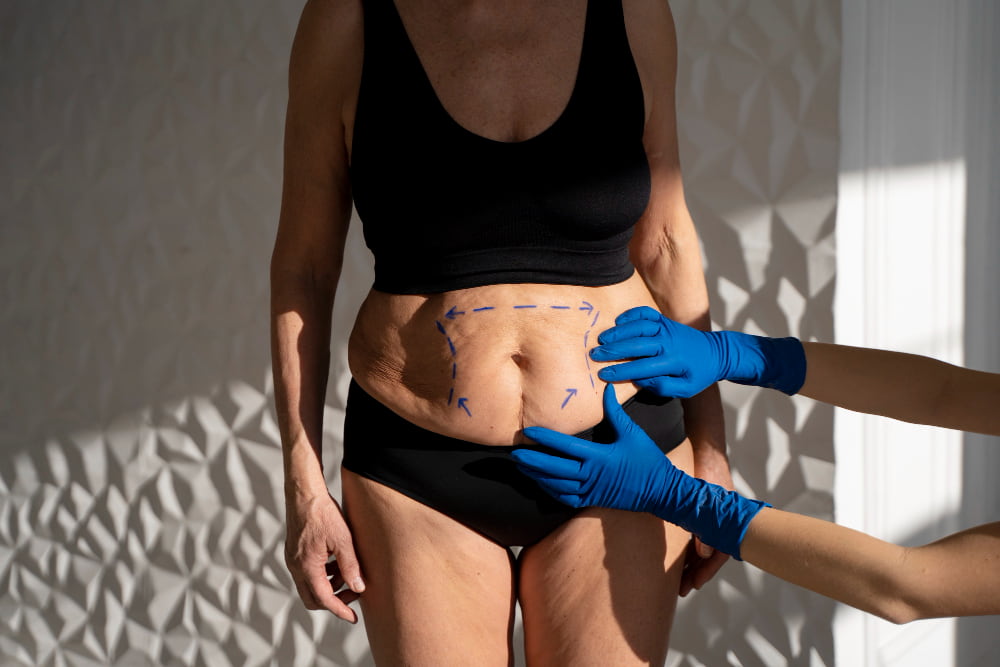
- Marks the areas of excess skin and the planned incision before surgery
- Makes the incision along the planned area of the arm
- Removes the excess skin and, when appropriate, underlying fat
- Uses liposuction when localized fat needs to be reduced alongside skin removal
- Repositions and secures the remaining tissues to create a smoother arm contour
- Closes the incision with sutures and applies appropriate dressings
Liposuction-assisted brachioplasty may be used when excess fat is present together with loose skin. Liposuction can help refine the arm contour before or during skin removal, but it does not replace brachioplasty when significant excess skin is present.
The procedure may be performed under general anesthesia or another appropriate form of anesthesia depending on the extent of surgery, the patient's health, and the surgeon's and anesthesiologist's assessment.
The duration of an arm lift operation varies according to the surgical approach and whether additional procedures are performed. The surgeon can provide more specific information after evaluating the patient.
Brachioplasty Before and After: What Results Can You Expect?
Brachioplasty before and after photographs can help patients understand the type of contour change that may be possible, but photographs from other patients cannot predict an individual's result.
An arm lift can reduce hanging skin and create a smoother, more defined upper-arm contour. The final appearance develops gradually as swelling decreases and the tissues heal.
Patients should also understand that an arm lift does not produce completely scar-free results. Because excess skin must be removed, a visible brachioplasty scar is an inherent part of the procedure.
The final result can be influenced by factors such as:
- The amount of excess skin before surgery
- Skin elasticity and quality
- The surgical technique used
- Weight stability
- Healing characteristics
- Smoking
- Postoperative care and activity restrictions
Arm lift before and after images should therefore be viewed as examples rather than guarantees of a particular outcome.
What Is Arm Lift Recovery Like?
Arm lift recovery takes place gradually. Swelling, bruising, tightness, and discomfort are expected during the early postoperative period and usually improve as healing progresses.
Patients should follow the surgeon's instructions regarding wound care, medication, physical activity, and compression garments where prescribed. Heavy lifting and strenuous upper-body exercise are generally restricted during the initial healing period.
Sleeping After Arm Lift
Sleeping after an arm lift can be uncomfortable during the first days because pressure or excessive movement may irritate the treated area. Patients may be advised to sleep in a position that avoids direct pressure on the arms and keeps them comfortably supported.
The appropriate sleeping position can vary according to the extent of surgery and any additional procedures performed, so patients should follow their surgeon's specific instructions.
Returning to Normal Activities
The time needed to return to normal activities varies from patient to patient. Light daily activities may be resumed relatively soon when the surgeon considers this appropriate, while strenuous exercise, heavy lifting, and activities that place tension on the incision may need to be avoided for longer.
Swelling can persist after the initial recovery period, meaning that the final contour may take several weeks or longer to become fully apparent.
Patients should not use a general recovery timeline as a substitute for their surgeon's postoperative instructions.
What Are the Risks of Brachioplasty?
Like any surgical procedure, brachioplasty has potential risks and complications. The individual risk depends on factors such as general health, smoking status, the extent of surgery, and the technique used.
Possible brachioplasty risks include:
- Bleeding or hematoma
- Infection
- Compartment syndrome a rare complication involving increased pressure within a muscle compartment
- Seroma, or accumulation of fluid beneath the skin
- Swelling and bruising
- Delayed wound healing
- Changes in skin sensation or numbness
- Nerve injury
- Asymmetry or contour irregularities
- Widening or more noticeable scarring
- Poor scar healing
- Skin loss in areas with compromised blood supply
- Persistent pain
- Blood clots and other complications associated with surgery or anesthesia
Severe complications are uncommon, but patients should discuss their individual risk factors with the surgeon before deciding on surgery.
Severe or rapidly increasing pain, marked swelling, changes in sensation, weakness, or other concerning symptoms after surgery require urgent medical assessment. Patients should not assume that significant or worsening symptoms are simply part of normal postoperative discomfort.
Can a Non-Surgical Arm Lift Replace Brachioplasty?
A non-surgical arm lift generally refers to treatments intended to improve skin firmness or reduce localized fat without surgically removing excess skin. Depending on the technology used, these treatments may involve energy-based skin tightening or other non-invasive approaches.
Non-surgical treatments may be considered when skin laxity is mild. However, they cannot remove substantial quantities of hanging skin.
For patients with significant excess skin, particularly after major weight loss, surgical arm skin removal is generally more effective because the unwanted tissue can be physically excised.
The most appropriate treatment depends on the degree of skin laxity, skin quality, fat distribution, and the patient's expectations.
How Can You Care for Your Arms After Brachioplasty?
Following postoperative instructions carefully can support healing and help protect the surgical result. Patients should receive individualized instructions from their surgical team, but these may include:
- Keeping the incision clean and following wound-care instructions
- Taking prescribed medications as directed
- Wearing compression garments when recommended
- Avoiding heavy lifting and strenuous arm movements during the healing period
- Attending scheduled follow-up appointments
- Avoiding smoking because it can impair wound healing
- Protecting healing scars from excessive sun exposure
- Maintaining a stable weight after recovery
Patients should contact their medical team if they develop symptoms such as increasing redness, significant swelling, drainage, fever, severe pain, or other unexpected changes.
What Is a Brachioplasty Scar Like?
A brachioplasty scar is unavoidable because the procedure requires an incision to remove excess skin. The surgeon generally places the incision along the inner or less visible aspect of the arm, although the exact location depends on the surgical technique and the amount of skin being removed.
Scar appearance changes over time. Initially, the scar may appear more prominent, raised, or darker than the surrounding skin before gradually becoming less noticeable as it matures.
Scar quality varies between individuals and can be affected by genetics, skin type, wound healing, tension on the incision, and postoperative care. Patients should discuss scar-management options with their surgeon if they are concerned about the appearance of the scar.
Brachioplasty Pricing: Key Cost Considerations
The brachioplasty cost varies between countries, hospitals, and patients because there is no single surgical approach or fixed treatment plan for every arm lift. In Turkey and elsewhere in the world, the final cost of arm lift may depend on several factors, including:
- The amount of excess skin and fat
- The type and extent of brachioplasty
- Whether liposuction is performed together with the arm lift
- The surgeon's experience and surgical fees
- Anesthesia, hospital, and operating room costs
- Preoperative examinations and postoperative follow-up
- Whether additional body-contouring procedures are performed
- For international patients, accommodation, transfers, and other services included in a treatment package
Patients comparing brachioplasty cost in Turkey or other countries should consider the complete treatment plan rather than the advertised surgical price alone. The services and expenses included in a package can vary, so these details should be clarified before treatment.
Brachioplasty (Arm Lift) in Turkey for International Patients
For patients considering brachioplasty in Turkey, Medical Park Hospitals provide arm lift procedures through their Plastic Surgery departments, where expert plastic surgeons assess each patient individually and determine the most appropriate surgical approach. Depending on the patient's anatomy and goals, the evaluation may consider the degree of skin laxity, excess fat, skin quality, and overall arm proportions to determine whether brachioplasty, liposuction, or a combination of techniques is appropriate.
The brachioplasty procedure at Medical Park Hospitals in Turkey includes preoperative assessment, surgical treatment, and postoperative follow-up according to the patient's individual treatment plan. The extent of surgery and recovery requirements are discussed with the plastic surgeon before the procedure.
For international patients, Medical Park's International Patient Services Center coordinates the practical aspects of treatment and supports patients throughout their hospital journey. Depending on the treatment plan, this may include assistance with appointments, medical coordination, and other arrangements related to treatment in Turkey.
To learn more about other cosmetic and reconstructive procedures available at Medical Park, visit our dedicated page on Plastic Surgery in Turkey.




 Makaleye Dön
 E-Result
 WhatsApp