


 TR
 EN
 RU
 AR
 FR


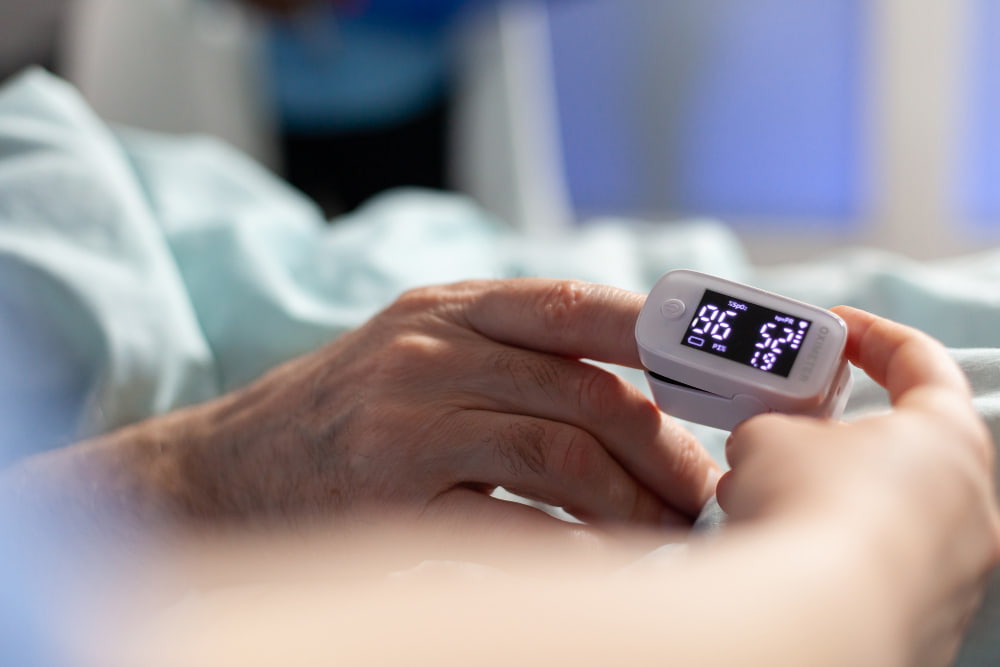

Blood oxygen levels indicate how much oxygen the blood carries to the body's organs and tissues, where it is needed to keep them working properly. One of the main ways to assess this is by measuring blood oxygen saturation: the percentage of hemoglobin, a protein in red blood cells, that is carrying oxygen. A fingertip pulse oximeter provides a quick estimate of this percentage, while an arterial blood gas (ABG) test can give doctors a more detailed picture by measuring oxygen and carbon dioxide levels in blood taken from an artery.
For most healthy people at sea level, oxygen saturation is typically between 95% and 100%, although the meaning of a reading depends on the person's health and symptoms. This guide explains what normal and low blood oxygen readings mean, how oxygen levels are measured, and when further medical assessment may be needed.
What Is Blood Oxygen Saturation?
Blood oxygen saturation describes how much of the hemoglobin in the blood is carrying oxygen. When we breathe in, oxygen passes from the lungs into the bloodstream, where hemoglobin picks it up and transports it around the body. The saturation reading shows how much of this oxygen-carrying protein is loaded with oxygen, making it a useful indicator of how effectively oxygen is entering the blood.
A pulse oximeter estimates blood oxygen saturation through the skin, usually at the fingertip, without requiring a blood sample. An arterial blood gas test measures oxygen directly in arterial blood and provides additional information about carbon dioxide levels. Although both tests help doctors assess oxygen status, they different things and may be used in different situations depending on a person's symptoms and medical needs.
SpO2, SaO2, and PaO2: Three Ways to Measure Oxygen
These three terms describe related but distinct measurements:
SpO2: Peripheral oxygen saturation estimated by a pulse oximeter, usually placed on a fingertip. It is noninvasive but can be inaccurate under certain conditions.
SaO2: Arterial oxygen saturation, which describes the proportion of hemoglobin carrying oxygen in arterial blood. It can be measured through laboratory analysis of an arterial blood sample.
PaO2: The partial pressure of oxygen dissolved in arterial blood, measured in millimeters of mercury (mmHg). It helps doctors assess how effectively oxygen passes from the lungs into the bloodstream.
SpO2 and SaO2 are expressed as percentages, whereas PaO2 is a pressure measurement. They are related, but they are not interchangeable. For example, a person can have a low PaO2 even when their saturation remains relatively high, because the relationship between oxygen pressure and hemoglobin saturation is not linear.
Oxygen Content, Oxygen Delivery, and the Hemoglobin Check
A normal oxygen saturation does not always mean that the tissues are receiving enough oxygen. The amount of oxygen carried in the blood depends mainly on hemoglobin concentration and how much of that hemoglobin is carrying oxygen. Oxygen delivery also depends on cardiac output, which is the amount of blood the heart pumps each minute.
This explains why anemia can cause fatigue, weakness, and shortness of breath even when a pulse oximeter displays a normal reading. The hemoglobin may be well saturated, but there may not be enough of it to carry the oxygen the body needs. A hemoglobin check can help identify this problem.
Oxygen delivery is particularly important in critical illness, when lung function, circulation, and hemoglobin levels may all affect tissue oxygen supply. Doctors therefore interpret oxygen saturation alongside blood counts, vital signs, symptoms, and other test results.
Normal Blood Oxygen Levels
For most healthy adults at sea level, a normal blood oxygen level measured by pulse oximetry is generally 95% to 100%. The expected range can differ according to altitude, age, underlying lung disease, and the circumstances in which the measurement is taken. A single result should not be used to diagnose a condition without considering the wider clinical picture.
The following values are general reference points, not a substitute for individual medical advice.
Measurement or reading | General interpretation |
|---|---|
SpO2 95%–100% | Usually a normal oxygen saturation for a healthy person at sea level |
SpO2 92%–94% | Below the usual range; repeat the reading correctly and seek medical advice if it persists or is unusual for you |
SpO2 below 90% | Low oxygen saturation that requires prompt medical assessment |
PaO2 around 80–100 mmHg | Typical arterial oxygen pressure range for many healthy adults at sea level |
These ranges can vary by clinical guideline, laboratory, age, and medical condition. A person with a known chronic respiratory condition may have a different prescribed target, but a new or unexplained decline still requires assessment. Severe symptoms need emergency care even when the displayed oxygen level appears normal.
Normal Oxygen Levels by Situation
The expected oxygen saturation can change with a person's environment and health.
At high altitude: Oxygen pressure in the air is lower, so saturation may fall as altitude increases. The expected level depends on the altitude, how quickly a person ascends, and how well they acclimatize.
During sleep: Oxygen saturation may dip briefly during sleep, but repeated or prolonged drops can indicate a breathing disorder such as sleep apnea or an underlying lung condition.
In children: Normal oxygen levels in children are generally similar to adult values at sea level, but age, illness, and clinical setting matter. Babies and children with breathing difficulties need prompt assessment.
In chronic lung disease: Some people with chronic obstructive pulmonary disease (COPD) or other conditions have individualized oxygen targets. In certain patients at risk of carbon dioxide retention, clinicians commonly aim for 88%–92% during acute treatment while blood gas results are assessed.
With an oxygen saturation of 94% or 92%: A reading of 94% may be slightly below the usual range, while 92% is low for many otherwise healthy adults at sea level. Whether it is concerning depends on symptoms, repeat measurements, baseline readings, and medical history.
How to Measure Oxygen Levels With a Pulse Oximeter
A pulse oximeter, also called an oximeter or pulse ox, is a small device that clips onto a fingertip. It uses light to estimate the percentage of hemoglobin carrying oxygen and usually displays the pulse rate as well. Because it does not require a blood sample, it is commonly used in hospitals, clinics, and home monitoring.
A pulse oximeter can help track oxygen levels, but it cannot identify the cause of a low reading or rule out every serious problem. A person who feels very unwell should not delay seeking care while repeatedly checking a device.
How to Use a Pulse Oximeter for a More Reliable Reading
To improve the reliability of pulse oximeter readings at home:
Sit quietly and rest for several minutes before measuring.
Warm your hands if your fingers are cold.
Remove nail polish or artificial nails from the finger you plan to use, if possible.
Place the device on your finger according to the manufacturer's instructions.
Keep your hand still and supported around chest level.
Wait for the reading to stabilize before recording the number.
Repeat the measurement if the result seems unexpected, and note whether it changes over time.
If the reading remains low, contact a healthcare professional. Do not keep repeating the measurement instead of seeking help when you have concerning symptoms.
Why Oximeter Readings Can Be Wrong
Are pulse oximeters accurate? They are useful for estimating oxygen saturation, but they have limitations. Their accuracy can be affected by several factors:
Skin pigmentation: Some pulse oximeters may overestimate oxygen saturation in people with darker skin, potentially missing low oxygen levels. Accuracy varies by device and clinical circumstances.
Cold hands and poor circulation: Cold fingers, low blood flow, or a weak pulse signal can make the reading unreliable. A low perfusion index, when displayed by a device that measures it, may indicate a weak pulse signal at the sensor site; it is not a direct measurement of oxygen saturation.
Nail polish and artificial nails: Certain colors, coatings, and artificial nails can interfere with the light used by the device.
Movement: Shivering, hand movement, or an unstable sensor can distort the result.
Tobacco use and other factors: Current smoking and some medical circumstances can affect readings or their interpretation.
Carbon monoxide poisoning: A standard pulse oximeter can display a falsely reassuring result because it may not reliably distinguish carboxyhemoglobin, formed when carbon monoxide binds to hemoglobin, from oxygenated hemoglobin.
A reading of 90% from a pulse oximeter should not be assumed to mean that the true arterial saturation is exactly 90%. The FDA has noted that, under the conditions described for certain cleared devices, a displayed reading of 90% may correspond to a true arterial saturation of approximately 86%–94%.
Smartwatch oxygen saturation readings and other wellness-device estimates should not be relied on to make medical decisions or determine whether urgent care is needed. Even the best pulse oximeter cannot replace a clinical assessment when symptoms or readings are concerning. Trends and how a person feels matter alongside the number.
Low Blood Oxygen: Hypoxemia and Hypoxia
Low oxygen levels are a sign that something may be affecting oxygen intake, transport, circulation, or use by the tissues. The terms hypoxemia and hypoxia are often used together, but they describe different problems. Understanding the distinction helps explain why a person can have normal oxygen saturation and still experience inadequate oxygen delivery.
Hypoxia vs. Hypoxemia
Hypoxemia means that oxygen levels in arterial blood are lower than expected. It may be identified through low SpO2, low SaO2, or a reduced PaO2 on an arterial blood gas test.
Hypoxia means that the body's tissues are not receiving or using enough oxygen to function normally. Medical hypoxia can occur because of hypoxemia, but it can also occur when oxygen saturation is normal.
The main types of hypoxia include:
Hypoxemic hypoxia: The blood does not contain enough oxygen, often because of lung disease or problems transferring oxygen from the lungs into the blood.
Anemic hypoxia: The blood cannot carry enough oxygen because hemoglobin is too low or cannot function normally.
Circulatory hypoxia: Blood flow is inadequate, so oxygen delivery to tissues falls despite potentially normal blood oxygen saturation.
Histotoxic hypoxia: The tissues cannot use oxygen properly, as can occur with certain poisons.
The word hypoxic describes a state involving insufficient oxygen at the tissue level. Since hypoxia and hypoxemia are not interchangeable, doctors consider the oxygen measurement, hemoglobin level, circulation, and underlying cause together.
Symptoms of Low Oxygen
Symptoms depend on how low the oxygen level is, how quickly it falls, and the person's underlying health. Some people develop obvious breathing difficulties, while others may have few symptoms despite a concerning reading.
Possible symptoms of low oxygen include:
Shortness of breath or difficulty breathing.
Rapid breathing or an unusually fast heartbeat.
Headache, restlessness, or unusual fatigue.
Confusion, reduced alertness, or difficulty concentrating.
Bluish or gray lips, fingertips, or skin, although color changes may not be easy to recognize in every skin tone.
Worsening exercise tolerance or weakness.
Low oxygen with normal breathing can occur, and some people experience silent hypoxia, sometimes called happy hypoxia, in which oxygen levels are dangerously low despite relatively little perceived breathlessness. The absence of severe shortness of breath does not rule out a serious problem.
Causes of Low Blood Oxygen
The causes of low blood oxygen vary from temporary illness to chronic conditions that affect breathing or circulation. Common possibilities include:
Lung infections: Pneumonia and severe bronchitis can interfere with the exchange of oxygen in the lungs.
Chronic lung conditions: COPD, severe asthma, and interstitial lung disease can reduce oxygen transfer into the bloodstream.
Blood clots in the lungs: A pulmonary embolism can disrupt blood flow through the lungs and cause a sudden drop in oxygen.
Heart conditions: Certain heart problems can impair circulation or cause fluid to build up in the lungs.
Sleep-related breathing disorders: Sleep apnea can cause repeated oxygen drops during sleep.
High altitude: Lower oxygen pressure in the air can reduce blood oxygen saturation.
Carbon monoxide exposure: Carbon monoxide prevents hemoglobin from carrying oxygen normally and can cause tissue hypoxia even when a pulse oximeter appears normal.
Anemia: Anemia primarily reduces oxygen-carrying capacity rather than necessarily lowering saturation. It can contribute to inadequate oxygen delivery even when SpO2 is normal.
The underlying cause determines the appropriate treatment. A low reading should not automatically be attributed to a respiratory infection, a chronic lung condition, or a device error without further assessment.
What Is a Dangerously Low Oxygen Level?
For most adults at sea level, a pulse oximeter reading that remains below about 90% is dangerously low and requires prompt medical assessment. A reading around 88% is particularly concerning in someone who does not have an individualized target from their clinician. Do not wait for the number to fall further before seeking help.
Call emergency services if you or someone else has severe difficulty breathing, confusion, chest pain, blue or gray lips, collapse, or reduced consciousness, regardless of the oximeter reading. These symptoms can signal a medical emergency. Children with significant breathing difficulty, unusual drowsiness, or blue or gray lips also need urgent emergency assessment.
If you have COPD or another condition for which your clinician has prescribed a different oxygen target, follow your individual plan. However, a new drop from your usual level or worsening symptoms still needs medical advice. Do not change prescribed oxygen flow rates on your own unless your care team has given you a clear plan for doing so.
Chronic Respiratory Failure With Hypoxia
Chronic respiratory failure occurs when the respiratory system cannot maintain adequate gas exchange over time. In chronic respiratory failure with hypoxia, oxygen levels remain too low because of a persistent underlying problem, such as advanced COPD, interstitial lung disease, or certain neuromuscular or chest wall conditions.
Respiratory failure is commonly classified according to whether oxygen is low, carbon dioxide is elevated, or both. Type 1 respiratory failure is characterized mainly by low oxygen, while type 2 respiratory failure involves elevated carbon dioxide (hypercapnia), which can occur when ventilation is insufficient. Some patients have overlapping features.
Assessment may include pulse oximetry, arterial blood gas testing, lung function tests, imaging, and evaluation of the underlying disease. Long-term oxygen therapy may be considered for selected patients with persistently low oxygen levels at rest, after formal assessment confirms the need. Not everyone with breathlessness or a chronic lung diagnosis benefits from supplemental oxygen.
How to Increase Blood Oxygen Level
How to increase blood oxygen level depends on why it is low. A healthy person whose oxygen saturation is already normal generally does not need to raise it further. If oxygen is low, the priority is to identify and treat the cause rather than trying unproven methods to boost a number.
Treating the Underlying Cause
Treatment may involve addressing a lung infection, adjusting treatment for asthma or COPD, treating sleep apnea, managing a heart condition, or correcting anemia when appropriate. Some causes require urgent hospital treatment, especially when oxygen levels fall suddenly or breathing becomes difficult.
Doctors determine whether oxygen therapy, medication, breathing support, or another intervention is needed based on the clinical findings. Treatment for hypoxemia is not the same in every patient, and oxygen alone does not correct every cause of hypoxia.
Everyday Measures That Can Help
For people with a diagnosed respiratory condition, practical measures may support breathing and general health, although they are not substitutes for prescribed treatment.
Avoid smoking: Smoking damages the lungs and exposes the body to carbon monoxide, which interferes with oxygen transport.
Sit upright when breathless: An upright position may make breathing easier for some people. Severe or sudden breathlessness still requires urgent assessment.
Use recommended breathing techniques: Pursed-lip breathing—breathing in gently through the nose and breathing out slowly through nearly closed lips—may help some people with COPD control breathlessness. Diaphragmatic breathing may also be taught in respiratory rehabilitation.
Stay active as advised: Appropriate physical activity and pulmonary rehabilitation can improve exercise tolerance, but activity should be adjusted to the person's condition and medical advice.
Acclimatize gradually at altitude: Allowing time to adapt to higher elevations may help reduce altitude-related symptoms. Severe symptoms at altitude require prompt medical attention.
There is no reliable evidence that unproven oxygen-boosting supplements or wellness products can safely correct low blood oxygen. If a reading is repeatedly low, seek medical advice rather than relying on breathing exercises or supplements alone.
Supplemental Oxygen
Supplemental oxygen is prescribed when a person cannot maintain adequate oxygen levels without additional support. It may be delivered through nasal cannulas, masks, or home oxygen equipment such as an oxygen concentrator. Long-term oxygen therapy is used for selected patients with chronic hypoxemia, while oxygen may also be given temporarily during an acute illness.
The amount of oxygen should be adjusted to a prescribed target. People with COPD or other risks for carbon dioxide retention may need a lower target range than other patients, and excessive oxygen can be harmful in some circumstances.
Oxygen safety matters: Never smoke or allow open flames near oxygen equipment. Keep oxygen away from heat sources, use equipment as instructed, and do not adjust the prescribed flow without guidance unless following a specific clinician-provided emergency plan.
Too Much Oxygen: Hyperoxia and Oxygen Toxicity
More oxygen is not always better. Hyperoxia means that the body is exposed to oxygen levels higher than needed, while oxygen toxicity refers to harmful effects caused by excessive oxygen exposure. Prolonged exposure to high concentrations of supplemental oxygen can injure lung tissue, and exposure to oxygen at very high pressure, such as in certain diving circumstances, can affect the nervous system.
In some patients with COPD or other conditions associated with carbon dioxide retention, uncontrolled oxygen administration can worsen hypercapnia. Oxygen should therefore be prescribed and adjusted according to the patient's condition and target range rather than increased simply to achieve the highest possible saturation.
Possible signs of oxygen-related complications depend on the type and duration of exposure. Patients receiving oxygen therapy should follow their prescribed settings and report new or worsening symptoms to their healthcare team.
Arterial Blood Gas (ABG) Test
An arterial blood gas (ABG) test is a blood test that measures oxygen and carbon dioxide levels and evaluates the body's acid-base balance. Unlike a pulse oximeter, which estimates oxygen saturation, an ABG provides information about the partial pressure of oxygen in arterial blood and how effectively the lungs remove carbon dioxide. It is particularly useful in people who are seriously ill, have suspected respiratory failure, or need close monitoring of oxygen and ventilation.
ABG testing is also known as blood gas analysis or arterial gasometry. Doctors use the results alongside symptoms, examination findings, and other investigations to assess breathing problems and guide treatment.
What an ABG Test Measures
An ABG report contains several values. Understanding their basic meaning can help patients make sense of their blood gas test results.
pH: Indicates how acidic or alkaline the blood is. It helps identify an acid-base imbalance.
PaCO2: The partial pressure of carbon dioxide in arterial blood. It provides information about ventilation, or how effectively the lungs remove carbon dioxide.
PaO2: The partial pressure of oxygen dissolved in arterial blood. It helps assess oxygen transfer from the lungs into the bloodstream.
HCO3 (bicarbonate): A substance that helps regulate blood acidity. Its level can indicate how the kidneys and other systems are responding to an acid-base disturbance.
Base excess: Estimates the metabolic component of an acid-base imbalance and can help distinguish metabolic disturbances from primarily respiratory ones.
Oxygen saturation: Indicates the proportion of hemoglobin carrying oxygen. Depending on the test and analyzer, the result may be measured or calculated.
Doctors interpret these values together. For example, a high PaCO2 may indicate that a patient is not ventilating adequately, while a low PaO2 can indicate impaired oxygenation. The pH and bicarbonate help establish whether an acid-base disturbance is present and whether the body may be compensating for it.
How the ABG Test Is Done and Its Risks
An arterial blood gas test usually involves taking a small blood sample from an artery in the wrist, most often the radial artery. Before collecting the sample, the healthcare professional cleans the skin and inserts a needle into the artery. The sample is then sent for laboratory analysis.
Because arteries are deeper and under higher pressure than veins, the procedure may be more uncomfortable than a routine blood draw. Patients may feel brief, sharp pain during the radial artery puncture, followed by tenderness at the sampling site.
Possible risks include temporary pain, bruising, bleeding, and, less commonly, infection or damage to nearby structures. The healthcare professional applies pressure after removing the needle to help prevent bleeding. Patients who take blood-thinning medication or have a bleeding disorder should tell the healthcare team before the test.
ABG Interpretation and Normal Values
ABG interpretation involves assessing the results as a group rather than judging each number independently. The following are typical reference ranges for adults; the reporting laboratory's own ranges should take precedence because values can vary with age, altitude, clinical circumstances, and testing methods.
ABG Parameter | Typical Adult Reference Range | What It Indicates |
|---|---|---|
pH | 7.35–7.45 | The acidity or alkalinity of the blood |
PaCO2 | 35–45 mmHg | Carbon dioxide removal through ventilation |
PaO2 | Approximately 80–100 mmHg | Oxygen pressure in arterial blood at sea level |
HCO3 | Approximately 22–26 mmol/L | The metabolic component of acid-base balance |
SaO2 | Usually approximately 95%–100% | The proportion of arterial hemoglobin carrying oxygen |
These values are general guides rather than universal cutoffs. PaO2, in particular, can be lower in older adults and at higher altitudes. Oxygen saturation may also be interpreted differently in people with chronic respiratory disease.
A common starting point for how to interpret an ABG is to examine the pH, then consider PaCO2 and bicarbonate:
Respiratory acidosis: The blood becomes more acidic because carbon dioxide accumulates, often due to inadequate ventilation. The pH is typically low and PaCO2 is elevated.
Respiratory alkalosis: The blood becomes more alkaline when excessive ventilation removes too much carbon dioxide. The pH is typically high and PaCO2 is reduced.
Metabolic acidosis: An increase in acid or a loss of bicarbonate lowers the blood pH. Possible causes include severe illness, kidney dysfunction, and certain metabolic disturbances.
Metabolic alkalosis: The blood becomes more alkaline due to increased bicarbonate or loss of acid, which can occur with prolonged vomiting or certain medications.
These patterns are not always straightforward. The body may compensate for a primary disturbance, and more than one acid-base problem can occur at the same time. Doctors also consider the clinical setting and other laboratory findings rather than making a diagnosis from the ABG values alone.
Other measurements may be calculated from the results. The A-a gradient, or alveolar-arterial oxygen gradient, compares estimated oxygen pressure in the air sacs of the lungs with the PaO2 in arterial blood. It can help investigate why oxygen is low. The PaO2/FiO2 ratio compares arterial oxygen pressure with the fraction of oxygen being inhaled and is used to assess oxygenation in certain critically ill patients.
Venous Blood Gas vs. ABG
A venous blood gas (VBG) test measures gas levels and acid-base parameters in blood taken from a vein. It can be useful for assessing pH, trends in carbon dioxide, and some metabolic disturbances, depending on the clinical situation.
However, venous blood has already passed through the body's tissues, where oxygen is used and carbon dioxide is produced. As a result, venous oxygen pressure and saturation are not equivalent to arterial values. A venous blood gas does not replace an ABG when an accurate assessment of arterial oxygenation is needed.
Doctors choose between an ABG and a VBG based on the question they need to answer. A venous sample may be sufficient for some assessments, while an arterial sample is necessary when precise information about PaO2 is important.
Respiratory Assessment and Cardiovascular Screening in Turkey
Blood oxygen levels provide useful information about oxygen saturation, but they do not tell the whole story of how well the body delivers oxygen to its tissues. A low reading may be associated with lung disease, heart conditions, or other medical problems, while a normal reading does not rule out every cause of breathlessness, fatigue, or chest discomfort. A medical assessment can help determine whether the symptoms require respiratory evaluation, cardiovascular screening, blood tests, or a combination of investigations.
Depending on the patient's symptoms and medical history, assessment may include pulse oximetry, an arterial blood gas (ABG) test, a complete blood count, an electrocardiogram (ECG), or other tests recommended by the treating physician. Pulse oximetry estimates the percentage of hemoglobin carrying oxygen, whereas an ABG test measures oxygen and carbon dioxide levels in arterial blood and helps assess acid-base balance. Investigations for cardiovascular disease may be appropriate when symptoms suggest that a heart or circulation problem could be contributing to the patient's condition.
For international patients seeking respiratory assessment and cardiovascular screening in Turkey, the choice of tests depends on individual clinical findings rather than the oxygen saturation number alone. Patients should seek urgent medical care for severe breathlessness, chest pain, confusion, or blue or gray lips, rather than waiting for a scheduled screening appointment.
Respiratory Assessment and Cardiovascular Screening at Medical Park
At Medical Park Hospitals in Turkey, patients experiencing low blood oxygen readings, breathlessness, or related symptoms can seek medical evaluation to help identify possible respiratory or cardiovascular causes. Depending on their needs, the assessment may involve specialists in Chest Diseases (Pulmonology) or Cardiology, alongside oxygen saturation measurements, blood tests, and other diagnostic investigations indicated by the clinical evaluation.
A pulse oximeter reading may be an initial part of the assessment, but further testing may be needed to understand what is causing an abnormal result or persistent symptoms. An arterial blood gas test can help evaluate oxygenation, carbon dioxide removal, and acid-base balance when clinically indicated. Other investigations, such as a complete blood count or an electrocardiogram, may help doctors assess whether anemia or a cardiovascular condition could be contributing to the patient's symptoms.
For international patients, Medical Park's International Patient Services Center can help coordinate appointments, medical records, and communication about the proposed evaluation. Previous oxygen readings, blood test results, medical reports, and a list of current medications can help the treating physician understand the patient's history and determine appropriate next steps. Patients considering respiratory assessment and cardiovascular screening at Medical Park can begin with a medical consultation to establish which investigations are suitable for their symptoms and health needs.


 Makaleye Dön
 E-Result
 WhatsApp