


 TR
 EN
 RU
 AR
 FR


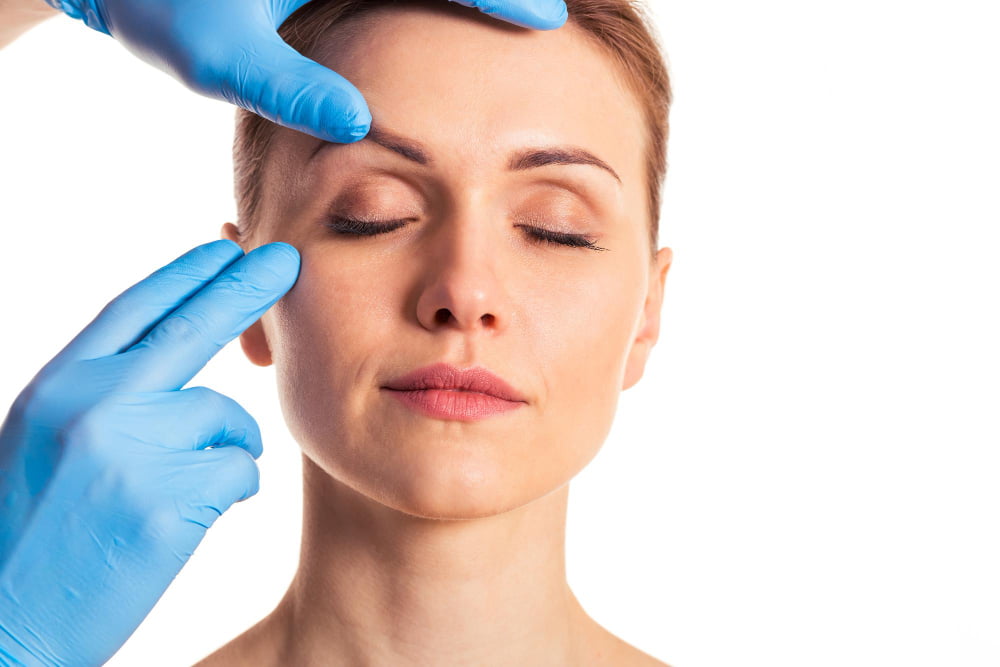


A brow lift, also known as an eyebrow lift or forehead lift, is a cosmetic procedure that raises sagging eyebrows and refreshes the upper third of the face. As the skin and underlying tissues lose elasticity with age, the brows may gradually descend, creating a tired, heavy, or aged appearance and sometimes making the upper eyelids look hooded.
Depending on the degree of brow drooping, facial anatomy, and desired results, a brow lift may be performed using surgical techniques such as an endoscopic brow lift, or with temporary non-surgical options such as Botox or Dysport.
This guide explains the different types of brow lift, who may benefit from the procedure, how recovery works, potential risks, and what to consider when comparing surgical and non-surgical options.
What Is a Brow Lift (Forehead Lift)?
A brow lift is a procedure designed to reposition the eyebrows and, when necessary, tighten or reposition tissues in the forehead. As the skin and supporting tissues lose elasticity with age, the eyebrows can gradually move downward. This may make the upper eyelids appear heavier and contribute to forehead wrinkles or a tired facial expression.
The medical term for a drooping eyebrow is brow ptosis. A brow lift can address brow ptosis by elevating the brow to a more suitable position while maintaining a natural appearance. The procedure may also reduce excess forehead skin and soften some forehead lines, although it is not primarily a wrinkle-removal procedure.
The amount and location of brow elevation depend on the patient's anatomy, hairline, degree of sagging, skin quality, and aesthetic goals. A surgeon may recommend lifting the entire brow or focusing mainly on the outer portion.
Types of Brow Lift Surgery
Several brow lift techniques can be used to raise the eyebrows. The choice depends on the patient's anatomy and the amount and location of correction required. Some techniques use small hidden incisions, while others require a longer incision or a more direct approach.
Endoscopic Brow Lift
An endoscopic brow lift is a minimally invasive surgical technique performed through several small incisions hidden within the hairline. A small camera allows the surgeon to visualize the tissues beneath the forehead skin and release and reposition the brow.
This is one of the commonly used modern approaches to eyebrow lift surgery and can provide effective elevation without a long scalp incision. It is often suitable for patients with a normal or suitable hairline who need moderate brow repositioning.
Potential advantages include:
Smaller incisions
Less visible scarring
Limited disruption to the scalp
Brow elevation with a relatively less invasive approach
The ability to adjust the position of the forehead and brow tissues
Coronal or (Classic) Brow Lift
A coronal brow lift, also known as a classic brow lift, uses a longer incision across the scalp, usually behind the hairline. The surgeon can access a wider area of the forehead and reposition the tissues more extensively. Because it allows substantial tissue adjustment, this technique may be considered for patients with significant forehead aging or more pronounced brow descent. However, it generally involves a longer incision and more extensive recovery than an endoscopic approach.
A coronal brow lift may be less suitable for people with a receding hairline because the incision and removal of scalp tissue can affect the appearance of the hairline.
Temporal (Lateral) Brow Lift
A temporal brow lift, also called a lateral brow lift, focuses primarily on the outer portion of the eyebrows. Instead of lifting the entire brow, the surgeon targets the tissues around the temples and lateral forehead. This approach may be suitable for patients whose main concern is outer brow drooping rather than significant descent across the entire brow.
A lateral brow lift may also be performed together with upper eyelid surgery when both the outer brow and upper eyelid area require treatment.
Direct Brow Lift
A direct brow lift involves an incision immediately above the eyebrow. The surgeon removes or repositions a small amount of tissue to raise the brow directly. Because the incision is close to the eyebrow, this technique can provide precise control over brow position. It may be considered for certain men with deep forehead lines or receding hairlines, as well as patients with specific causes of brow drooping, including some cases of facial nerve palsy.
The main disadvantage is that the scar is located above the eyebrow and may remain visible. For this reason, careful patient selection and surgical planning are particularly important.
Other Brow Lift Techniques
Other approaches include a hairline brow lift, also called a trichophytic brow lift or pretrichial brow lift, in which the incision is placed along the hairline. This can be useful when brow elevation needs to be combined with forehead shortening or hairline management.
A trans-blepharoplasty brow lift uses an upper eyelid incision to access and elevate the brow from below. Depending on the patient's anatomy, surgeons may also use techniques such as a hidden incision brow lift, mid-forehead brow lift, mini brow lift, suture brow lift, or gliding brow lift.
The appropriate technique is selected after examining the brow position, forehead, hairline, eyelids, skin quality, and facial proportions.
Non-Surgical Brow Lift Options
A non-surgical brow lift can create a subtle eyebrow raise without surgery. These treatments generally work by relaxing muscles, adding volume, or temporarily supporting the tissues around the brow. Non-surgical methods may be appropriate when the patient has mild brow descent or wants a temporary change. They cannot usually produce the same degree of lifting or tissue repositioning as a surgical brow lift.
Dysport (Botox) Brow Lift
A Dysport (Botox) brow lift uses injections to relax selected muscles that pull the eyebrows downward. When these muscles are weakened, the muscles that naturally elevate the brow can have a greater relative effect, creating a subtle lift. The result depends heavily on injection placement and the patient's individual muscle activity. A Dysport brow lift is therefore different from surgical brow lift techniques, which physically reposition tissues.
Patients should also understand that the effect is temporary. When considering how long does a Botox brow lift last, results generally last for several months before the muscle activity gradually returns.
Fillers, Threads, and Other Options
A filler brow lift may use injectable dermal fillers to add carefully placed volume around the temples or brow area. Thread brow lift procedures use temporary threads to provide mechanical support to the tissues. Other approaches sometimes marketed as brow lift without surgery include chemical brow lift treatments and energy-based procedures such as ultrasound brow lift treatments. These options vary in how much lifting they can achieve and how long their effects last.
Fat grafting for brow lift may also be considered when volume loss contributes to an aged appearance around the forehead or temples. However, adding volume is different from physically elevating a drooping brow.
Who Is a Good Candidate for a Brow Lift?
A brow lift candidate is generally someone with visible brow descent, forehead skin laxity, or upper facial changes that can be improved by repositioning the brow. There is no single brow lift age that applies to everyone. Some younger patients may develop brow ptosis because of genetics or facial anatomy, while others develop it gradually with aging.
A brow lift may be considered when a patient has:
Droopy eyebrows or noticeable brow ptosis
A heavy brow that makes the upper face look tired
Hooded eyes partly caused by a low brow
Sagging forehead skin
Forehead wrinkles associated with aging
Asymmetry between the eyebrows
A desire to restore a more open appearance around the eyes
Brow lift for men requires particular attention to masculine brow shape, hairline position, forehead proportions, and the risk of creating an overly elevated or arched appearance.
Patients with a high hairline, receding hairline, significant asymmetry, previous forehead surgery, or certain medical conditions may require a different surgical approach. During consultation, the surgeon also considers whether the patient's expectations are realistic and whether a brow lift is actually the procedure addressing the underlying concern.
Brow Lift vs. Blepharoplasty (Eyelid Surgery)
Brow lift and blepharoplasty is an important distinction because both procedures can change the appearance of the upper eye area, but they address different anatomical concerns.
A brow lift raises and repositions the eyebrows and forehead tissues, while blepharoplasty is eyelid surgery that removes or repositions excess skin and, when appropriate, fat from the eyelids. An upper blepharoplasty therefore focuses on the eyelid itself, while a brow lift addresses the position of the brow above it.
This distinction is particularly important for patients with hooded eyes or heavy-looking upper eyelids. A low brow can push forehead skin over the eyelid, so removing eyelid skin alone may not fully address the cause. Conversely, if excess upper eyelid skin is the primary concern and the brow is well positioned, an upper blepharoplasty may be more appropriate.
Some patients may benefit from brow lift and eyelid surgery together. Combining an upper blepharoplasty and brow lift can address both brow descent and excess eyelid tissue when both contribute to the patient's concerns.
A brow lift also differs from a facelift (rhytidectomy), which primarily addresses sagging in the lower face and neck.
Brow Lift vs. Forehead Reduction
Brow lift and forehead reduction is another important distinction when choosing a procedure for the upper face. A brow lift primarily raises and repositions the eyebrows, while forehead reduction surgery lowers the hairline and reduces the vertical height of the forehead.
A brow lift may be suitable for droopy eyebrows, brow ptosis, or a heavy appearance around the upper eyelids. Forehead reduction, also known as hairline lowering surgery, is generally considered when the forehead appears disproportionately tall or the hairline sits higher than desired. It involves removing a strip of forehead skin and advancing the hairline downward rather than directly lifting the brow.
The procedures therefore create different changes in facial proportions. A brow lift elevates the eyebrow, while forehead reduction decreases the distance between the eyebrows and hairline. Patients with both a high hairline and brow descent may sometimes be candidates for addressing both concerns, depending on their anatomy and goals.
How Is a Brow Lift Performed?
The details of an eyebrow lift surgery depend on the selected technique. Before surgery, the surgeon determines how much elevation is needed and where the brow should sit to maintain balanced facial proportions.
Consultation and Preparation
During the consultation, the surgeon examines the forehead, eyebrows, eyelids, hairline, and facial symmetry. Medical history, previous cosmetic procedures, medications, allergies, and general health are also reviewed.
The surgeon may discuss:
The degree and location of brow drooping
Forehead skin quality and wrinkles
Hairline position and hair density
Existing brow asymmetry
Whether upper blepharoplasty may also be appropriate
The expected position of the brow after surgery
Which brow lift technique is most suitable
Potential risks, scars, and recovery requirements
Photographs may be taken for surgical planning and comparison during follow-up.
Anesthesia, Incisions, and Duration
A surgical brow lift is usually performed under anesthesia selected according to the technique, extent of surgery, and patient's circumstances. The surgeon makes the planned incisions, releases or adjusts the underlying tissues, elevates the brow, and secures it in the desired position.
The procedure may involve:
Marking the planned brow position and incision sites.
Administering the selected anesthesia.
Making the incisions appropriate to the chosen technique.
Releasing and repositioning the forehead and brow tissues.
Securing the tissues in their new position.
Closing the incisions and applying any necessary dressings.
The exact duration varies according to the surgical technique and whether another procedure is performed at the same time.
Brow Lift Recovery and Results
Understanding brow lift recovery time can help patients plan for work, travel, and normal activities. Swelling and bruising are common during the early recovery period, and the final appearance develops gradually as the tissues settle. The early recovery period can include swelling, bruising, tightness, and temporary numbness around the forehead or scalp. These symptoms usually improve progressively.
Depending on the technique and individual healing, patients may need to plan for:
Several days of significant swelling or bruising
Temporary scalp or forehead numbness
Temporary tightness or altered sensation
A gradual return to work and everyday activities
Restrictions on strenuous exercise during early healing
Follow-up appointments to assess healing and remove sutures when required
The exact brow lift recovery timeline varies from person to person. Patients should follow their surgeon's instructions rather than using a fixed timeline as a substitute for individualized medical advice.
Brow Lift Before and After
Brow lift before and after photos can help patients understand the type of change that surgery may produce. However, photographs should be interpreted carefully because results vary according to anatomy, surgical technique, age, skin quality, and the starting position of the brow.
A well-planned brow lift should generally aim for a balanced and natural appearance rather than an excessively high or surprised-looking brow. Brow lift results become easier to assess as postoperative swelling decreases and the tissues settle.
The longevity of a brow lift also varies. Aging continues after surgery, so the procedure does not stop future changes in the forehead and brow. Patients considering how long does a brow lift last should discuss the expected durability of their specific technique and individual anatomy with their surgeon.
Risks and Side Effects of a Brow Lift
Like any surgical procedure, a brow lift has potential risks and side effects. Many early effects are temporary and improve as healing progresses, but patients should understand the possible complications before deciding on surgery.
Common temporary effects can include:
Swelling and bruising
Forehead or scalp numbness
Tightness or pulling sensations
Temporary changes in skin sensation
Mild discomfort
Temporary asymmetry during healing
Potential brow lift complications can include infection, bleeding or hematoma, noticeable scarring, persistent numbness, brow lift asymmetry, hair loss around an incision, and changes in hairline position. Rarely, injury to branches of the facial nerve can affect forehead movement or brow position. Brow lift nerve damage may be temporary or, in uncommon cases, persistent.
Overcorrection can produce an unusually high or surprised look, while insufficient correction may leave some brow drooping. These outcomes can sometimes require additional treatment. Discussing brow lift risks, expected results, and possible complications with a qualified surgeon is an important part of informed consent.
Factors That Effect the Brow Lift Cost
The brow lift cost varies because there is no single procedure that is appropriate for every patient. The final brow lift price depends on the surgical technique, extent of correction, anesthesia, hospital and operating room costs, surgeon's fees, and whether another procedure is performed at the same time.
Factors that may influence how much is a brow lift include:
The selected surgical technique
Whether the entire brow or only the lateral brow is treated
Whether eyelid surgery is performed at the same time
Type of anesthesia
Hospital and operating room fees
Preoperative assessment and postoperative follow-up
Medications and other recovery-related costs
Patients researching brow lift cost in Turkey should also check exactly what is included in a quoted treatment package. For international patients, travel coordination, accommodation, transfers, interpretation, and follow-up arrangements may differ between providers.
Patients considering a brow lift abroad should look beyond the procedure price and assess the complete treatment plan. A qualified brow lift surgeon should evaluate the patient's facial anatomy before recommending a technique, particularly when the patient is traveling internationally for treatment.
Why Choose Medical Park for Facial Aesthetic Procedures?
Medical Park provides facial aesthetic procedures within a hospital-based healthcare setting, with treatment planned according to each patient's individual anatomy and aesthetic goals. Our Plastic Surgery departments and experienced plastic surgeons evaluate the position of the eyebrows, forehead, upper eyelids, hairline, skin quality, and overall facial proportions to determine whether a brow lift is appropriate and which technique may provide the most suitable result.
Our plastic surgeons consider the brow in relation to the surrounding facial structures. This is particularly important when brow descent occurs together with excess upper eyelid skin or other signs of facial aging. Depending on the patient's needs, a brow lift may be performed alone or combined with procedures such as blepharoplasty to achieve a balanced result.
Before treatment, patients undergo a detailed assessment and discuss the recommended procedure, expected results, recovery, and potential risks with their plastic surgeon. Treatment planning is based on the patient's individual features rather than a predetermined brow shape or degree of elevation.
For international patients, Medical Park's International Patient Center supports the treatment process with appointment coordination, medical consultation, hospital arrangements, language assistance, and follow-up services. If you are considering other cosmetic procedures in addition to a brow lift, read our Plastic Surgery in Turkey guide for broader information about cosmetic surgery procedures and treatment options available in Turkey.




 Makaleye Dön
 E-Result