


 TR
 EN
 RU
 AR
 FR


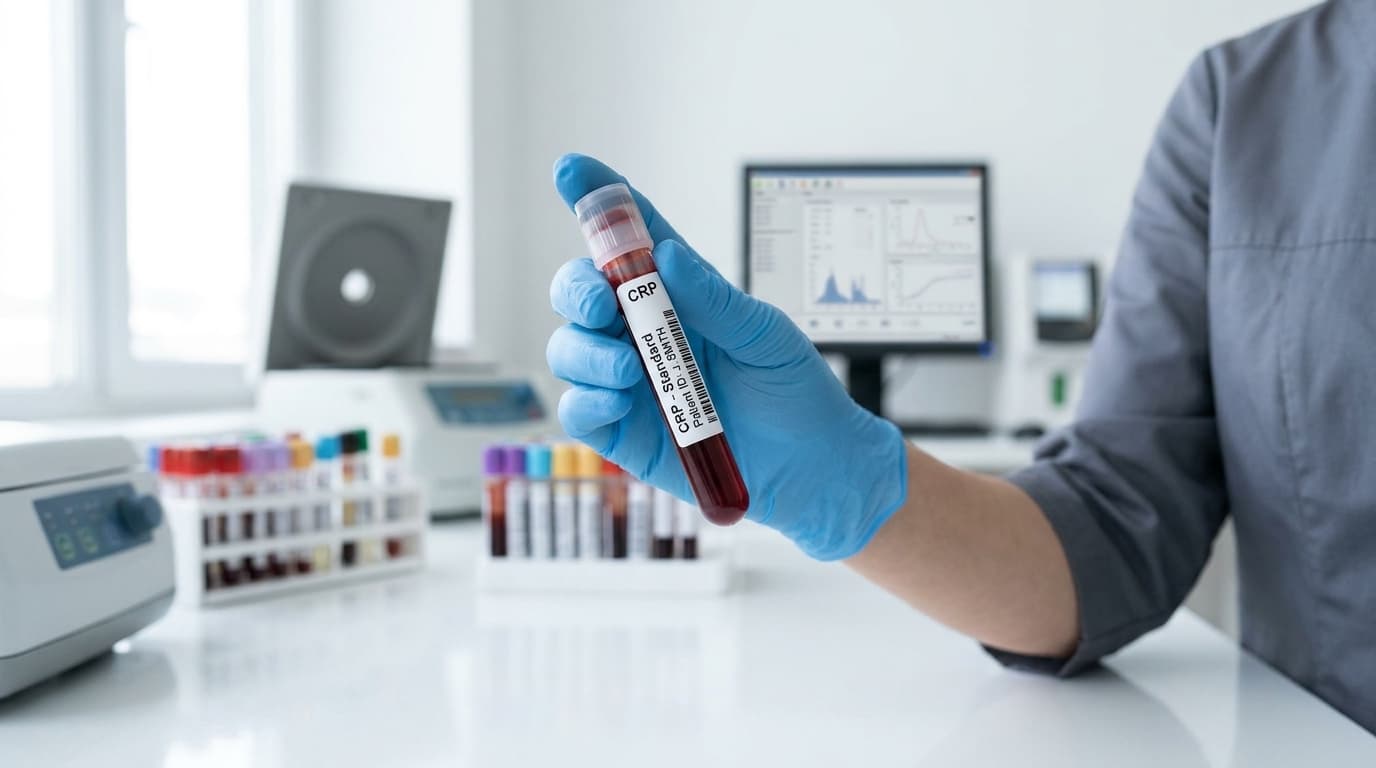

C-reactive protein (CRP) is a protein made by the liver that rises in the blood when inflammation occurs. A CRP blood test helps doctors investigate infections, inflammatory conditions, and tissue injury. A more sensitive version, called high-sensitivity CRP (hs-CRP), can also contribute to cardiovascular risk assessment in selected people.
A high result is a clue, not a diagnosis. CRP does not identify where inflammation is occurring or what is causing it. Its meaning depends on the level, symptoms, medical history, and other test findings. The distinction between standard CRP and hs-CRP is particularly important because the tests have different purposes and must be interpreted differently.
What Is C-Reactive Protein (CRP)?
C-reactive protein is an acute-phase protein produced mainly by the liver in response to inflammation. Acute-phase proteins are substances whose blood concentrations change when the body responds to infection, injury, or another inflammatory trigger. CRP is part of the immune response and helps the body recognize damaged cells and certain microorganisms.
CRP is a nonspecific inflammation marker. It can indicate that an inflammatory response is occurring, but it cannot identify the disease responsible for it. Doctors therefore interpret the result alongside symptoms, examination findings, and other tests.
What CRP Does
When the immune system detects infection or tissue damage, immune cells release signaling substances called cytokines. These signals prompt the liver to produce more CRP, causing its concentration in the blood to rise.
CRP can begin increasing within approximately 6–12 hours after an acute inflammatory event and often reaches a peak within 24–48 hours. It may fall relatively quickly once the underlying cause is controlled or resolves. This changing pattern makes CRP useful for monitoring inflammation over time.
The amount produced depends on the nature and intensity of the inflammatory response. A minor infection may cause a small increase, while severe infection or major tissue injury can lead to a much higher result. However, the number does not always correspond directly to how unwell someone feels.
What Is a CRP Blood Test?
CRP in a blood test measures the concentration of C-reactive protein in the blood sample. Doctors commonly order it when symptoms or examination findings suggest inflammation, or when they need to monitor an existing condition.
The test can help doctors:
Investigate unexplained symptoms: A raised result may support further investigation when someone has fever, pain, swelling, or other signs of inflammation.
Monitor an inflammatory condition: Changes in CRP may help assess whether a condition is becoming more or less active.
Follow treatment response: A falling level may indicate that inflammation is decreasing, although it does not prove that the underlying problem has resolved.
Assess recovery: CRP may be measured after surgery or during treatment for an infection.
CRP cannot identify the source of inflammation, diagnose a specific infection, or reliably distinguish bacterial from viral infections. A normal result also does not rule out every inflammatory or autoimmune condition.
Why Is a CRP Test Done?
A doctor may request a CRP test when symptoms suggest inflammation or when an established condition needs monitoring. The test may also be used after surgery or, in its high-sensitivity form, as part of cardiovascular risk assessment. The reason for testing determines which version is appropriate and how the result should be interpreted.
Detecting and Monitoring Infection and Inflammation
CRP may be measured when someone has fever, chills, unexplained pain, or signs of infection. It provides additional information about the body's inflammatory response but does not reveal which microorganism is responsible.
CRP should not be used alone to decide whether antibiotics are necessary. Both bacterial and viral infections can raise the level, and the result must be considered alongside the clinical assessment and, when appropriate, cultures or other tests.
Monitoring Inflammatory Conditions
Some autoimmune and inflammatory diseases cause ongoing or recurring inflammation. Autoimmune conditions develop when the immune system mistakenly attacks the body's own tissues. CRP may help doctors assess inflammatory activity and monitor response to treatment.
Conditions in which CRP may be useful include:
Rheumatoid arthritis: CRP may rise during periods of active joint inflammation and help assess response to treatment.
Inflammatory bowel disease: The result may provide information about inflammation associated with Crohn's disease or ulcerative colitis.
Polymyalgia rheumatica: CRP and other tests can support assessment of this condition, which commonly causes pain and stiffness around the shoulders and hips.
Vasculitis: CRP may be included in the investigation and monitoring of inflammation affecting blood vessels.
CRP does not behave in the same way in every condition. Some people with systemic lupus erythematosus, for example, may have only a modest increase despite active disease. A normal or mildly raised result therefore cannot exclude every inflammatory disorder.
Assessing Heart Disease Risk
High-sensitivity C-reactive protein (hs-CRP) measures very small concentrations of CRP. It may help refine cardiovascular risk assessment in selected people who are otherwise well.
Low-grade inflammation is involved in atherosclerosis, the buildup of plaque in artery walls. An elevated hs-CRP result may provide additional information about cardiovascular risk, but it does not diagnose coronary artery disease or replace cholesterol testing, blood pressure measurement, and assessment of other risk factors.
hs-CRP is not a routine screening test for everyone. A doctor considers whether the result is likely to add useful information before requesting it.
After Surgery and in Hospital
Surgery causes tissue injury, so CRP commonly rises during the body's normal healing response. Doctors may monitor the level after an operation when they need to assess inflammation or investigate a possible complication.
An elevated CRP after surgery does not automatically mean that an infection has developed. The type of operation, timing of the test, recovery progress, and other clinical findings all matter.
Standard CRP vs. High-Sensitivity CRP
Standard CRP and high-sensitivity CRP measure the same protein, but the laboratory methods differ in their ability to detect low concentrations. Standard CRP is generally used to investigate more noticeable inflammation, while hs-CRP may help assess cardiovascular risk in people who are otherwise well.
Standard CRP
Standard CRP is used to investigate or monitor infections, inflammatory diseases, and tissue injury. It measures concentrations commonly associated with these conditions and is usually reported in mg/L or mg/dL.
Many laboratories consider a standard CRP below approximately 5 mg/L to be within the reference range, although some use a cutoff closer to 10 mg/L. A result above the laboratory's range indicates an elevation, but it does not establish the cause.
High-Sensitivity CRP (hs-CRP)
The hs-CRP test uses a more sensitive method to measure small increases in CRP that may not be clinically significant on a standard test. Its main use is to contribute to cardiovascular risk assessment.
hs-CRP is most useful when measured in someone who is not experiencing an acute infection or another temporary inflammatory condition. A result above 10 mg/L may reflect an acute inflammatory cause rather than a person's usual cardiovascular risk. In that situation, the doctor may recommend repeating the test after recovery.
An elevated hs-CRP result does not mean that a person has heart disease. It is one part of a broader assessment that may include cholesterol levels, blood pressure, diabetes, smoking history, age, and family history.
Which Test Do You Need?
The appropriate test depends on why the doctor is investigating CRP. Standard CRP is generally requested when symptoms suggest infection or inflammation. hs-CRP may be considered when additional information could help refine cardiovascular risk.
If you have received a result and are unsure which test was performed, check the test name and reference range on the laboratory report. Look for “CRP” or “hs-CRP,” and ask why the test was ordered if the purpose is unclear. Standard CRP and hs-CRP are not interchangeable, even when both are reported in mg/L.
CRP Normal Range and Levels Chart
There is no single normal CRP range that applies to every laboratory and testing method. Many laboratories consider standard CRP below approximately 5 mg/L normal, while others use a limit closer to 10 mg/L. Always compare your result with the reference range printed on your own report.
The chart below summarizes commonly used interpretation patterns. Standard CRP categories describe the degree of elevation, while hs-CRP categories refer to relative cardiovascular risk in people who are otherwise well. These are general guides, not diagnostic cutoffs.
| Test and result | General interpretation |
|---|---|
| Standard CRP: below 5 mg/L (below 0.5 mg/dL) | Often within the reference range; does not exclude every inflammatory condition |
| Standard CRP: 5–10 mg/L (0.5–1 mg/dL) | Normal or mildly elevated, depending on the laboratory |
| Standard CRP: 10–40 mg/L (1–4 mg/dL) | Mild to moderate elevation; may occur with infection or inflammatory disease |
| Standard CRP: 40–100 mg/L (4–10 mg/dL) | More substantial elevation; requires interpretation alongside symptoms and clinical findings |
| Standard CRP: above 100 mg/L (above 10 mg/dL) | Marked elevation, often associated with severe infection, major injury, or severe inflammatory disease; prompt assessment is important |
| hs-CRP: below 1 mg/L (below 0.1 mg/dL) | Lower relative cardiovascular risk |
| hs-CRP: 1–3 mg/L (0.1–0.3 mg/dL) | Average relative cardiovascular risk |
| hs-CRP: above 3 mg/L (above 0.3 mg/dL) | Higher relative cardiovascular risk |
| hs-CRP: above 10 mg/L (above 1 mg/dL) | Possible acute inflammation; usually reassessed after the temporary cause has resolved |
CRP Units: mg/L vs. mg/dL
CRP results may be reported in milligrams per liter (mg/L) or milligrams per deciliter (mg/dL). These units describe the same measurement using different volume scales.
The conversion is 1 mg/dL = 10 mg/L.
For example, 5 mg/L equals 0.5 mg/dL, 10 mg/L equals 1 mg/dL, 50 mg/L equals 5 mg/dL, and 100 mg/L equals 10 mg/dL. Always check the unit before comparing your result with a chart or information found online. A result of 10 mg/dL is equivalent to 100 mg/L, not 10 mg/L.
Why Normal Ranges Differ Between Labs
Laboratories may use different testing equipment, methods, and reference intervals. This can lead to differences in the stated normal range, even when the same type of test is performed.
When reviewing a result, use the laboratory's reference interval rather than a cutoff from another hospital or website. Confirm whether the test was standard CRP or hs-CRP, and consider the timing of the measurement. An infection, injury, strenuous exercise, or recent operation may affect the result.
Age, pregnancy, and other individual factors may also influence CRP. The result should be considered in the context of a person's health rather than against a number in isolation.
Factors That Can Raise CRP Slightly
A mild increase does not always indicate a serious illness. Several factors may be associated with low-grade inflammation or temporary changes in CRP, including higher body weight, smoking, recent strenuous exercise, pregnancy, some medications, poor sleep, and gum disease.
These factors do not automatically explain an abnormal result. A doctor should consider symptoms, recent illness, medical history, and other possible causes before attributing an elevation to lifestyle.
What Causes Elevated CRP?
CRP rises in response to many different conditions, ranging from a minor infection to a serious inflammatory disease. The level can offer a clue about the intensity of the body's response, but it cannot identify the underlying cause on its own. Symptoms, medical history, examination, and other test results help determine what an elevated result means.
Infections
Infections are a common cause of raised CRP. Bacterial infections often produce higher levels than many viral infections, but there is considerable overlap. CRP cannot reliably distinguish bacterial from viral illness or determine whether antibiotics are needed.
Possible causes include respiratory infections such as pneumonia, urinary tract infections, skin and soft tissue infections such as cellulitis, and bone or joint infections such as osteomyelitis and septic arthritis. Severe systemic infection, including sepsis, can produce very high CRP levels and is a medical emergency.
Depending on the suspected source, doctors may request a complete blood count, urine analysis, cultures, or imaging. These investigations help identify the infection rather than relying on CRP alone.
Inflammatory and Autoimmune Diseases
Conditions that cause ongoing inflammation can lead to persistently or intermittently elevated CRP. The level may rise during a flare and decrease when inflammation is controlled.
Examples include rheumatoid arthritis, polymyalgia rheumatica, giant cell arteritis, inflammatory bowel disease, and vasculitis. Symptoms vary by condition and may include joint pain and stiffness, bowel problems, muscle aches, headaches, or other signs of inflammation.
CRP is not equally responsive in every autoimmune disease. In systemic lupus erythematosus, for example, the result may remain relatively low despite active inflammation. A normal or mildly elevated CRP cannot exclude every inflammatory condition.
Injury, Surgery, and Heart Attack
Physical damage to tissues can trigger an acute inflammatory response and raise CRP. This may happen after an accident, burn, major operation, or other injury.
A heart attack also damages heart muscle and can lead to an increase in CRP. However, CRP is not a test for diagnosing a heart attack. Anyone with possible heart attack symptoms needs urgent assessment, including an electrocardiogram and appropriate cardiac blood tests such as troponin.
After surgery, CRP may rise as part of normal healing. Doctors consider the timing and pattern of the result, the type of operation, and signs of complications before deciding whether further investigation is necessary.
Cancer and Other Chronic Conditions
Some cancers are associated with inflammation and may cause elevated CRP. However, CRP is not a cancer screening test and cannot confirm or rule out cancer. A raised result alone is not a reason to assume that cancer is present.
Other chronic conditions, including chronic kidney disease and diabetes, may also be associated with higher CRP. The relationship varies, so doctors consider the person's overall health and other test results.
Lifestyle and Metabolic Factors
Lifestyle and metabolic factors are more commonly associated with mild, persistent elevations than with very high CRP levels. They may contribute to low-grade inflammation over time.
Obesity and abdominal fat, smoking, physical inactivity, poor sleep, and gum disease may be associated with increased inflammatory activity. Addressing these factors can support general health, but lifestyle changes should not replace medical evaluation when CRP is clearly elevated or symptoms are present.
What a Very High CRP Can Mean
A standard CRP level above 100 mg/L is a marked elevation. It is often associated with severe infection, major tissue injury, or severe inflammatory disease and needs prompt medical assessment, particularly when accompanied by fever, worsening pain, weakness, or other signs of illness.
A very high result does not identify the diagnosis by itself. Doctors may need to check vital signs, examine the patient, order additional blood tests, collect cultures, or arrange imaging to find the cause. The urgency of care depends on the person's condition, not the CRP number alone.
How Stress Affects CRP
Psychological stress can influence the body's immune and inflammatory responses. Research has found associations between chronic stress, depression, poor sleep, and modestly higher CRP levels in some groups. However, these relationships are complex, and stress alone rarely explains a clearly elevated result.
What the Research Shows
Stress activates systems that help the body respond to perceived threats, including the nervous system and hormonal pathways. When stress is prolonged, changes in sleep, behavior, and immune regulation may contribute to low-grade inflammation.
Research has reported associations between higher CRP and chronic psychological stress, depression, poor sleep, and stress-related lifestyle changes. These findings describe associations across groups. They do not mean that someone with anxiety, depression, or poor sleep will necessarily have high CRP.
Limits of the Evidence
The relationship between stress and CRP is not straightforward. Studies differ in how they measure stress, how long participants are followed, and which other health factors are taken into account.
Body weight, smoking, physical activity, sleep quality, chronic illness, and medication use can all influence CRP. It can therefore be difficult to determine how much of an elevated result is directly related to psychological stress.
Stress is not a sufficient explanation for a marked increase. A high CRP result should not be dismissed as stress-related without considering infection, tissue injury, and inflammatory disease.
What This Means If Your CRP Is High
If your CRP is elevated, the first step is to review the result with a doctor and investigate possible medical causes. Stress management and better sleep may support overall health, but they should not replace an appropriate assessment.
How the CRP Test Is Done and How to Prepare
A CRP test is usually performed using a blood sample taken from a vein in the arm. The sample is sent to a laboratory, where the amount of CRP is measured. Some clinics also use rapid point-of-care tests, which can provide a result during the appointment.
Most people do not need special preparation for a CRP test alone. Before testing:
Ask whether fasting is required: CRP by itself usually does not require fasting, but other blood tests ordered at the same time may.
Mention your medications: Tell the doctor about prescription medicines, over-the-counter products, vitamins, and supplements. Do not stop prescribed medication unless your doctor advises you to.
Report recent illness or injury: An infection, strenuous exercise, or recent operation may affect the result.
Confirm the type of test: Ask whether the request is for standard CRP or hs-CRP, particularly if it is intended to assess cardiovascular risk.
The blood draw usually takes only a few minutes. The time needed to receive results depends on the laboratory, testing method, and whether the request is routine or urgent. Your healthcare provider or laboratory can explain when the report is expected.
If hs-CRP is being used for cardiovascular risk assessment, testing should generally take place when you are well. A result above 10 mg/L may reflect a temporary inflammatory response and is usually reassessed after approximately 2–3 weeks, once the acute illness has resolved.
What to Do If Your CRP Is High
A high CRP result should be interpreted with a doctor rather than treated as a problem in itself. The next step depends on the level, the reason for testing, whether symptoms are present, and what other investigations show. There is no treatment for CRP itself; management focuses on identifying and treating the cause.
Repeat Testing and Finding the Cause
A doctor may recommend repeating CRP or ordering additional investigations. A repeat measurement can show whether the level is falling, remaining elevated, or continuing to rise.
Depending on your symptoms and medical history, the next steps may include reviewing recent illness, surgery, injury, or changes in an existing condition. A doctor may also check a complete blood count, kidney function, liver tests, or other inflammatory markers. Urine tests, cultures, imaging, or targeted investigations for inflammatory disease may be appropriate when symptoms point to a particular cause.
Not everyone with a mildly raised result needs extensive investigation. The doctor decides what is appropriate based on the overall clinical picture.
Lifestyle Measures That Are Linked to Lower CRP
Some everyday habits are associated with lower levels of chronic inflammation. They can support cardiovascular and metabolic health, although they cannot replace treatment for an infection or inflammatory disease.
A healthy weight, regular physical activity, a balanced Mediterranean-style diet, avoiding tobacco, adequate sleep, and practical ways of managing ongoing stress may support general health. Choose activities that suit your health and fitness, and increase exercise gradually according to your abilities and medical advice.
Do not rely on supplements marketed as CRP-lowering treatments. Their benefits and safety vary, and they may interact with medication. Discuss supplements with your doctor before taking them.
CRP and Heart Risk
When hs-CRP is used in cardiovascular risk assessment, the result is considered alongside established risk factors. These include LDL and HDL cholesterol, blood pressure, diabetes, smoking, age, and family history of cardiovascular disease.
A persistently elevated hs-CRP may be considered a risk-enhancing factor in some people. Cardiovascular guidance uses a level around 2 mg/L or higher as a factor that can support preventive treatment decisions in the appropriate clinical context. This does not mean that everyone with this result needs a statin.
Statins lower LDL cholesterol and can also reduce hs-CRP. A doctor may consider statin treatment or changes to an existing plan after reviewing overall cardiovascular risk, medical history, and individual circumstances. Do not start, stop, or change medication based on an hs-CRP result alone.
When to Seek Prompt Medical Care
Seek urgent medical assessment if a high CRP result occurs alongside concerning symptoms, including:
Fever with severe or rapidly worsening illness: This may indicate a significant infection or another acute condition.
Severe or worsening pain: This is particularly concerning when accompanied by fever, swelling, or a sudden change in general health.
Chest pain or shortness of breath: These symptoms may indicate a serious heart or lung problem and should not wait for a routine appointment.
Confusion, fainting, or marked weakness: These can be signs of a medical emergency.
A new headache after age 50 with scalp tenderness, jaw pain while chewing, or vision changes: These symptoms may indicate giant cell arteritis, which requires urgent assessment to reduce the risk of permanent vision loss.
Do not wait for a repeat CRP test if you have severe symptoms. Your symptoms and overall condition determine how urgently you need care.
CRP vs. Other Inflammation Markers
CRP is one of several blood markers used to investigate inflammation. Doctors may request other tests when they need additional information or when a condition affects inflammatory markers differently.
The erythrocyte sedimentation rate (ESR) measures how quickly red blood cells settle in a tube over a set period. Like CRP, it is a nonspecific inflammation marker, but it changes more slowly and can be influenced by factors such as age, anemia, and pregnancy. CRP often rises and falls more quickly, which can make it useful for monitoring changes over a shorter period.
Ferritin is a protein that stores iron, but it also behaves as an acute-phase reactant. This means ferritin can rise during inflammation even when the body's iron stores are not increased. Doctors may interpret ferritin alongside CRP and other iron studies to understand whether inflammation is affecting the result. For more detail, see the guide to ferritin levels.
Other tests, such as a complete blood count, white blood cell count, and specific infection tests, may help investigate the reason for inflammation. No single marker provides a complete diagnosis; the choice of tests depends on the symptoms and suspected condition.
Blood Testing and Inflammation Evaluation at Medical Park
At Medical Park hospitals in Turkey, CRP testing can be included in a broader health assessment when clinically appropriate. During a check-up, Internal Medicine specialists review the patient's medical history, current health concerns, and examination findings to determine which blood tests and other investigations are needed. Depending on the check-up package and hospital, laboratory testing may include CRP alongside other measurements that help assess general health and identify findings that require further evaluation.
If a check-up reveals an elevated CRP level, the result is interpreted in context rather than treated as a diagnosis. Internal Medicine specialists may recommend repeat testing or further investigations, or refer patients to Rheumatology, Infectious Diseases, or Cardiology when the findings indicate a need for more specialized assessment. The appropriate follow-up depends on the patient's symptoms, medical history, and test results.
Medical Park’s International Patient Services Center helps international patients coordinate check-up appointments, consultations, diagnostic tests, and follow-up arrangements in Turkey. This support helps patients organize their health assessments and understand any recommended next steps.




 Makaleye Dön
 E-Result