


 TR
 EN
 RU
 AR
 FR


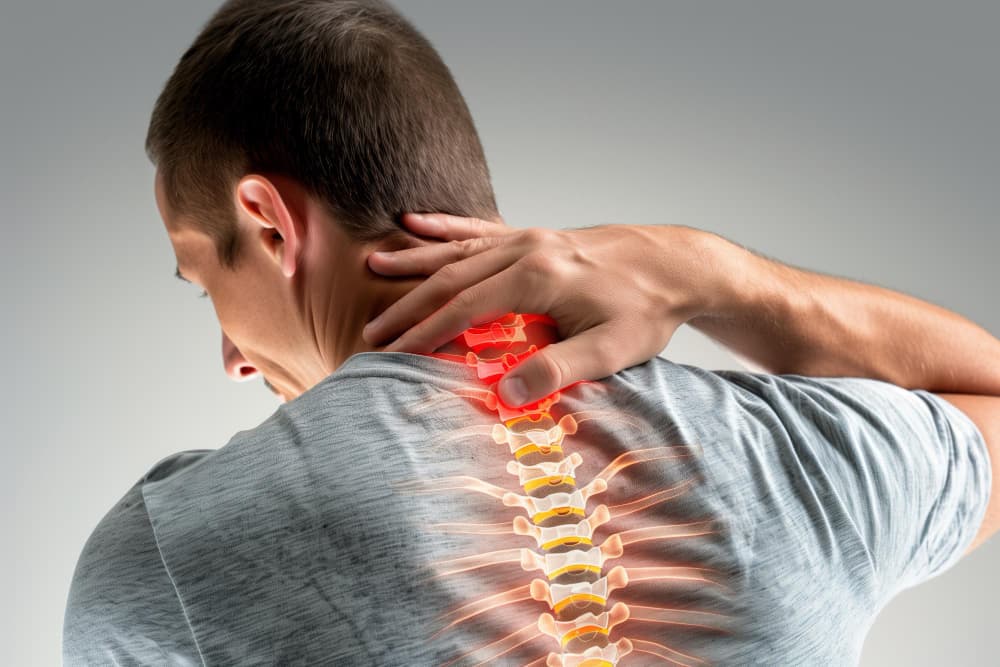

Cervical spondylosis is a common age-related change in the neck that affects the discs, bones, and joints of the spine. Some people have these changes without noticeable symptoms, while others experience neck pain, stiffness, headaches, or discomfort that spreads into the shoulders and arms. Although the diagnosis can sound concerning, most people manage their symptoms with nonsurgical treatment.
Treatment often focuses on easing pain, maintaining movement, and improving neck strength. However, progressive weakness, difficulty walking, or loss of hand coordination may indicate pressure on the spinal cord and require prompt evaluation.
What Is Cervical Spondylosis?
Cervical spondylosis describes the gradual wear and tear of the structures in the cervical spine, which is the seven-vertebra section of the spine in the neck. These bones support the head, allow the neck to move, and protect the spinal cord and the nerves that travel into the arms.
Between the vertebrae are intervertebral discs, which act as cushions and help the neck bend and turn. Small joints and ligaments also support movement and stability. Over time, these structures can change, sometimes leading to pain or reduced movement.
Cervical spondylosis is also called osteoarthritis of the neck or degenerative neck disease. Osteoarthritis is a type of arthritis in which the tissues that help a joint move smoothly gradually deteriorate. In the neck, this may involve changes to the discs, the small joints between vertebrae, and the bone around them.
These changes are common with aging, particularly after age 60. They do not always cause pain or disability, and the degree of degeneration seen on a scan does not necessarily reflect how severe a person's symptoms will be.
What Happens to the Neck With Age?
Several changes may occur as the cervical spine ages:
Disc dehydration and thinning: Spinal discs gradually lose some of their water content and flexibility. They may become thinner and provide less cushioning between the vertebrae.
Bone spurs: The body may develop small areas of extra bone, called osteophytes, around the edges of the vertebrae. These growths are part of the body's response to changes in the spine, but they can sometimes narrow the spaces where nerves pass.
Joint degeneration: The small joints at the back of the spine may develop osteoarthritis, which can contribute to pain and stiffness during movement.
Ligament thickening: Ligaments are strong bands of tissue that help hold the vertebrae together. Some may thicken over time, potentially reducing the space available for the spinal cord or nerves.
These changes may occur together. If they narrow the openings through which nerves leave the spine, they can cause nerve irritation or compression. If they narrow the spinal canal—the passage that contains the spinal cord—they may place pressure on the cord.
Spondylosis vs. Spondylitis and Other Spinal Conditions
Similar-sounding spinal terms describe different problems:
Spondylosis: Age-related degeneration of the discs, joints, and bones of the spine.
Spondylitis: Inflammation of the vertebrae, often associated with inflammatory conditions such as ankylosing spondylitis.
Spondylolisthesis: A condition in which one vertebra slips out of its usual position relative to another.
Spondylolysis: A defect or stress-related fracture in a small section of a vertebra, most often in the lower back.
Cervical spondylosis can also coexist with a herniated disc or spinal stenosis. A herniated disc occurs when material from a spinal disc pushes through its outer layer and may irritate a nearby nerve. Spinal stenosis means that a space within the spine has become narrower; in the neck, this can affect the nerve roots or spinal cord. These conditions can have overlapping symptoms, so a clinical assessment is important.
Symptoms of Cervical Spondylosis
Cervical spondylosis symptoms vary depending on which structures are affected. Some people notice only mild stiffness, while others develop pain that travels into an arm or symptoms related to spinal cord compression. Symptoms may come and go and can change over time.
Neck Pain and Stiffness
Neck pain and stiffness are common symptoms. Discomfort may be worse after holding the head in one position for a long time, such as while working at a computer or looking down at a phone. Turning the head may feel difficult, particularly first thing in the morning or after a period of inactivity.
Pain may stay in the neck or spread into the shoulders and upper back. Some people notice muscle tightness or tenderness around the neck. These symptoms can have many causes, however, and do not by themselves confirm cervical spondylosis.
Headaches, Shoulder Pain, and Other Symptoms
Cervical spondylosis may contribute to headaches that begin near the base of the skull and spread toward the back or side of the head. Pain may also affect the shoulder blades or upper back. These symptoms can be related to irritated joints, restricted movement, or muscle tension, but other causes of headaches and shoulder pain may need to be considered.
Although cervical spondylosis typically affects the neck, age-related degeneration can also affect the lower spine and contribute to chronic back pain. Symptoms often vary with activity and posture.
Gentle movement and regular changes in position may help some people, while prolonged inactivity can increase stiffness. Sudden, severe, or unusual headaches should not automatically be attributed to neck degeneration.
Symptoms of Nerve Root Compression
The spinal nerves branch out from the spinal cord through small openings between the vertebrae. When a nerve root is irritated or compressed by a bone spur, disc change, or narrowing, the resulting condition is called cervical radiculopathy.
Symptoms may include:
Pain that travels from the neck into one shoulder or arm, sometimes reaching the hand.
Tingling or a pins-and-needles sensation in the arm or fingers.
Numbness or reduced sensation in part of the arm or hand.
Muscle weakness that makes lifting, gripping, or other everyday tasks more difficult.
The location of the symptoms can help a clinician identify which nerve may be affected. Persistent or worsening numbness or weakness needs medical evaluation, particularly if it interferes with normal activities.
Symptoms of Spinal Cord Compression
The spinal cord carries signals between the brain and the rest of the body. When narrowing in the cervical spine puts pressure on the cord, it can cause cervical myelopathy. This is different from a pinched nerve because it can affect coordination, walking, and function in several limbs.
Warning signs may include:
Difficulty fastening buttons, writing, or handling small objects because the hands feel clumsy.
Problems with balance, unsteady walking, or more frequent falls.
Weakness, heaviness, or stiffness in the arms or legs.
Changes in coordination or difficulty controlling movements.
New changes in bladder or bowel function in more serious cases.
Possible myelopathy requires prompt medical assessment. Seek urgent care for rapidly worsening weakness, new difficulty walking, or loss of bladder or bowel control. These symptoms should not be managed with home exercises alone.
What Causes Cervical Spondylosis?
The main cause of cervical spondylosis is the gradual change in the spine that occurs with age. Repeated everyday movement and the demands placed on the neck over many years may contribute, but degeneration can develop even in people who have not had a particular injury or obvious strain.
As discs lose flexibility and the joints change, the body may form bone spurs and other tissues may thicken. These changes can reduce movement or narrow the spaces around nerves. Whether they cause symptoms depends on their location, extent, and effect on nearby structures.
Cervical Spondylosis Risk Factors
Age is the strongest risk factor, but other factors may contribute to spinal degeneration or increase the likelihood of neck symptoms:
Previous neck injury: Whiplash or another injury may damage structures in the cervical spine and contribute to later problems.
Repetitive physical strain: Jobs or activities involving repeated heavy lifting, sustained awkward positions, or frequent neck movement may increase strain on the neck.
Family history: Genetic factors may influence the structure of spinal discs and how they change with age.
Smoking: Smoking is associated with poorer disc health and can affect the body's ability to maintain and repair tissues.
Prolonged static posture: Staying in one position for long periods can increase muscle fatigue and neck discomfort, although evidence that phone use or poor posture directly causes cervical spondylosis is limited.
Ergonomic adjustments can reduce unnecessary strain and help manage symptoms, but they cannot guarantee that age-related changes will be prevented.
Cervical Spondylosis Complications
Many people never develop serious complications. When degeneration affects nearby nerves or the spinal cord, however, symptoms can become more disruptive.
Possible complications include persistent neck pain, reduced neck movement, and cervical radiculopathy. Nerve compression may cause ongoing tingling, numbness, or weakness. In some cases, prolonged nerve dysfunction can lead to lasting changes in sensation or muscle function.
The most concerning complication is cervical myelopathy caused by spinal cord compression. It can affect hand coordination, balance, walking, and limb strength. If compression progresses, some neurological problems may not fully resolve, even after treatment. Early assessment is therefore important when coordination, walking, or strength changes.
How Is Cervical Spondylosis Diagnosed?
Diagnosis starts with a review of symptoms and medical history, followed by a physical examination. A clinician may ask when the pain began, whether it travels into the arms, what makes it better or worse, and whether there has been an injury. They may also ask about numbness, weakness, balance, and changes in bladder or bowel function.
Imaging tests can show changes in the cervical spine, but the results must be interpreted alongside symptoms and examination findings. Age-related changes are common in people who have no neck pain, so an abnormal scan does not automatically establish the cause of discomfort.
Physical and Neurological Examination
During the examination, the clinician may assess neck movement, tenderness, posture, and muscle strength. They may test sensation and reflexes and ask the patient to perform certain movements or tasks. If spinal cord compression is suspected, walking and coordination may also be assessed.
These findings help determine whether symptoms are more consistent with muscle or joint pain, nerve root compression, or a problem affecting the spinal cord. They also help guide the choice of imaging or further tests.
X-Ray for Cervical Spondylosis
An X-ray of the cervical spine can show the alignment of the vertebrae, reduced space between discs, and bone spurs. An X-ray for cervical spondylosis may be useful when assessing neck pain or suspected degenerative changes.
However, an X-ray does not show the spinal cord or nerve roots in detail. It also cannot reliably establish whether a visible bone spur or disc-space change is responsible for a person's symptoms. Since similar findings are common in people without pain, the result must be considered alongside the clinical examination.
MRI, CT, and Nerve Tests
Other tests may be recommended depending on the symptoms:
Magnetic resonance imaging (MRI): MRI uses a magnetic field and radio waves to produce detailed images of discs, ligaments, nerves, and the spinal cord. It may be needed when symptoms persist, nerve compression is suspected, or signs of myelopathy are present.
Computed tomography (CT): CT uses X-rays to create detailed cross-sectional images of bone. It may help clarify bone changes or support surgical planning when more detail is needed.
Electromyography (EMG) and nerve conduction studies: These tests measure electrical activity in muscles and how signals travel along nerves. They may help distinguish nerve problems in the neck from conditions affecting nerves elsewhere, such as at the wrist.
Not everyone needs every test. The clinician selects investigations according to the symptoms, examination findings, and whether the results are likely to change the treatment plan.
Cervical Spondylosis Treatment
Cervical spondylosis treatment depends on the symptoms and whether nerves or the spinal cord are affected. Most people begin with nonsurgical care, particularly when symptoms involve pain and stiffness without progressive neurological changes. The goal is to reduce discomfort, preserve movement, and support daily activities rather than reverse every age-related change visible on a scan.
Home Care and Daily Adjustments
Several simple measures may help ease cervical spondylosis symptoms:
Keep moving: Continue comfortable daily activities as tolerated. Prolonged bed rest can increase stiffness and reduce strength.
Use heat or cold: A warm pack may relax tense muscles, while a cold pack may help some people with recent pain. Wrap packs in a towel and avoid applying them directly to the skin.
Adjust your workstation: Keep the screen near eye level, support the arms, and change position regularly instead of holding the neck still for hours.
Choose a comfortable pillow: A pillow that keeps the neck in a neutral position may improve comfort during sleep. There is no single pillow type that works for everyone.
Take movement breaks: Short, regular breaks from sitting or looking down may reduce muscle fatigue and stiffness.
These adjustments can help manage symptoms, but they do not treat significant spinal cord compression. New or worsening neurological symptoms need medical assessment.
Medication
Medication may be used for short-term symptom relief, depending on a person's medical history and the type of pain.
Nonsteroidal anti-inflammatory drugs (NSAIDs): Medicines such as ibuprofen reduce pain and inflammation. They may not be suitable for people with certain stomach, kidney, heart, or blood-pressure problems, and should be used according to medical advice.
Muscle relaxants: These may sometimes be prescribed for short-term use when muscle spasms are contributing to pain. They can cause drowsiness and other side effects.
Medicines for nerve pain: Certain prescription medicines may be considered for persistent burning, shooting, or nerve-related pain. Their suitability depends on the symptoms and the person's overall health.
Medication can reduce symptoms but does not remove bone spurs or restore a narrowed spinal canal. A clinician can help assess potential side effects and interactions.
Physical Therapy and Rehabilitation
Physical therapy is an important part of nonsurgical treatment for many people with cervical spondylosis. A physiotherapist can develop an individualized program that may include gentle mobility exercises, strengthening, posture guidance, and strategies for returning to normal activities.
Treatment may focus on improving the endurance of the neck and shoulder muscles, which help support the head during daily movement. A physiotherapist can also help identify activities that aggravate symptoms and adapt exercises to the person's abilities.
Traction, which applies a controlled pulling force to the neck, may be considered for selected patients, particularly when symptoms suggest nerve root irritation. It is not appropriate for everyone and should only be used with professional guidance. Forceful neck manipulation should be avoided unless a qualified clinician has assessed its suitability, especially when nerve or spinal cord compression is possible.
Injections and Surgery
In selected cases, a clinician may consider an injection to help manage severe or persistent pain. Depending on the suspected source of pain, an injection may target an area around an irritated nerve or joint. Benefits vary, and injections do not correct the underlying degeneration or remove pressure from the spinal cord.
Surgery is not usually the first treatment for cervical spondylosis. It may be recommended when there is spinal cord compression, progressive neurological weakness, or severe nerve pain that has not improved with appropriate nonsurgical treatment.
The procedure depends on the location and cause of compression:
Anterior cervical discectomy and fusion (ACDF): The surgeon performs a discectomy, removing the damaged disc to relieve pressure on nearby nerves or the spinal cord. The surgeon then fuses the adjacent vertebrae using a bone graft or implant to stabilize that section of the neck.
Cervical disc replacement: In selected patients, a damaged disc is replaced with an artificial one, with the aim of maintaining movement at that level.
Laminoplasty: The surgeon reshapes or opens part of the back of the vertebrae to create more space for the spinal cord.
The choice of surgery depends on the imaging findings, neurological examination, overall health, and the number of spinal levels affected. A surgeon should explain the expected benefits, limitations, risks, and recovery requirements before a decision is made.
Cervical Spondylosis Exercises
Exercises for cervical spondylosis may help maintain neck movement, improve muscle control, and reduce stiffness. The right program depends on the person's symptoms and whether nerve roots or the spinal cord are affected. Anyone with new weakness, numbness, balance problems, or other possible signs of myelopathy should be medically assessed before starting neck exercises.
The following movements are examples of exercises that may be included in a supervised program. They are not suitable for every person, and a physiotherapist or clinician should confirm which are appropriate.
Gentle Range-of-Motion Exercises
These movements aim to maintain comfortable neck mobility:
Slow neck rotation: Sit upright and gently turn the head to one side, only as far as comfortable. Return to the center and repeat on the other side without forcing the movement.
Gentle side bending: Slowly tilt one ear toward the same-side shoulder while keeping the shoulder relaxed. Return to the starting position and repeat on the other side without pulling the head down.
Move slowly and stay within a comfortable range. Stop if an exercise causes sharp pain, dizziness, or symptoms that spread farther into the arm.
Strengthening and Posture Exercises
Strengthening may help the muscles support the neck and shoulder girdle during daily activities.
Chin tucks: Sit or stand upright and gently draw the chin backward, as if making a small double chin, without tilting the head up or down. Hold briefly, then relax.
Shoulder blade squeezes: Draw the shoulder blades gently toward each other while keeping the shoulders relaxed and avoiding an exaggerated arch in the back.
Gentle isometric neck exercises: With the head in a neutral position, apply light pressure with the hand against the forehead or side of the head while resisting movement. The neck should remain still; avoid strong effort.
A physiotherapist may also prescribe deep neck flexor exercises, which target small muscles that help control head position. The repetitions, duration, and intensity should be adapted to the individual rather than followed as a fixed routine.
Movements to Avoid or Modify
Avoid forceful neck twisting, sudden jerking movements, and pushing the neck into an extreme range. Do not continue an exercise that worsens arm pain, tingling, numbness, or weakness. Neck collars, traction devices, and manipulation techniques should not be used without appropriate guidance, as they may be unsuitable for some causes of cervical spine symptoms.
When to Seek Medical Care for Neck Pain
Medical assessment is advisable if neck pain persists, repeatedly returns, limits daily activities, or spreads into an arm. Numbness, tingling, or weakness also warrants evaluation, especially if symptoms are worsening.
Seek urgent medical care for:
New or progressive weakness in an arm or leg.
Increasing difficulty with balance, walking, or hand coordination.
New loss of bladder or bowel control.
Neck pain after a significant injury.
Fever with a stiff neck or severe headache.
Neck pain accompanied by chest pain or shortness of breath.
A sudden, severe, or unusual headache.
These symptoms can have causes other than cervical spondylosis, some of which require urgent treatment. Do not assume that a new or severe symptom is simply part of an existing neck condition.
Living With Cervical Spondylosis and Prevention
Cervical spondylosis often remains stable, and symptoms may fluctuate over time. Many people improve with nonsurgical treatment and continue their usual activities. Imaging changes may remain even when pain improves, because symptom relief does not require the spine to return to its earlier appearance.
Regular physical activity, appropriate strengthening, workstation adjustments, and breaks from prolonged static positions can help manage discomfort. Stopping smoking may support disc and general tissue health, while maintaining a healthy weight can support overall mobility and well-being. These measures may help reduce strain and improve function, but they cannot guarantee prevention of age-related spinal changes.
A balanced approach is usually more helpful than avoiding movement out of fear of further damage. Activity should be adjusted to symptoms, and a rehabilitation professional can help identify safe ways to maintain strength and mobility.
Spine Care and Cervical Spondylosis Treatment at Medical Park
At Medical Park hospitals in Turkey, patients with cervical spondylosis can receive an individualized treatment plan developed around their symptoms, examination findings, and imaging results. Neurosurgery and Orthopedics and Traumatology specialists assess spinal degeneration and determine whether nerve or spinal cord compression requires surgical intervention. Physical Therapy and Rehabilitation specialists contribute to the same care plan by addressing pain, stiffness, reduced mobility, and muscle weakness through tailored rehabilitation programs.
Depending on the patient's needs, treatment may combine medication, supervised physical therapy, and rehabilitation exercises, with surgery considered when compression causes significant or progressive neurological problems or when symptoms do not improve with nonsurgical care.
By coordinating specialist assessment, treatment, and rehabilitation, the care team can address both the underlying spinal problem and its effects on daily function. Medical Park’s International Patient Services Center can help international patients coordinate consultations, diagnostic evaluations, treatment planning, and follow-up throughout their care.
To learn more about the orthopedic services, treatment options, and specialist care available at Medical Park, explore our guide to orthopedic treatment in Turkey.




 Makaleye Dön
 E-Result
 WhatsApp