


 TR
 EN
 RU
 AR
 FR


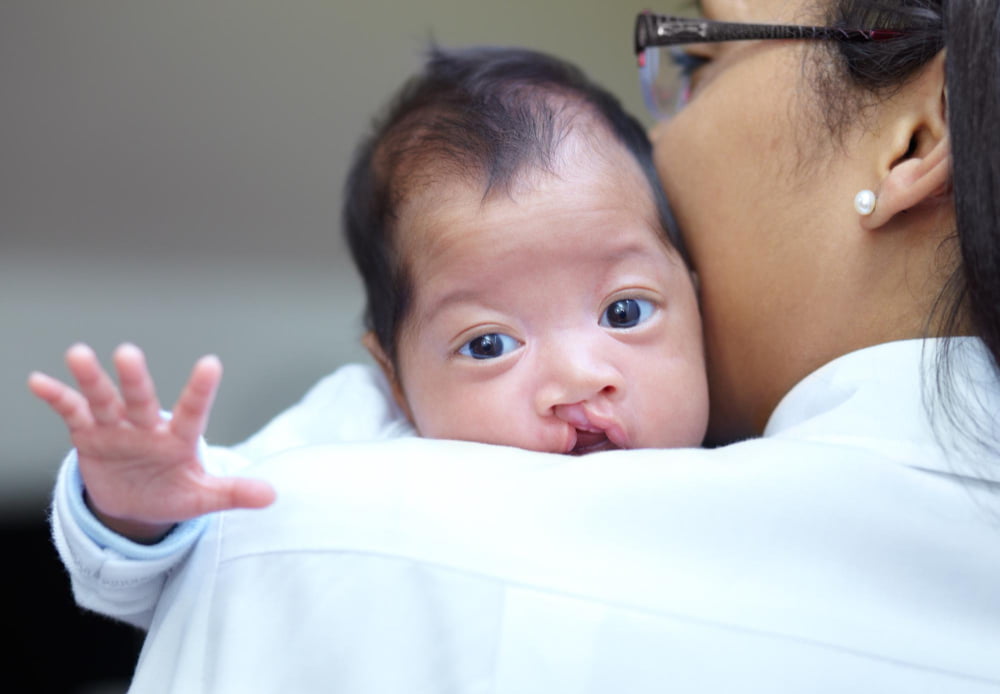

An orofacial cleft is a birth condition that occurs early in pregnancy when the tissue forming a baby's upper lip or the roof of their mouth does not fuse completely. A gap in the upper lip is called a cleft lip, while a gap in the roof of the mouth is called a cleft palate. A child may have either condition or both.
Although a cleft diagnosis can feel overwhelming, treatment can improve feeding, speech, facial function, and appearance. Surgical repair is often performed in stages, with coordinated follow-up supporting the child's development as they grow.
What Are Cleft Lip and Cleft Palate?
Cleft lip and cleft palate affect the upper lip, the roof of the mouth, or both. Their appearance and extent depend on which tissues are involved.
Cleft Lip
Cleft lip forms when the tissues of the upper lip do not join fully during fetal development. The opening may be small or extend toward the nose. It may also involve the gum line, affecting tooth development and alignment.
Cleft lip is classified according to its location and extent:
- Unilateral cleft lip: The opening affects one side of the upper lip.
- Bilateral cleft lip: The opening affects both sides.
- Complete cleft lip: The opening extends through the full height of the lip and may involve the gum and nose.
- Incomplete cleft lip: The opening affects only part of the lip.
These differences help the surgical team plan the repair and determine whether nasal reconstruction is needed. The term “harelip” is outdated and considered offensive.
Cleft Palate
The palate separates the mouth from the nasal cavity. The hard palate is the firm, bony front portion, while the soft palate is the flexible, muscular area toward the back. A cleft palate occurs when these tissues do not join completely.
A cleft palate can make feeding difficult because a baby may struggle to create enough suction to drink from the breast or a standard bottle. Milk may also pass into the nose. As the child grows, the cleft may affect speech and increase the risk of middle-ear fluid, ear infections, and hearing difficulties.
Cleft palate can take several forms:
- Cleft of the hard palate: The opening affects the bony front portion of the roof of the mouth.
- Cleft of the soft palate: The opening affects the muscular tissue at the back of the palate.
- Cleft of both the hard and soft palate: The opening extends through both areas.
- Submucous cleft palate: The surface tissue may appear intact, but the muscles beneath it have not joined normally.
A submucous cleft palate may not be recognized at birth. While standard newborn screening and physical examinations at birth check for visible anomalies, subtle forms like a submucous cleft may only become apparent as the child develops speech and eating habits.
Cleft Lip and Palate Together
When cleft lip and cleft palate occur together, the opening may extend from the upper lip through the gum and into the roof of the mouth. Bilateral clefts affect both sides of the upper lip and may require additional attention to the central portion of the lip, nostril shape, and tissue alignment.
Surgical planning may involve reconstructing the lip, improving the position and shape of the nostrils, closing the palate, and coordinating treatment with gum, tooth, and jaw development. The approach depends on the child's anatomy and the areas affected.
What Causes Cleft Lip and Cleft Palate?
Parents often ask what causes cleft lip or cleft palate during pregnancy. In most cases, there is no single identifiable cause. Orofacial clefts are thought to result from a combination of genetic influences and environmental factors during early fetal development. They usually occur without anything the parents knowingly did or failed to do.
Genetic and Environmental Factors
Family history can increase the likelihood of a cleft, although many affected babies have no known family history. Genetic changes may contribute independently or as part of a broader syndrome, while the cause remains unknown in other cases.
Factors associated with an increased risk include:
- Smoking during pregnancy: Smoking is associated with a higher risk of orofacial clefts.
- Certain medications: Some medicines can affect fetal development, so their safety should be reviewed with a healthcare professional before or during pregnancy.
- Folate intake: Adequate folic acid intake before conception and during early pregnancy supports fetal development, although supplementation cannot prevent every cleft.
- Genetic factors: Inherited variations and other genetic changes may contribute to cleft development.
These associations do not establish the cause of an individual child's cleft. Anyone who is pregnant or planning a pregnancy should discuss medication safety and folic acid supplementation with a healthcare professional rather than stopping prescribed medicines independently.
There is no guaranteed way to prevent every cleft. Preconception care, recommended folic acid supplementation, avoiding smoking, and reviewing medicines with a clinician can support a healthy pregnancy but cannot eliminate all risk.
When a family has had a child with a cleft, a genetic counselor or specialist can explain recurrence risk based on the child's findings and family history. They can also assess whether genetic testing may be useful.
Syndromic Clefts and Velocardiofacial Syndrome
Some clefts occur as part of a genetic syndrome that affects other parts of the body. One example is velocardiofacial syndrome, also known as 22q11.2 deletion syndrome. It may involve cleft palate or differences in palate function, heart conditions, and learning, speech, or developmental difficulties.
A cleft alone does not mean a child has a genetic syndrome. If other features or family history raise concern, further assessment may include genetic evaluation, cardiac assessment, or developmental and speech assessments. The recommended investigations depend on the child's clinical findings.
Diagnosis Before and After Birth
Cleft lip and palate may be identified during pregnancy or after delivery. Prenatal diagnosis helps families prepare for feeding support and specialist care, while examination after birth clarifies the type of cleft and the baby's immediate needs.
Ultrasound of Cleft Palate and Prenatal Detection
A routine mid-pregnancy ultrasound may identify a cleft lip, particularly when the opening is clearly visible. An isolated cleft palate is harder to detect because the roof of the mouth may not be easy to assess on standard prenatal images. Therefore, an ultrasound that does not show a cleft cannot rule out every form of cleft palate.
If a scan raises concern, the obstetric team may recommend a detailed or three-dimensional ultrasound. MRI may be considered in selected cases when additional information is needed. These prenatal tests are not necessary for every pregnancy.
A specialist can explain what the scan shows, what remains uncertain, and how the family can prepare for delivery and early care.
Cleft Lip in Newborns and the First Weeks
After birth, the priorities are feeding, growth, and assessment of the mouth and face. Babies with cleft palate may struggle to create enough suction to feed effectively. A specialist may recommend a specially designed bottle, adjustments to feeding position, and guidance on pacing feeds.
Early care commonly includes:
- Feeding support: Finding a method that helps the baby take in enough milk safely.
- Growth monitoring: Checking weight gain, hydration, and nutritional intake.
- Specialist referral: Arranging assessment by a cleft team to plan treatment and follow-up.
- Presurgical molding: Considering nasoalveolar molding for selected babies to guide the shape of the gum and nose before surgery.
Nasoalveolar molding uses a custom appliance and is not suitable or necessary for every baby. The decision depends on the cleft and the care team's approach.
The Cleft Care Team and Treatment Timeline
Cleft treatment is planned over time because the lip, palate, teeth, jaw, hearing, and speech develop at different stages. The schedule varies with the cleft, the child's health, and the care team's protocol. These ages are common planning ranges rather than fixed deadlines.
| Age or stage | Typical care and treatment |
|---|---|
| Birth to 3 months | Cleft team assessment, feeding support, growth monitoring, and treatment planning. Presurgical molding may be considered. |
| Around 3–6 months | Cleft lip repair is commonly performed, depending on the baby's health and surgical plan. |
| Around 9–18 months | Cleft palate repair is often performed, with timing chosen to support speech development and account for surgical factors. |
| From around 1 year onward | Speech and language assessment, hearing checks, dental monitoring, and developmental follow-up. |
| Around 8–11 years | An alveolar bone graft may be considered when the cleft affects the gum ridge, often alongside orthodontic treatment. |
| Teen years | Continued orthodontic and speech assessment; some patients may need nasal, lip, or jaw procedures. |
| Adulthood | Further care may address speech, dental health, nasal breathing, facial balance, scarring, or an unrepaired cleft. |
Who Is on the Cleft Team?
Cleft care may involve several specialists who work together as the child grows:
- Plastic or craniofacial surgeon: Plans and performs cleft repair and assesses whether further reconstruction may be useful.
- Pediatrician and neonatology specialists: Monitor general health, growth, feeding, and other medical needs.
- Ear, nose, and throat (ENT) specialist: Evaluates middle-ear fluid, ear infections, hearing concerns, and relevant airway or speech issues.
- Audiologist: Assesses hearing and monitors changes over time.
- Speech-language therapist: Tracks speech and language development and provides therapy or recommends further assessment.
- Orthodontist and pediatric dentist: Monitor tooth development, jaw relationships, and oral health, including preparation for bone grafting.
- Genetic specialist: Assesses possible syndromic causes and explains recurrence risk when indicated.
- Psychological support professionals: Help children and families manage the emotional and social aspects of long-term treatment.
Not every child needs every specialist at every stage. Coordinated care helps ensure that the right assessments are arranged when they become relevant.
Cleft Lip Surgery (Cheiloplasty)
Cheiloplasty is the medical term for cleft lip repair. The operation closes the opening and repositions the separated tissues and muscles. The surgeon also considers the nostrils and the relationship between the lip and nose to support function and a balanced appearance.
When Cleft Lip Surgery Is Done and What It Involves
Cleft lip surgery is commonly performed when a baby is around 3 to 6 months old. Timing depends on the child's health, the cleft's anatomy, and the team's protocol. Before surgery, the team checks that the baby is growing well and is medically ready for anesthesia.
The main goals are to close the opening, rebuild the lip muscle, improve lip shape, and address nasal shape when needed. The surgeon makes incisions according to the chosen technique, repositions the tissues, and closes the repair with sutures.
The method and length of surgery depend on the cleft's complexity and whether other procedures are performed at the same time. The team explains the expected operating time, hospital stay, and recovery plan for each child.
Repair of Unilateral and Bilateral Cleft Lip
The surgical approach differs depending on whether one or both sides of the lip are affected.
- Unilateral cleft lip repair: Restores continuity and alignment across the affected side, rebuilds the muscle, and improves the relationship between the lip and nose. A technique such as the Millard rotation-advancement repair may be used in selected cases.
- Bilateral cleft lip repair: Reconstructs both sides and carefully shapes the central portion of the upper lip. Additional planning may be needed to improve nasal form and support.
- Presurgical preparation: Some babies may benefit from nasoalveolar molding to guide the shape of the gum and nose before surgery.
The surgeon selects the technique according to the child's anatomy and clinical needs, aiming for a stable repair that supports function and appearance as the child grows.
Cleft Palate Surgery (Palatoplasty)
Palatoplasty closes a cleft in the roof of the mouth and aims to position the soft-palate muscles so they can help separate the mouth from the nose during speech and swallowing. This function supports clearer speech and helps limit air escaping through the nose when a child speaks.
When Cleft Palate Repair Is Done and What It Involves
Cleft palate repair is often performed between 9 and 18 months of age, although timing varies. The team considers the cleft's anatomy, the child's health, and the balance between supporting early speech development and other surgical factors.
During surgery, the surgeon lifts and repositions tissues along the cleft to close the opening. The soft-palate muscles are also reconstructed where needed. The procedure depends on whether the cleft affects the hard palate, soft palate, or both.
The main goals are to close the opening, restore muscle function, and support speech, feeding, and swallowing. Although repair improves separation between the mouth and nasal cavity, it does not guarantee that speech will develop without difficulty. Some children still need speech therapy, hearing care, or further assessment.
Palatoplasty Techniques
Surgeons use different approaches depending on the cleft's shape and extent, available tissue, and functional goals.
- Two-flap palatoplasty: Uses tissue flaps from the sides of the palate to close the opening.
- Furlow palatoplasty: Uses opposing tissue flaps to lengthen the soft palate and rearrange its muscles in selected cases.
- Other tailored approaches: May be chosen according to the cleft's anatomy and the surgeon's clinical judgment.
No single method is right for every child. The surgical team should explain the recommended approach and its expected benefits and limitations.
Intravelar Veloplasty and Radical Intravelar Veloplasty
Intravelar veloplasty is a technique used during palate repair to separate and reposition muscles that have not joined normally. This reconstruction helps the soft palate move more effectively during speech and swallowing.
Radical intravelar veloplasty involves a more extensive release and reconstruction of the palate muscles when indicated. The aim is to create a functional muscle sling that helps the soft palate lift and close against the back of the throat during speech.
These techniques are not necessary for every child. The surgeon determines whether they are appropriate based on the cleft's anatomy and the planned repair.
Ear, Hearing, and Speech Care
Cleft palate treatment involves more than closing the opening in the mouth. Palate muscles also help the Eustachian tubes regulate pressure and drain fluid from the middle ear. Children may therefore need hearing and speech monitoring even after palate repair.
Eustachian Tube Dysfunction and Ear Tubes
Eustachian tube dysfunction occurs when the tubes connecting the middle ear to the back of the nose do not open effectively. In children with cleft palate, differences in palate muscle function can allow fluid to build up behind the eardrum. This may reduce hearing, sometimes without obvious symptoms.
Care may include hearing tests, ear examinations, and continued monitoring. Small ventilation tubes may be placed through the eardrum when persistent fluid or related hearing problems warrant treatment. Ear tubes may sometimes be inserted during palate surgery, but they are not required for every child.
Parents should tell the care team if a child seems not to respond to sounds, has frequent ear infections, or appears to have difficulty hearing. Prompt assessment matters because hearing difficulties can affect speech and language development.
Speech Development and Velopharyngeal Insufficiency
Children with cleft palate may develop speech differences because of learned pronunciation patterns or difficulty closing the soft palate against the throat. Speech and language assessments help distinguish these causes and guide treatment.
Velopharyngeal insufficiency occurs when the soft palate and throat do not close adequately during speech. Air may escape through the nose, leading to hypernasal speech or difficulty producing certain sounds.
Management may include:
- Speech-language therapy: Helps children develop clearer speech sounds and address learned pronunciation patterns.
- Speech assessment: Determines whether speech differences relate to learned patterns, palate function, or other factors.
- Further surgical evaluation: May be recommended when the palate or surrounding tissues cannot close adequately during speech.
- Pharyngoplasty: One possible procedure for selected patients with persistent velopharyngeal insufficiency.
Speech therapy can help with sound production and language skills but cannot correct every structural cause of nasal speech. Specialist assessment determines whether therapy, surgery, or a combination is appropriate.
Later Surgeries in Childhood and the Teen Years
As children grow, their teeth, gums, nose, and jaw continue to develop. Some need further treatment, while others require only routine monitoring. The team reassesses the child at each stage rather than assuming every possible procedure will be necessary.
Later treatment may include:
- Alveolar bone grafting: When the cleft extends through the gum ridge, bone may be placed in the gap to support the teeth and stabilize the area. This is often planned around ages 8 to 11, alongside orthodontic care and the development of permanent teeth.
- Orthodontic treatment: Helps align teeth and guide the bite as the jaws grow. It may be needed before or after a bone graft.
- Rhinoplasty: May address nasal shape or breathing concerns, depending on anatomy and treatment history.
- Scar revision: May be considered if a lip scar causes functional or appearance-related concerns.
- Corrective jaw surgery: Orthognathic surgery may be considered when a jaw relationship cannot be corrected with orthodontics alone and growth is sufficiently advanced.
The timing and need for these procedures vary. For more information about jaw correction, see the guide to orthognathic surgery.
Recovery and Risks After Cleft Surgery
Recovery depends on the operation, the child's age, and whether other procedures are performed at the same time. The surgical team provides instructions on feeding, pain relief, wound care, activity, and follow-up. Parents should follow these instructions and ask the team about anything they are unsure of at home.
Recovery After Cleft Lip Surgery
After cleft lip surgery, the lip may be swollen and bruised for a time. The team explains how to care for the incision, whether ointment is needed, and how to protect the repair while it heals.
Important aspects of recovery include following the recommended feeding method, keeping the incision clean, using prescribed ointment as instructed, protecting the lip from accidental injury, and attending follow-up appointments. The surgeon may remove sutures if necessary.
The incision gradually heals, and the scar's appearance can change over several months as swelling settles and the tissue matures.
Recovery After Cleft Palate Surgery
After palate repair, the care team provides guidance on pain management and the gradual return to feeding. Depending on the surgeon's protocol, a child may need a soft or modified diet and may be advised to avoid hard foods, straws, or objects that could injure the repair.
Postoperative care commonly includes prescribed pain relief, appropriate foods and fluids, monitoring intake and wound healing, and attending follow-up appointments. Children may be unsettled for several days, and temporary changes in eating or sleep can occur. The team explains when normal activities and diet can resume.
Possible Risks and Complications
As with any operation, cleft surgery carries risks related to anesthesia, bleeding, infection, wound healing, and the procedure itself. The likelihood of complications varies with the child's health, the cleft's complexity, and the type of surgery.
Possible concerns include:
- Bleeding or infection: Risks associated with surgery that the team monitors during recovery.
- Scarring or uneven lip shape: Some children may later consider revision as the scar matures or facial growth changes the appearance.
- Palatal fistula: An opening that remains or develops between the mouth and nose after palate repair.
- Persistent nasal speech: Some children continue to have hypernasal speech or difficulty directing airflow during speech and may need further assessment.
- Anesthesia-related complications: Risks that depend on the child's health and the procedure.
Parents should contact the care team promptly if the child has breathing difficulty, significant bleeding, signs of dehydration, worsening pain, fever, or other symptoms identified as concerning. The surgeon will explain the specific warning signs and when urgent assessment is needed.
Cleft Lip and Palate in Adults
Cleft care does not always end in childhood. Adults born with a cleft may seek treatment for speech, nasal breathing, dental health, facial balance, or scarring. Others may have undergone several operations as children and want to understand whether further treatment could address remaining concerns.
Adults Born with a Cleft
For adults who received treatment in childhood, assessment focuses on current function, anatomy, and goals. Depending on the findings, care may involve:
- Cleft lip revision surgery: To address selected concerns with lip shape or scarring.
- Rhinoplasty: To address nasal appearance or breathing when appropriate.
- Dental rehabilitation or orthodontics: To improve oral health, tooth alignment, or bite function.
- Speech therapy or speech surgery: Depending on whether speech differences relate to learned patterns or palate function.
- Corrective jaw surgery: When the bite and jaw relationship require treatment.
Not every concern requires another operation. Some can be managed with dental care, speech therapy, or monitoring. Surgical options depend on anatomy, previous procedures, and the expected benefits and risks.
Adults with an Unrepaired Cleft
Adults who did not have access to treatment earlier in life can still be assessed for cleft palate repair or cleft lip surgery. Planning may differ from treatment in infancy because facial structures are mature and the person may have established speech patterns, dental changes, or other health considerations.
An unrepaired cleft may affect:
- Speech and communication: An opening in the palate or altered palate function may affect airflow and sound production.
- Feeding and swallowing: Food or liquid may pass toward the nose.
- Dental health and bite: The cleft may affect tooth position, gum structure, or the relationship between the jaws.
- Lip or nasal appearance: Some adults seek treatment for functional or appearance-related concerns.
Treatment can improve specific problems, but the expected results depend on the anatomy and procedures required. A comprehensive assessment helps determine what can be achieved safely.
Cleft Palate Repair and Pediatric Surgery in Turkey
Families considering cleft palate repair in Turkey should look for a treatment plan that addresses both the planned operation and the child's ongoing needs. Because cleft treatment may involve several stages, families should understand which assessments and procedures can be completed during their visit and which will require follow-up after returning home.
Before travel, the team may review previous surgical reports, medical history, feeding or speech assessments, hearing tests, and relevant imaging. These records help specialists understand the child's current condition and determine whether additional evaluations are needed. The plan and length of stay depend on the operation, recovery, and the child's health.
For international families, planning should also cover postoperative checks, symptoms that require urgent attention, and how speech, hearing, dental, and orthodontic care can continue locally. Treatment costs depend on the individual plan and should be confirmed directly with the provider rather than assumed from a general estimate.
Why Choose Medical Park for Cleft Lip and Palate Surgery?
Cleft lip and palate surgery requires planning that considers the child's health, the type and extent of the cleft, and its effects on feeding, speech, hearing, and facial development. At Medical Park Hospitals in Turkey, Plastic and Reconstructive Surgery and Pediatric Surgery specialists work with Pediatry teams to assess each child and plan the appropriate surgical repair.
Depending on the child's needs, care may also involve ENT specialists, hearing assessments, language and speech therapy, and orthodontic care. These services address different aspects of cleft treatment, from general medical needs to functional concerns that may arise during growth. The specialists involved and the recommended follow-up depend on the individual treatment plan.
Medical Park provides cleft lip and palate surgery tailored to each patient's needs, with follow-up planned according to the procedure and any additional care required. For families traveling from abroad, Medical Park's International Patient Services Center helps coordinate appointments, medical records, and practical arrangements for treatment in Turkey. A consultation with the relevant specialists allows families to discuss the proposed surgery, understand the expected stages of treatment, and clarify what follow-up may be needed as the child grows.





 Makaleye Dön
 E-Result
 WhatsApp