


 TR
 EN
 RU
 AR
 FR


A CT scan (short for computed tomography, sometimes also called a CAT scan or CAT imaging) is one of the most powerful and widely used diagnostic tools in modern medicine. CT scanning has transformed the way doctors diagnose and treat disease. In a matter of minutes, it can reveal information that would otherwise require invasive procedures — making it an invaluable tool in both emergency medicine and routine care. Today, CT scanners are available in hospitals and outpatient imaging centers around the world, and the technology continues to advance rapidly, delivering sharper images at lower radiation doses than ever before.
Whether your doctor has referred you for a chest CT scan, a CT scan of the brain, or a complete body scan, understanding what to expect can make the experience far less daunting. This guide covers everything you need to know from how CT imaging works, to what different scan types reveal, to costs, contrast agents, and how CT compares to MRI.
What Is a CT Scan?
A computerized tomography scan uses a series of X-ray images taken from multiple angles around the body. A sophisticated computer then processes these images and assembles them into detailed cross-sectional "slices", giving your healthcare team a three-dimensional picture of your bones, organs, blood vessels, and soft tissues.
Unlike a standard X-ray, which produces a single flat image, CT imaging stacks hundreds of these slices together. The result is a remarkably detailed map of your body's interior, precise enough to detect early-stage tumors, subtle fractures, internal bleeding, and much more.
CT scans are painless, non-invasive, and typically completed within an hour. The scan itself usually takes fewer than five minutes; the rest of the appointment is preparation.
What Can a CT Scan Detect?
CT scanning is one of the most versatile diagnostic tools available. Physicians order CT scans across almost every medical specialty because of the breadth of conditions they can identify and monitor. Below are some of the most common conditions that CT imaging is used to diagnose and track.
Conditions Commonly Diagnosed with CT Imaging
- Cancer: Many types of cancer — including lung, liver, kidney, and bowel cancers — can be identified and staged using CT. CT scans also help plan and monitor radiation therapy.
- Cardiovascular diseases: CT scans of the chest can reveal coronary artery calcification and other signs of cardiovascular disease.
- Brain injuries and strokes: A CT scan of the brain is often the first imaging test performed after a head injury, stroke, or sudden severe headache. It quickly reveals bleeding, swelling, or structural abnormalities.
- Bone conditions: Fractures, bone tumors, and degenerative joint disease all show up clearly on CT.
- Lung conditions: A thorax CT scan (chest CT scan) can detect pneumonia, emphysema, pulmonary embolism, and lung nodules.
- Abdominal and pelvic conditions: A CT scan of the abdomen and pelvis is used to evaluate appendicitis, diverticulitis, kidney stones, liver masses, bowel obstructions, and Crohn's disease.
- Internal bleeding: After trauma or injury, CT is one of the fastest and most reliable ways to find internal bleeding.
- Infections: CT can locate abscesses and guide drainage procedures.
CT scans are also used to guide procedures such as biopsies and to monitor how well treatments — particularly oncology treatments — are working over time.
Types of CT Scans Explained
CT scanning is not a one-size-fits-all procedure. Different parts of the body require different protocols, and the type of scan your doctor orders will depend on your symptoms and clinical history. Here is a breakdown of the most commonly performed CT scan types and what each one is designed to assess.
CT Scan of the Brain
A computed tomography brain scan is typically performed in emergency settings — after a head injury, to rule out stroke, or to investigate symptoms like sudden severe headache, confusion, or seizures. It is fast, widely available, and extremely effective at detecting bleeding and structural problems. For more nuanced soft tissue detail, such as early-stage brain tumors, an MRI may be recommended as a follow-up.
Chest CT Scan / Thorax CT Scan
A chest CT scan — also referred to as a thorax CT scan — produces highly detailed images of the lungs, heart, major blood vessels, and the structures of the chest wall. It is used to investigate symptoms like chronic cough, shortness of breath, or chest pain, and is standard practice for lung cancer screening in high-risk individuals. It is far more sensitive than a plain chest X-ray for detecting small nodules and early changes in lung tissue.
CT Scan of the Abdomen and Pelvis
A CT scan of the abdomen and pelvis is among the most commonly requested scans in both emergency and elective medicine. It can evaluate the liver, spleen, pancreas, kidneys, bowel, bladder, and reproductive organs in a single examination. This scan is frequently used to investigate abdominal pain, unexplained weight loss, suspected infection, or cancer staging.
CT Scan of the Stomach
While "CT scan of the stomach" is a term patients commonly use, this typically refers to an abdominal CT that includes the stomach along with surrounding digestive organs. Depending on the clinical question, a contrast agent may be used to better outline the stomach and bowel wall.
Complete Body Scan
A complete body scan covers the chest, abdomen, and pelvis in a single, continuous scan. It is used in trauma settings to rapidly assess injuries across multiple body regions. Some private imaging centers also offer full-body scans as a health screening tool, though medical guidelines generally recommend these only when clinically indicated and in consultation with a physician.
CT Scan vs MRI: Which Is Right for You?
Patients frequently ask about the difference between a CT scan and an MRI. Both produce detailed internal images, but they work differently and each has specific strengths. A CT scan is generally preferred in emergency situations because of its speed and its superior ability to image bones, lungs, and blood vessels.
MRI, on the other hand, produces better detail for soft tissues such as the spinal cord, ligaments, and early brain changes, but takes considerably longer and is not suitable for patients with certain metal implants. Your doctor will recommend the most appropriate test based on your specific clinical situation.
What Is a PET-CT Scan?
A PET-CT combines two types of imaging in a single session: positron emission tomography (PET) and computed tomography (CT). While a standard CT shows anatomy — the size and shape of tissues and organs — a PET scan shows metabolic activity, revealing how tissues are functioning at the cellular level.
In cancer care, PET-CT is particularly valuable. Cancer cells typically consume more glucose than normal cells. A small amount of radioactive glucose is injected before the scan; areas of high metabolic activity light up on the PET images. When overlaid on CT anatomy, this combination allows oncologists to precisely locate tumors, assess whether cancer has spread, and evaluate treatment response — all in one appointment. PET-CT is also used in Neurology to assess conditions like Alzheimer's disease, and in Cardiologyto evaluate heart muscle viability.
CT Scan Contrast Agents: What You Need to Know
Some CT scans are performed with a special substance called a contrast agent, commonly referred to as contrast dye. Understanding why contrast is used, how it is given, and what side effects are possible can help you feel more prepared for your appointment.
Why Is Contrast Used?
A CT scan contrast agent makes certain structures inside your body appear more clearly on the images. Blood vessels, tumors, and inflamed tissues often become much easier to see and evaluate when contrast is used, allowing radiologists to make more accurate assessments.
How Is Contrast Administered?
Contrast material can be given in three ways depending on which part of the body is being examined.
- Intravenously (IV injection): The most common method. Contrast is injected into a vein in your arm and travels through the bloodstream, highlighting vessels and organs. You may feel a brief warmth or notice a metallic taste in your mouth — this is normal and passes quickly.
- Orally (by mouth): For scans of the digestive system, you may be asked to drink a contrast liquid in the hour before your appointment. It may not taste pleasant, but it helps outline the stomach and intestines clearly.
- By enema: Less common; used specifically to visualize the lower bowel.
Side Effects of CT Scan Contrast
Most people tolerate contrast well, and serious reactions are rare. Mild side effects of CT scan contrast can include a warm or flushed sensation, a metallic taste in the mouth, nausea, and mild headache or dizziness.
Serious allergic reactions are uncommon but possible. If you have ever had a reaction to contrast dye, kidney problems, or certain thyroid conditions, always inform the radiology team before your scan. People with a known allergy may be given antihistamines or steroids before the procedure as a precaution. The contrast agent is cleared from your body through the kidneys — typically within 24 hours — and drinking plenty of water after your scan helps flush it from your system more quickly.
Is CT Contrast Safe During Pregnancy?
Pregnant patients should always inform their healthcare provider before undergoing any CT scan. Iodine-based contrast crosses the placenta and enters the fetal circulation. While a single exposure is not considered to pose a significant risk, contrast is generally avoided unless the clinical benefit clearly outweighs any theoretical concern. Ultrasound and MRI without contrast are often preferred alternatives during pregnancy.
What to Expect: Before, During, and After Your CT Scan
Knowing what happens at each stage of your appointment can help you feel calm and prepared. Here is a step-by-step overview of what the process typically looks like.
Before the Scan
- Wear comfortable clothing and leave metal jewelry at home, as you may be asked to wear a hospital gown.
- If contrast is being used, you may be asked not to eat or drink for a few hours beforehand.
- A blood test may be required to check kidney function before contrast is administered.
- Inform the team of any allergies, kidney conditions, diabetes medication (specifically metformin), or pregnancy.
During the Scan
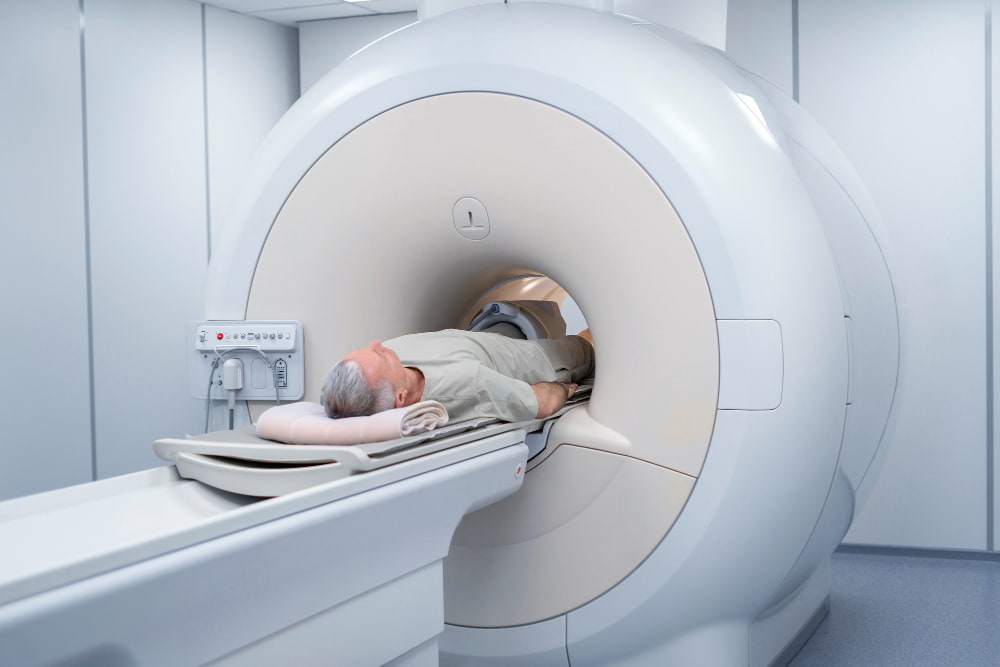
You will lie on a motorized table that slides through a large, doughnut-shaped scanner. The machine is open on both ends and relatively quiet compared to an MRI. A CT technologist in an adjacent room will guide you through the process and communicate with you via intercom. You may be asked to hold your breath briefly at certain moments — this prevents motion blur and improves image quality. The scan itself takes between one and five minutes, depending on the area being examined.
After the Scan
You can return to your normal activities immediately after a CT scan. If contrast was used, drink plenty of water to help clear it from your system. Your CT images will be reviewed by a radiologist, who prepares a detailed report. Results are typically available to your doctor within 24 to 48 hours; in emergency settings, this can be within the hour.
Radiation and Safety: How Risky Is a CT Scan?
CT scans use ionizing radiation — more than a plain X-ray, but still at a low dose. The radiation from a single CT scan has not been shown to cause long-term harm in the vast majority of patients. Medical teams always use the minimum radiation dose required to obtain diagnostically useful images, and newer CT machines deliver significantly lower doses than older models.
For patients who require repeated scans over time — such as those being monitored for cancer — cumulative radiation exposure is taken into account when deciding on imaging frequency. CT scans are recommended only when the clinical benefit justifies their use. If you have concerns about radiation, speak openly with your doctor; they can walk you through the risk-benefit assessment for your specific situation. Children are more sensitive to radiation than adults, and CT protocols in Pediatry use adjusted, lower doses accordingly.
CT Scan Costs and Private CT Scan Options in Turkey
CT scan cost varies depending on the type of scan, whether contrast is used, the facility, and the country. In Turkey, Medical Park hospitals offer competitive pricing for international patients, with transparent pricing structures and multilingual patient coordinators.
Patients seeking a private CT scan — whether for a second opinion, health screening, or faster access — can often arrange same-day or next-day appointments at Medical Park's imaging centers. Our teams work with patients arriving from across Europe, the Middle East, and beyond to coordinate imaging, reporting, and consultation in a single visit wherever possible.
To obtain a personalized quote for your CT scan or to ask about PET-CT and other advanced imaging options, contact our International Patient Services team.
CT Scan at Medical Park
Medical Park is one of Turkey's leading hospital groups, equipped with state-of-the-art CT and PET-CT scanners across its network of hospitals. Our Radiology departments operate 24 hours a day, with experienced radiologists and multilingual support for international patients.
Whether you need a chest CT scan, a CT scan of the brain, a full-body scan, or a PET-CT for oncology, our teams are here to guide you from the moment you arrive. Contact our International Patient Services team to learn more about CT scan costs, scheduling, and how to arrange your visit to Medical Park.




 Makaleye Dön
 E-Result
 WhatsApp