


 TR
 EN
 RU
 AR
 FR


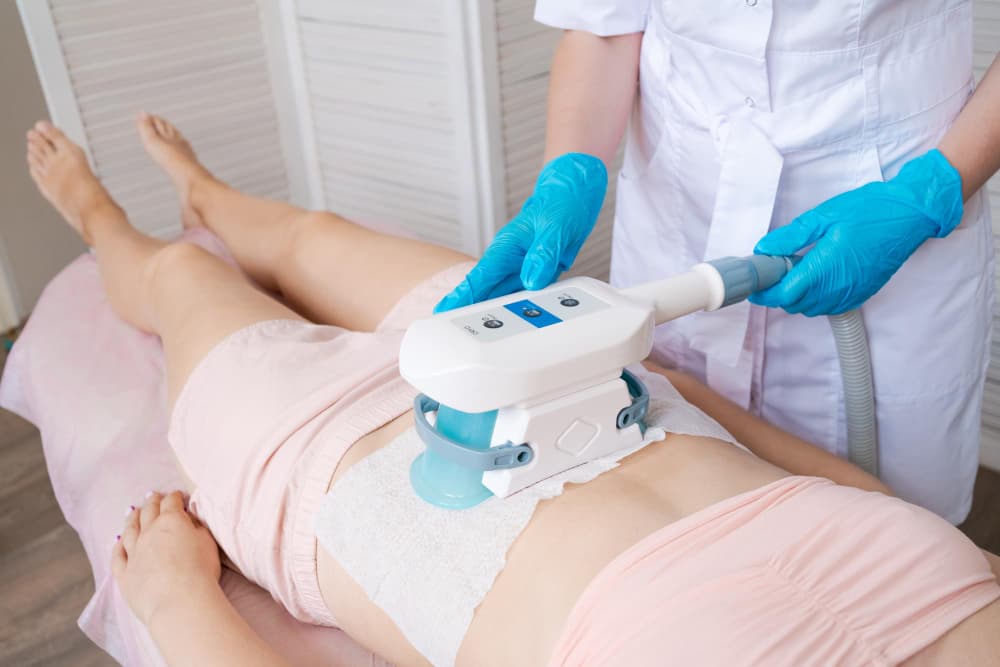

Cryolipolysis, commonly known as fat freezing, is a non-surgical body contouring treatment that uses controlled cooling to reduce localized pockets of fat. It works by exposing selected areas of subcutaneous fat to low temperatures that damage fat cells while limiting injury to the surrounding skin and tissues. The body gradually clears the affected cells over the following weeks and months, so changes appear progressively rather than immediately.
Cryolipolysis is intended for people who are close to a stable, healthy weight but have specific areas of fat that remain despite a balanced diet and regular physical activity. It does not treat obesity, reduce visceral fat, or replace weight loss.
This guide explains how cryolipolysis works, which areas it can treat, who may be suitable, what happens during the procedure, what results and risks to expect.
What Is Cryolipolysis?
Cryolipolysis is a non-invasive fat reduction procedure that uses controlled cooling to target fat cells beneath the skin. The name comes from cryo, meaning cold, and lipolysis, referring to the breakdown of fat. During treatment, a device applies cooling to a selected area for a set period. The aim is to damage some of the fat cells in that area without requiring incisions, anesthesia, or the removal of tissue through surgery.
The treatment is designed for localized fat deposits rather than general weight reduction. It may be considered for areas such as the abdomen, flanks, thighs, upper arms, back, and under the chin, provided there is enough pinchable fat for the applicator to treat. The amount of fat reduction varies, and the procedure does not produce the same degree of change as surgical fat removal.
How Fat Freezing Works
Fat cells, also called adipocytes, are more sensitive to cold than many surrounding tissues. Cryolipolysis uses this difference to expose a targeted fat layer to controlled cooling. The cooling process triggers a gradual form of cell death called apoptosis. The affected cells are then broken down and cleared by the body's immune system over several weeks to months.
Fat is not melted or immediately removed during the procedure. Instead, the body gradually processes the damaged cells, which can lead to a reduction in the thickness of the treated fat layer. The skin and surrounding structures are intended to remain largely unaffected when the treatment is performed correctly with an appropriate device and protocol.
The cooling temperature, treatment duration, applicator design, and size of the treated area depend on the device and the patient's anatomy. These factors are important because excessive or incorrectly applied cooling can cause tissue injury. Cryolipolysis should therefore be performed by a trained provider using a suitable, authorized device.
Cryolipolysis, Fat Freezing, and CoolSculpting: What Is the Difference?
These terms are related, but they do not mean exactly the same thing:
Cryolipolysis: The medical term for the fat reduction technique that uses controlled cooling to damage selected fat cells.
Fat freezing: The common name used to describe cryolipolysis. It refers to the cooling process rather than a specific brand or device.
Although the basic principle is similar, device features, applicator designs, treatment protocols, and clinical evidence can differ.
Which Areas Can Be Treated With Fat Freezing?
Cryolipolysis is intended for localized fat deposits that can be gently drawn into or placed against an applicator. The available applicators vary in size and shape, allowing providers to treat different areas of the body. The suitability of each area depends on the amount of pinchable fat, the patient's anatomy, and whether the device has an appropriate applicator for that location.
The treatment does not work equally well on every type of fat deposit. In particular, it targets fat directly beneath the skin, not deeper abdominal fat surrounding internal organs.
Belly and Flanks
The abdomen and flanks are among the areas commonly considered for fat freezing. The lower abdomen may retain a small pocket of fat even when a person is close to their preferred weight. The flanks, sometimes called love handles, are the areas at the sides of the waist that can create a fuller appearance around the midsection.
Cryolipolysis for belly fat targets the subcutaneous fat layer, which lies between the skin and the abdominal muscles. This is the layer that can usually be pinched between the fingers. An applicator may be used to treat selected areas of the lower or upper abdomen, depending on its design and the amount of tissue available.
It is important to distinguish subcutaneous fat from visceral fat. Visceral fat is located deeper inside the abdomen, around organs such as the liver and intestines. It cannot be reached by a fat freezing applicator. A larger abdomen may involve a combination of subcutaneous fat, visceral fat, abdominal muscle separation, or loose skin, and cryolipolysis will not address all of these factors.
Thighs, Back, and Bra Line
The thighs may be treated when a localized, pinchable fat layer is present. Depending on the person's anatomy and the available applicator, treatment may focus on the inner or outer thighs. Fat freezing does not correct cellulite dimples or significantly tighten loose skin, so these concerns need to be assessed separately.
The back and bra line can also be considered when small pockets of subcutaneous fat create visible fullness around the upper or lower back. The provider evaluates the thickness of the tissue and determines whether an applicator can fit the area safely. Treating these areas may help reduce localized fullness, but it does not change the underlying structure of the back or correct skin laxity.
Arms
The upper arms may be treated when excess fullness is caused mainly by a localized fat deposit. The provider checks whether the fat can be drawn into the applicator and whether the skin has enough elasticity to adapt to the reduction in volume.
Fat freezing for arms is not a treatment for loose or hanging skin. If the main concern is skin laxity rather than fat, removing some fat may not create the desired contour and could make looseness more noticeable. A separate assessment is needed to determine whether non-surgical treatment, skin tightening, or an arm lift is more appropriate.
Double Chin
Cryolipolysis may be used to reduce a small pocket of fat beneath the chin, also known as submental fat. A suitable applicator is positioned under the chin to cool the targeted tissue. The treatment may be considered when fullness in this area is mainly caused by pinchable fat rather than loose skin, muscle structure, or the position of the jaw.
The provider assesses the thickness of the fat layer, skin elasticity, and the shape of the chin and neck before recommending treatment. CoolSculpting for double chin is one example of a branded approach to this area, but the availability of a suitable applicator and the device used should always be confirmed. Not every cause of a double chin can be addressed through fat freezing.
Who Is a Good Candidate for Fat Freezing?
The most suitable candidates for fat freezing are generally close to a stable, healthy weight and have one or more small areas of subcutaneous fat that remain despite consistent lifestyle habits. The treatment is intended to refine body contours, not produce major changes in body size. A person does not need to have a particular body shape, but the fat deposit must be suitable for the device and applicator being used.
Skin elasticity is another important consideration. When the treated fat layer becomes thinner, the skin needs to adapt to the change in volume. People with significant loose skin may not achieve the contour they expect from cryolipolysis alone. A consultation helps establish whether the treatment is likely to address the concern or whether another procedure should be considered.
Who Should Not Have Cryolipolysis?
Cryolipolysis is unsuitable for people with certain medical conditions that make exposure to cold unsafe. These include:
Cryoglobulinemia: A condition in which abnormal proteins in the blood can become thicker or form deposits when exposed to cold.
Cold agglutinin disease: A rare autoimmune blood disorder in which cold temperatures can cause red blood cells to clump together and break down.
Paroxysmal cold hemoglobinuria: A rare condition in which cold exposure can trigger the destruction of red blood cells.
Pregnancy and breastfeeding: Fat freezing is generally avoided during pregnancy and breastfeeding because it is an elective procedure and its safety in these circumstances has not been established.
Hernia in or near the treatment area: Applying suction and cooling over a hernia may be unsafe and requires medical assessment.
Open wounds or active skin infection: The treatment area should not have broken skin, an active infection, or another condition that could be aggravated by the procedure.
Other medical conditions, previous surgery, impaired sensation, or circulation problems may also affect suitability. The provider should review the patient's medical history and examine the intended treatment area before proceeding. A device manufacturer's contraindications and the treating clinician's assessment should guide the final decision.
Fat Freezing Is Not a Weight Loss Treatment
Cryolipolysis reduces the thickness of a selected fat layer; it does not cause substantial overall weight loss. It is not intended to treat obesity, replace dietary changes and physical activity, or reduce the health risks associated with excess body weight. People seeking help with weight management may need a different assessment and treatment plan. Body mass index (BMI) can be one part of that assessment, although it does not describe body composition or determine suitability for cryolipolysis on its own.
The procedure also cannot target visceral fat, which lies deeper in the abdomen around the internal organs. A person with a prominent abdomen caused mainly by visceral fat is unlikely to benefit from freezing the superficial fat layer. Similarly, cryolipolysis does not remove excess skin or tighten significantly loose tissue.
Realistic expectations are essential. The aim is a modest change in a specific area, not a transformation of the whole body. A provider should explain what the treatment can reasonably achieve and recommend another approach if the patient's main concern falls outside its scope.
What Happens During a Fat Freezing Procedure?
A fat freezing procedure usually takes place in an outpatient setting and does not require general anesthesia. The exact process depends on the device, the applicator, and the areas being treated. Before treatment begins, the provider should explain how the device works, what sensations to expect, how long the session may take, and what side effects or complications are possible.
Before the Treatment
The first step is a consultation and physical assessment. The provider asks about the patient's medical history, previous procedures, current health, and treatment goals. They examine the intended areas to assess the amount of subcutaneous fat, skin condition, and whether the tissue can be positioned safely in the applicator.
The treatment plan identifies which areas may be treated and which applicator is appropriate for each one. The provider may mark the treatment areas and take photographs to document the starting appearance. These photographs can help compare changes later, provided they are taken consistently and used with the patient's consent.
The provider should also discuss the limitations of fat freezing. If the main concern is loose skin, visceral fat, cellulite, or a larger volume of excess fat, another treatment may be more suitable. Patients should have an opportunity to ask which device will be used, whether it is authorized and maintained, and what experience the provider has with the procedure.
During the Treatment
The provider positions the patient so the selected area can be reached comfortably. Depending on the device, a protective gel pad or membrane may be placed over the skin before the applicator is positioned. The applicator then uses suction or direct contact to bring the targeted tissue into contact with the cooling surfaces.
During the first few minutes, patients may feel pulling, pressure, cold, tingling, or mild discomfort. The area often becomes numb as cooling continues. The patient remains in position while the device completes its programmed treatment cycle. The length of each cycle varies by device and treatment area, so there is no single duration that applies to every fat freezing procedure.
Some devices allow patients to sit or rest during treatment. If several areas are being treated, the applicator may need to be repositioned or additional cycles may be scheduled. The provider monitors the procedure and follows the manufacturer's instructions throughout.
Right After the Treatment
After the cooling cycle, the applicator is removed and the treated area may look red, feel firm, or appear temporarily swollen. Some protocols include a brief massage of the area after the applicator is removed. Whether massage is performed depends on the device instructions and the provider's protocol; it should not be assumed to be necessary in every case.
Most patients can return to their usual daily activities soon after treatment, although temporary tenderness, bruising, swelling, or numbness may continue. The provider explains any specific aftercare instructions and when to seek medical advice.
The number of sessions depends on the size of the area, the desired degree of change, the device, and the individual's response. Some people may be treated in one session per area, while others may need additional sessions. Further treatment should be considered only after enough time has passed to assess the initial result.
Cryolipolysis Results and Timeline
Fat freezing results develop gradually because the body needs time to clear the affected fat cells. The treated area does not become smaller immediately after the cooling session. Changes may become noticeable over several weeks, with the result generally assessed over the following one to three months. The degree of reduction varies according to the treatment area, device, protocol, and individual response.
Cryolipolysis is intended to create a localized change in contour. It does not guarantee a particular waist measurement, clothing size, or amount of weight loss. Patients should understand the likely limits of the procedure before deciding whether it matches their expectations.
How Much Fat Reduction Can You Expect?
Clinical studies have reported an average reduction of approximately 20% to 25% in the thickness of the treated fat layer after one session. This figure describes an average measured change in a localized area; it does not mean that a quarter of a person's total body fat or body weight will be lost. Individual results can be smaller or larger, and study findings may differ according to the device, treatment protocol, measurement method, and follow-up period.
The result also depends on whether the treated area is suitable for the applicator. A small, well-defined fat pocket may respond differently from a broader or thicker area. Some people may need more than one session to achieve the change they want, while others may decide that the improvement after one treatment is sufficient.
A consultation should include a discussion of the likely degree of change rather than a promise of a specific outcome. The provider should explain how the result will be assessed and when it is appropriate to consider additional treatment.
Results Timeline
The body clears damaged fat cells over time, so the visible effect is progressive. Some people begin to notice a change within a few weeks, but the treated area may continue to change for several months.
A general timeline is:
First few days: Redness, swelling, bruising, tenderness, or numbness may be present. These are treatment effects rather than the final contour.
Two to six weeks: Early changes may become noticeable as the body processes the affected cells. The degree of visible change varies.
One to three months: The result is usually assessed during this period, when much of the gradual clearance process has taken place.
After the assessment: The provider may recommend no further treatment, another session after an appropriate interval, or a different approach if the result does not address the original concern.
The timeline is not identical for everyone. Patients should follow the review schedule provided by their clinician rather than arranging repeated sessions too soon.
Fat Freezing Before and After
Before-and-after photographs can help illustrate the type of localized change that may occur after cryolipolysis. However, images should be interpreted carefully. Results depend on the patient's starting anatomy, the area treated, the device and protocol, and the time between treatment and the follow-up photograph.
For a fair comparison, photographs should be taken with consistent lighting, camera position, distance, posture, and clothing. Images should not be retouched or altered to exaggerate the result. Any photographs used by a healthcare provider should be authentic, taken with documented patient consent, and presented in accordance with applicable health service advertising rules in Turkey.
A single patient's result should not be treated as a prediction of what another person will achieve. Before-and-after images are examples, not guarantees of typical results.
Do the Results Last?
The fat cells damaged and cleared through cryolipolysis do not simply return to the treated area. However, the remaining fat cells can still increase in size if a person gains weight. This means that the contour may change again over time, even after a successful treatment.
Maintaining a relatively stable weight helps preserve the result. Fat freezing does not prevent future weight gain, replace healthy lifestyle habits, or stop fat from accumulating in untreated areas. Patients should view it as a localized body contouring procedure rather than a permanent safeguard against changes in body composition.
Side Effects and Risks of Fat Freezing
Cryolipolysis is non-invasive, but it is not risk-free. Most side effects affect the treated area and improve without specific treatment. Their duration and severity vary, and the provider should explain both common reactions and less frequent complications before obtaining consent.
Common and Temporary Side Effects
The most common effects occur because the skin and underlying tissue have been exposed to cooling and, in some devices, suction. These may include:
Redness: The skin may look red immediately after treatment. This usually settles over a short period.
Bruising: Suction can cause small blood vessels beneath the skin to break, leading to temporary discoloration.
Swelling: The treated area may become puffy or feel fuller for a short time before the swelling subsides.
Numbness or tingling: Changes in sensation can occur during or after treatment and may take days or weeks to resolve.
Tenderness or discomfort: The area may feel sore, sensitive, or painful to touch for a period after the session.
These reactions are usually temporary, but patients should follow the aftercare instructions they receive. Persistent or worsening symptoms should be reported to the treating provider rather than assumed to be part of normal recovery.
Uncommon Effects
Some patients develop firmness, small nodules, or irregularities in the treated area. These changes may be temporary, but persistent lumps or contour changes need assessment. Nerve-related symptoms, including prolonged sensitivity, altered sensation, or pain, have also been reported.
Skin injury is uncommon but can occur, particularly if cooling is applied incorrectly or the device is unsuitable for the area. Blistering, burns, or changes in skin color should not be ignored. The risk of complications makes correct patient selection, appropriate applicator placement, device maintenance, and provider training important parts of treatment safety.
Paradoxical Adipose Hyperplasia
One of the most important complications to understand is paradoxical adipose hyperplasia (PAH). Instead of becoming smaller, the treated fat layer develops a firm, enlarged bulge. It may follow the shape of the applicator and can become noticeable several weeks or months after treatment.
PAH is uncommon, but it can have a significant effect on the appearance of the treated area. It does not usually resolve on its own. Treatment often requires liposuction or another surgical procedure to remove or reduce the enlarged fat tissue, which means that a complication of a non-surgical procedure may ultimately require surgery.
Published estimates of PAH frequency vary. A 2025 systematic review and meta-analysis reported a pooled estimate of 0.22%, but the authors noted that the evidence was of low certainty and that follow-up was insufficient in many studies. The true frequency therefore remains uncertain, and patients should receive a clear explanation of this risk before treatment. Current evidence has not established definitive risk factors.
When to Contact Your Provider
Patients should contact their provider if they experience severe or worsening pain, blistering, burns, dark or unusual skin changes, or symptoms that do not improve as expected. A firm bulge that gradually enlarges in the treated area over the following weeks or months also requires medical assessment because it may indicate PAH.
Do not wait for a routine follow-up appointment if a new or concerning change develops. Patients who have returned home after treatment should know how to contact the treating clinic and arrange an in-person assessment if necessary.
Fat Freezing vs. Liposuction
Liposuction is a surgical procedure that removes fat through small incisions using a thin tube called a cannula. It can remove a larger volume of fat than cryolipolysis and may be considered when a person wants a more substantial change in a specific area. The amount that can be safely removed depends on the patient's health, anatomy, and surgical plan.
Cryolipolysis does not involve incisions or surgical fat removal. It generally requires less recovery time, but results are more gradual and the degree of reduction is more modest. Some patients need multiple sessions, and the outcome cannot be judged immediately after treatment.
Liposuction involves anesthesia, surgical risks, postoperative swelling and bruising, and a recovery period. It may also require compression garments and follow-up visits. The choice between fat freezing and liposuction depends on the amount of fat, the desired degree of change, general health, skin quality, and willingness to undergo surgery. Neither procedure is a substitute for weight management.
How Do Fat Freezing Devices Differ From Each Other?
Fat freezing devices use controlled cooling to target localized subcutaneous fat, but they are not identical. They may differ in cooling technology, applicator design, the size and shape of the treatment areas they can cover, and the way they monitor and regulate temperature. These differences can affect how comfortably an applicator fits a particular body area, how the treatment is performed, and which areas can be treated.
CoolSculpting, Clatuu, Cooltech, and Z Lipo are examples of commercially available cryolipolysis systems. Although they share the same basic principle, their features, treatment protocols, and supporting clinical evidence may vary. When comparing devices, patients should consider the manufacturer's safety features, device authorization, maintenance, the provider's training and experience, and whether the applicator is suitable for the area being treated. The device name alone does not guarantee a particular result.
Factors That Affect the Cryolipolysis Cost
The cost of fat freezing varies according to the treatment area, the device used, and the number of sessions required. Treating several areas or using more than one applicator may increase the overall cost. The provider's experience, the clinic's facilities, and the follow-up arrangements may also affect the fee.
When comparing cryolipolysis cost between providers, it is important to establish what the quoted amount covers. A price may refer to one applicator cycle, one treatment area, or a complete session involving several areas. These are not necessarily equivalent. Patients should ask whether the consultation, photographs, protective materials, follow-up assessment, and any additional sessions are included.
The device itself is another consideration. A lower price does not necessarily represent better value if the provider cannot confirm the equipment's authorization, maintenance, or suitability for the intended treatment area. Patients should also ask how additional sessions are priced and whether the clinic provides support if the result is not as expected or a complication develops.
Rather than comparing prices alone, patients should consider the full treatment plan, the provider's qualifications, the device being used, and the arrangements for follow-up. No clinic should promise a particular result based solely on the price or number of sessions.
Fat Freezing in Turkey
Turkey is a destination for patients considering both surgical and non-surgical aesthetic procedures. International patients interested in fat freezing should plan the treatment around the fact that cryolipolysis results develop gradually and that more than one session may be recommended. If additional sessions are needed, they may have to be scheduled several weeks apart, which can make completing the full treatment course during a short visit difficult.
The visible result usually develops after the patient has returned home. This makes the follow-up plan particularly important. Before travelling, patients should understand when the treated area will be reviewed, how progress can be documented, and how to contact the provider if an unexpected change occurs. Photographs may support remote follow-up, but they do not replace an in-person examination when symptoms or complications require assessment.
Patients should also ask which device will be used and whether it is authorized and properly maintained. The provider should be able to explain the device's treatment protocol, identify the applicator suitable for the intended area, and discuss relevant risks. A consultation should include an assessment of medical history and anatomy rather than relying on photographs alone.
For some travelers, a procedure that can be completed in one planned visit may be more practical. Liposuction may be considered when a larger volume of fat needs to be removed, although it involves surgery, recovery, and postoperative follow-up. The choice should be based on medical suitability and the patient's circumstances, not simply on the length of the trip.
Non-Surgical Body Contouring and Fat Reduction at Medical Park
Medical Park hospitals in Turkey offer cryolipolysis, particularly CoolSculpting, in multiple facilities as a non-surgical option for reducing localized fat deposits. Treatment planning begins with an assessment by Medical Park’s plastic surgeons, who evaluate the amount and distribution of subcutaneous fat, skin elasticity, the area to be treated, and the patient's medical history. This assessment helps establish whether fat freezing is appropriate, which areas can be treated, and how many sessions may be required.
If the assessment shows that cryolipolysis is unlikely to address the patient's main concern, the specialists can recommend a more appropriate option. For example, larger fat deposits may be better addressed with liposuction, while significant loose skin may require another surgical body contouring procedure. The choice depends on the patient's anatomy, health, and expectations, as well as the extent of the change they wish to achieve. The recommended plan is determined individually rather than through a standard treatment package.
After cryolipolysis, the treated areas are reviewed as the results develop over the following weeks and months. Follow-up helps assess the response to treatment and determine whether another session or a different approach should be considered.
For international patients, Medical Park’s International Patient Services Center coordinates appointments, treatment arrangements, and follow-up communication, including support for patients continuing their care after returning home. The team can also provide information on which Medical Park hospitals offer cryolipolysis and help arrange an appointment at a suitable facility.
For more information on the surgical and non-surgical fat reduction procedures offered at Medical Park, read our guide to body sculpting procedures.





 Makaleye Dön
 E-Result