


 TR
 EN
 RU
 AR
 FR


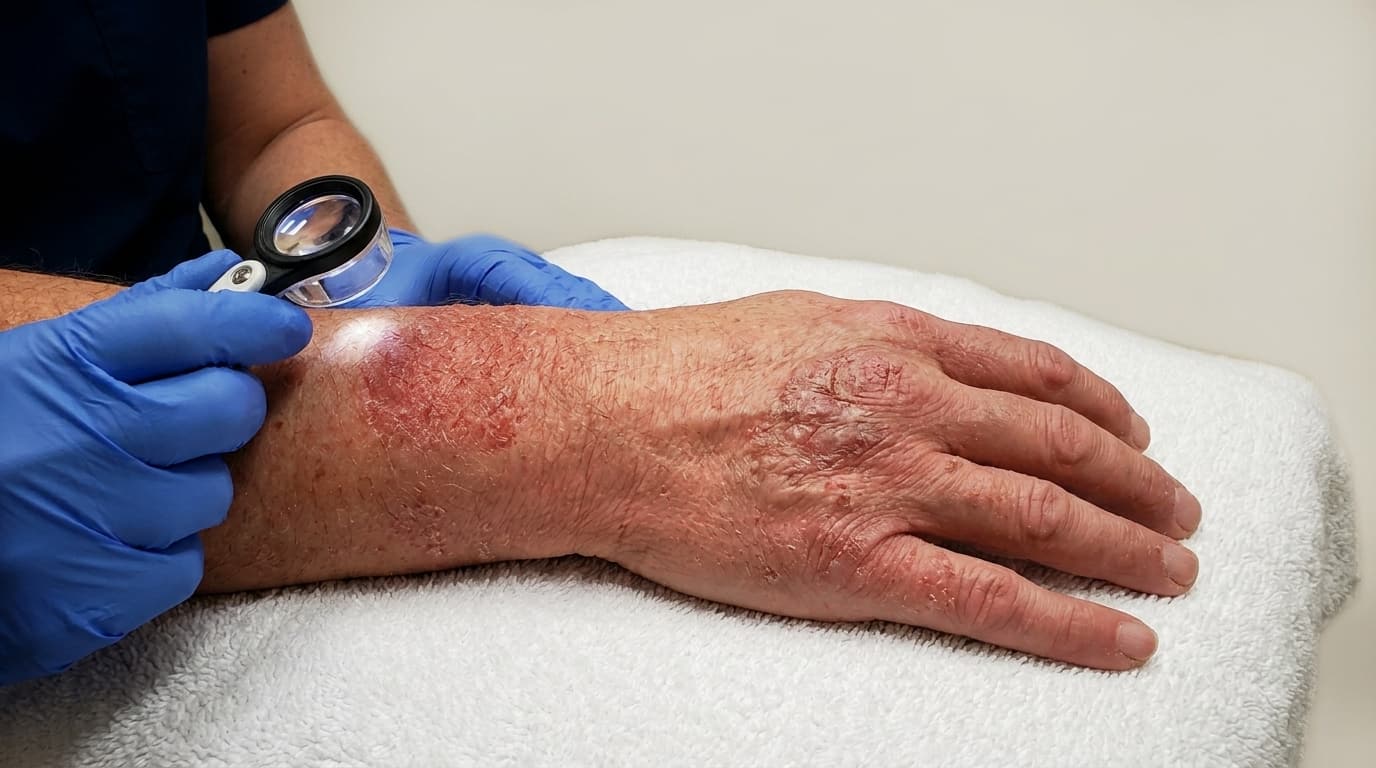

Dermatitis is a general term for inflammation of the skin. It can cause itching, dryness, redness, swelling, scaling, blisters, or cracked skin. Some forms develop because of an inherited tendency toward sensitive skin, while others occur after contact with an irritating substance, an allergen, or a combination of environmental and biological factors. Symptoms may come and go, affect a small area, or involve several parts of the body.
The appearance of dermatitis varies according to its type, the affected area, and the person’s skin tone. Some forms respond well to simple skin care and avoiding triggers, while others require prescription medication or long-term management. Identifying the cause matters because treatments that help one type of dermatitis may not work for another.
This guide explains the common types of dermatitis, their symptoms and causes, how they are diagnosed, and which treatments can help manage flare-ups and protect the skin.
What Is Dermatitis?
Dermatitis is inflammation of the skin that can affect its outer protective barrier. When this barrier is weakened or damaged, the skin may lose moisture more easily and become more vulnerable to irritants, allergens, and infection. The resulting rash may be itchy, dry, scaly, swollen, or blistered.
Dermatitis is not a single disease. It describes a group of skin conditions with different triggers and patterns. Some are long-lasting and tend to flare up repeatedly, while others improve when the cause is removed.
Dermatitis vs. Eczema
The terms dermatitis and eczema are often used interchangeably, although their meanings can vary by context. Eczema commonly refers to inflammatory skin conditions that cause itching and irritation, particularly atopic dermatitis. Contact dermatitis and several other forms are also described as eczematous conditions.
A rash that looks like eczema does not necessarily have the same cause as another eczema-like rash. For example, contact dermatitis may develop after exposure to a particular product, while atopic dermatitis is associated with a weakened skin barrier and immune system activity. Correctly identifying the type helps guide treatment.
How Dermatitis Appears on Different Skin Tones
Dermatitis does not always look bright red. On lighter skin, inflammation may appear pink or red. On darker skin, affected areas may look purple, gray, dark brown, or darker than the surrounding skin. Swelling, small bumps, scaling, and changes in skin texture may be more noticeable than color changes alone.
After inflammation settles, some people develop lighter or darker patches known as post-inflammatory pigment changes. These can take weeks or months to fade. Persistent discoloration, thickening, or a rash that keeps returning should be assessed rather than assumed to be harmless.
Types of Dermatitis
Different types of dermatitis affect different areas of the body and have distinct causes, although their symptoms can overlap. The most useful clues are where the rash appears, what it looks like, how long it lasts, and whether it follows a recognizable exposure or pattern.
Common types include atopic dermatitis, contact dermatitis, seborrheic dermatitis, perioral dermatitis, periorbital dermatitis, genital dermatitis, nummular dermatitis, dyshidrotic dermatitis, stasis dermatitis, dermatitis herpetiformis, and the rare condition known as progesterone dermatitis.
Atopic Dermatitis (Eczema)
Atopic dermatitis is a chronic inflammatory skin condition associated with a weakened skin barrier and an altered immune response. It often begins in childhood but can develop at any age. Symptoms tend to fluctuate, with periods of relative improvement interrupted by flare-ups.
Common symptoms include:
Intense itching: Itching may become worse at night and interfere with sleep.
Dry, sensitive skin: The skin may feel rough, tight, or irritated even when no obvious rash is present.
Inflamed patches: Affected areas may become scaly, swollen, cracked, or thickened after repeated scratching.
Changes in pigmentation: The rash or the skin’s recovery process may leave darker or lighter patches.
The location of the rash can change with age. Infants commonly develop symptoms on the cheeks, scalp, and outer surfaces of the arms and legs. Older children and adults more often have dermatitis around the elbows and knees, on the hands, neck, eyelids, or face. These patterns are typical rather than universal.
Atopic dermatitis is not contagious. Family history of eczema, asthma, or allergic rhinitis may increase the likelihood of developing it, but not everyone with atopic dermatitis has other allergic conditions.
Common flare triggers include fragranced skin care products, harsh cleansers, dry air, heat, sweating, rough fabrics, stress, and skin infections. A trigger diary can help identify individual patterns. Food should not be eliminated from a child’s or adult’s diet solely because of eczema without a clear reason and appropriate medical advice.
Contact Dermatitis
Contact dermatitis develops when the skin reacts to a substance it touches. The rash usually affects the area exposed to the substance, although it can spread beyond that area in some cases. Symptoms may begin within hours or develop over several days, depending on the cause.
There are two main forms:
Irritant contact dermatitis: A substance directly damages or irritates the skin. Frequent handwashing, detergents, cleaning products, solvents, prolonged water exposure, and friction are common causes. Repeated exposure can gradually weaken the skin barrier.
Allergic contact dermatitis: The immune system reacts to a substance after becoming sensitized to it. Nickel, fragrances, preservatives, hair dyes, cosmetics, adhesives, and some topical medications can trigger this reaction.
Contact dermatitis may cause itching, burning, tenderness, swelling, blisters, scaling, or painful cracks. The hands are frequently affected, particularly in people whose work involves cleaning, food preparation, health care, or repeated contact with water. The face, eyelids, neck, and areas beneath jewelry or adhesive dressings are also common sites.
Identifying and avoiding the trigger is central to treatment. If the cause is unclear or the rash keeps returning, a dermatologist may recommend patch testing, in which small amounts of suspected allergens are applied to the skin and assessed over several days. Patch testing evaluates delayed allergic reactions; it is not the same as a prick test used for certain immediate allergic reactions.
Seborrheic Dermatitis
Seborrheic dermatitis affects areas with a high concentration of oil-producing glands, particularly the scalp, eyebrows, sides of the nose, ears, and upper chest. It can cause flaky skin, itching, and patches that look greasy or scaly. On lighter skin, the affected areas may appear red; on darker skin, they may look darker, lighter, purple, or gray.
The condition is associated with an inflammatory response involving Malassezia, a yeast that normally lives on the skin. Oil production, individual susceptibility, and other factors may contribute. Seborrheic dermatitis is not a sign of poor hygiene and is not contagious.
On the scalp, it commonly appears as dandruff. In infants, a related presentation called cradle cap causes greasy scales on the scalp and usually improves over time. Adult seborrheic dermatitis often follows a relapsing pattern, so treatment may be needed periodically even after the skin improves.
Medicated anti-dandruff shampoos containing ingredients such as ketoconazole, selenium sulfide, or zinc pyrithione may help, depending on the product and local availability. A dermatologist may also prescribe antifungal creams or a short course of an appropriate anti-inflammatory treatment for affected skin.
Perioral and Periorbital Dermatitis
Perioral dermatitis causes small, inflamed bumps around the mouth, often leaving a narrow area of skin next to the lips unaffected. It may also cause burning, tightness, dryness, or scaling. Similar eruptions can affect the nose or develop around the eyes.
Periorbital dermatitis specifically affects the skin around the eyes. It may be related to contact allergy, irritation from cosmetics or skin care products, or another inflammatory condition. Because the eyelid skin is thin and sensitive, the cause should be identified before treatment is chosen.
Potential triggers include heavy facial products, cosmetics, fragranced creams, and topical corticosteroids. However, the causes of perioral dermatitis are not always clear, and not every rash around the mouth or eyes is the same condition.
Topical corticosteroids may temporarily reduce redness but can worsen or perpetuate perioral dermatitis. Do not start or repeatedly apply steroid creams to facial skin without medical guidance. If a prescribed steroid has been used regularly, ask the prescribing clinician how to stop it safely, since symptoms may temporarily worsen after withdrawal.
Genital Dermatitis
Genital dermatitis affects the sensitive skin of the vulva, penis, scrotum, groin, or surrounding areas. It can cause itching, burning, redness, dryness, swelling, scaling, or small cracks. Symptoms may be uncomfortable during walking, exercise, urination, sexual activity, or when clothing rubs against the affected skin.
Possible triggers include fragranced soaps, intimate washes, wipes, laundry products, sanitary products, lubricants, condoms, sweat, friction, and shaving. Atopic dermatitis and contact dermatitis can affect genital skin, but infections and other skin conditions may produce similar symptoms.
Gentle care can reduce irritation while the cause is being assessed:
Avoid fragranced products: Wash the area gently with lukewarm water or a mild, fragrance-free cleanser if needed.
Reduce friction and moisture: Choose breathable underwear, change out of damp clothing, and avoid tight garments that rub against the skin.
Avoid self-treating persistent symptoms: Antifungal creams, antiseptics, and steroid products are not interchangeable. Using the wrong treatment may worsen irritation or delay diagnosis.
A clinician may need to examine the affected skin and, when appropriate, test for infection or contact allergy. Seek prompt assessment for genital sores, blisters, discharge, significant pain, painful urination, or symptoms following a possible sexually transmitted infection exposure. A persistent genital rash should not automatically be attributed to dermatitis.
Nummular Dermatitis
Nummular dermatitis, also called discoid eczema, produces round or oval patches that resemble coins. The patches may itch, scale, crack, or develop small blisters and crusting. They commonly appear on the arms and legs but can occur elsewhere.
The exact cause is not always known. Dry skin, skin injury, insect bites, and irritation may contribute. The coin-shaped appearance can resemble ringworm, psoriasis, or a skin infection, so examination may be needed before treatment.
Management often includes regular moisturization, gentle cleansing, and prescribed topical anti-inflammatory medication when appropriate. If a patch becomes increasingly painful, warm, swollen, or develops pus, medical assessment is important because infection may be present.
Dyshidrotic Dermatitis
Dyshidrotic dermatitis, also called dyshidrotic eczema or pompholyx, causes small, deep-seated blisters on the palms, sides of the fingers, and soles of the feet. The blisters can be intensely itchy and may be followed by peeling, dryness, or painful fissures.
Flare-ups may be associated with sweating, heat, stress, irritants, or contact allergy to certain metals. Some people experience repeated episodes without an obvious trigger. Despite the name, the condition is not simply caused by blocked sweat glands.
Treatment may include cool compresses, moisturizers, and prescribed topical corticosteroids for inflammation. Keeping the hands protected from harsh detergents and prolonged wet work can help. Severe or recurring cases may require a dermatologist to reassess the diagnosis and consider other treatments.
Stasis Dermatitis
Stasis dermatitis usually affects the lower legs and ankles when poor circulation in the veins allows fluid and inflammatory substances to collect in the tissues. It is commonly associated with chronic venous insufficiency, a condition in which blood does not return efficiently from the legs to the heart.
Symptoms may include:
Swelling: The ankles or lower legs may become puffy, particularly after prolonged standing or sitting.
Itching and scaling: Skin may feel dry, irritated, or inflamed.
Color changes: Brownish discoloration can develop as the condition continues, including on darker skin tones.
Thickening or open sores: Long-standing inflammation may damage the skin and contribute to venous ulcers.
Stasis dermatitis is not the same as ordinary dry skin, and treatment must address circulation as well as inflammation. A clinician may assess leg swelling, examine the skin, and investigate venous disease. Compression therapy may be recommended for suitable patients after circulation has been evaluated. Sudden swelling or pain in one leg, particularly with warmth or redness, requires urgent medical assessment because a blood clot is one possible cause.
Dermatitis Herpetiformis (Duhring’s Disease)
Dermatitis herpetiformis is an intensely itchy, blistering skin condition associated with celiac disease and an immune reaction to gluten. Despite its name, it is not caused by the herpes virus and is not a contagious infection.
The rash often appears symmetrically on the elbows, knees, buttocks, scalp, or back. Small blisters may be scratched off before they are noticed, leaving excoriations, crusts, or persistent itchy bumps. Digestive symptoms may be mild or absent even when celiac disease is present.
Diagnosis generally involves a skin biopsy taken from skin near an active rash for direct immunofluorescence, a test that identifies characteristic immune deposits. Blood tests for celiac disease may also be recommended. Testing should be planned before eliminating gluten, because a gluten-free diet can affect the results.
Long-term treatment usually requires a strict gluten-free diet. Dapsone can relieve the rash relatively quickly, but it does not treat the underlying intestinal response to gluten. It requires medical supervision and blood monitoring because it can cause serious adverse effects, including blood-cell abnormalities. Patients should not start it without specialist guidance.
Progesterone Dermatitis
Progesterone dermatitis, often discussed within the broader term progestogen hypersensitivity, is a rare condition in which skin symptoms or other allergic-type reactions are associated with the body’s progesterone or exposure to progestogen medication. The name covers a range of presentations, and diagnosis can be challenging.
A possible clue is a recurring rash that develops in a similar phase of the menstrual cycle, often in the days before menstruation, and improves when hormone levels change. Symptoms may include hives, eczema-like patches, swelling, or, less commonly, more severe allergic reactions. Not every cyclical rash is progesterone-related, so other causes must be considered.
Diagnosis relies on a detailed history of symptoms, menstrual timing, medication or contraceptive use, and examination. There is no single routine test that reliably confirms every case. A dermatologist or allergy specialist may work with a gynecologist to assess the pattern and discuss appropriate treatment. Hormonal treatments or other medicines may be considered in selected cases, but they require individualized supervision. Difficulty breathing, throat swelling, faintness, or a rapidly progressing severe reaction is an emergency.
What Causes Dermatitis?
The causes of dermatitis depend on its type. In some forms, an impaired skin barrier and immune system activity play a central role. In others, repeated exposure to irritants, contact with an allergen, venous circulation problems, or a specific immune response is more important.
Common contributing factors include:
Skin barrier disruption: Dryness, frequent washing, harsh cleansers, and low humidity can make skin more vulnerable to irritation.
Allergens and irritants: Fragrances, preservatives, metals, detergents, solvents, and topical products may trigger contact dermatitis.
Genetics and immune activity: Atopic dermatitis is more likely in people with a personal or family history of eczema and certain allergic conditions.
Microorganisms: Malassezia is associated with seborrheic dermatitis, while bacteria or viruses can cause secondary infections in damaged skin.
Heat, sweat, and friction: These can aggravate several types of dermatitis, including atopic and dyshidrotic dermatitis.
Underlying medical conditions: Venous insufficiency contributes to stasis dermatitis, while dermatitis herpetiformis is associated with celiac disease.
Hormonal patterns: Rarely, skin symptoms follow a recurring pattern related to progesterone or progestogen exposure.
Stress may aggravate itching or contribute to flare-ups, but it should not be assumed to be the sole cause of a persistent rash. Likewise, dermatitis is not necessarily caused by poor hygiene, and many forms are not contagious.
How Is Dermatitis Diagnosed?
A dermatologist usually begins by examining the skin and asking about the onset, location, appearance, and duration of symptoms. The clinician may ask about previous episodes, family history, medications, skin care products, workplace exposures, and whether symptoms change with seasons, menstrual cycles, or particular activities.
Testing depends on the suspected type. Many cases can be diagnosed clinically, while persistent, unusual, or treatment-resistant rashes may require additional investigation.
Skin examination and medical history: The distribution of the rash, skin texture, and likely triggers help distinguish dermatitis from infections, psoriasis, and other conditions.
Patch testing: Small quantities of suspected allergens are placed on the skin to investigate allergic contact dermatitis. Results are assessed over several days.
Skin biopsy: A small skin sample may be examined under a microscope when the diagnosis is uncertain. Direct immunofluorescence on a suitable biopsy is particularly important when dermatitis herpetiformis is suspected.
Blood tests: These may be appropriate when a specific associated condition is suspected, such as celiac disease in dermatitis herpetiformis. Blood tests are not routinely needed for every dermatitis rash.
Additional tests: Depending on the findings, a clinician may take a skin swab to investigate infection or arrange an assessment for venous circulation problems in suspected stasis dermatitis.
An allergy test does not identify every cause of dermatitis, and broad food-allergy panels are not a routine way to diagnose atopic dermatitis. Testing should answer a specific clinical question rather than replace examination.
Dermatitis Treatment
Dermatitis treatment aims to reduce inflammation and itching, restore the skin barrier, address the underlying cause, and prevent complications. The best approach depends on the type, severity, affected body area, and whether infection or another condition is present.
Skin Care and Moisturizers
Moisturizers help reduce water loss and protect the skin barrier. They are useful for many forms of dermatitis, although they do not replace cause-specific treatment when medication or trigger avoidance is needed.
When choosing moisturisers for dermatitis, look for a fragrance-free product suited to the affected area and how dry the skin is. Ointments are often useful for very dry skin, while creams may feel more comfortable for everyday use. Products can still irritate sensitive skin, so stop using one that consistently causes burning or worsens the rash.
Helpful habits include:
Apply moisturizer regularly: Use it after bathing and whenever the skin feels dry.
Keep bathing gentle: Choose lukewarm rather than hot water, avoid scrubbing, and pat the skin dry.
Use mild cleansers: Fragrance-free products are generally less likely to irritate sensitive skin.
Protect damaged skin: Gloves may help during wet work, but prolonged sweating or friction inside gloves can also aggravate symptoms.
Prescription Creams and Other Medicines
Medication may be needed when skin care alone does not control inflammation. A clinician should choose the treatment based on the diagnosis and the location of the rash.
Topical corticosteroids: These creams or ointments reduce inflammation and are commonly used for flares. The appropriate strength and duration depend on the body area and severity. Strong products require particular caution on the face, eyelids, genital skin, and skin folds.
Topical calcineurin inhibitors: Tacrolimus or pimecrolimus may be prescribed for selected cases of atopic dermatitis, including sensitive areas where repeated steroid use may be unsuitable.
Antifungal treatments: These may help seborrheic dermatitis and certain confirmed fungal infections. Antifungals should not be assumed to treat every itchy or scaly rash.
Other prescription treatments: Depending on the diagnosis, clinicians may consider additional topical medicines or oral treatments when standard measures are insufficient.
Antibiotics or antivirals: These are used when a bacterial or viral infection is diagnosed or strongly suspected, not as routine treatment for uncomplicated dermatitis.
Do not use leftover prescription creams or combine treatments without advice. Topical corticosteroids can be effective when used correctly, but prolonged or inappropriate use can cause side effects and may worsen certain facial rashes.
Treatment for Persistent or Severe Dermatitis
When dermatitis is extensive, recurrent, or resistant to initial treatment, a dermatologist may reassess the diagnosis and consider specialist options.
Phototherapy: Controlled exposure to specific wavelengths of ultraviolet light may help selected cases of chronic inflammatory skin disease.
Systemic medicines: Oral or injectable treatments that affect immune activity may be considered for severe disease when appropriate.
Biologic medicines and targeted therapies: Certain treatments target specific pathways involved in inflammation and may be used for eligible patients with moderate-to-severe atopic dermatitis.
Condition-specific treatment: Dermatitis herpetiformis requires a gluten-free diet and may require medication such as dapsone under specialist monitoring. Stasis dermatitis also requires assessment and management of venous insufficiency.
Not every treatment is suitable for every type of dermatitis, and authorization, availability, and prescribing criteria vary by medicine and country, including Turkey. A dermatologist can explain which options are appropriate and available for an individual patient.
When to See a Dermatologist
Seek medical advice if a rash persists, repeatedly returns, spreads, affects sleep, or does not improve with appropriate skin care. Assessment is also important when the cause is uncertain, symptoms develop in a sensitive area, or prescription treatment is needed.
Arrange prompt medical assessment if the skin becomes increasingly painful, hot, swollen, or rapidly worse, or if there is pus, spreading redness, fever, or other signs of infection. People with atopic dermatitis can develop eczema herpeticum, a potentially serious viral infection that may cause clusters of painful blisters or punched-out sores, sometimes with fever. Suspected eczema herpeticum needs urgent medical care.
Seek emergency help for difficulty breathing, swelling of the tongue or throat, fainting, or another possible severe allergic reaction. Sudden one-sided leg swelling or pain should also be assessed urgently rather than attributed to stasis dermatitis.
Living With Dermatitis
Long-term management often means learning which factors aggravate the skin and building a practical routine that can be maintained at home, at work, and while traveling. The aim is to reduce flare-ups and treat them early, not to expect every chronic form of dermatitis to disappear permanently.
A few consistent habits can make a difference:
Track recurring symptoms: Record when the rash appears, where it develops, and any relevant exposure to products, work materials, heat, sweat, or menstrual-cycle changes.
Keep products simple: Introduce new skin care products one at a time and choose fragrance-free options when possible.
Follow the treatment plan: Use prescribed medicines for the recommended duration and ask the clinician what to do when symptoms return.
Reduce scratching: Keep nails short and use a cool compress when itching becomes difficult to tolerate. Scratching can damage the skin and increase infection risk.
Address sleep and stress: Itching can interrupt sleep, and stress may aggravate symptoms. Practical relaxation strategies and a consistent sleep routine may help support symptom management.
Review persistent problems: A rash that does not respond as expected may need a different diagnosis, trigger investigation, or treatment adjustment.
Dermatitis can affect comfort, sleep, confidence, and everyday activities. A clear diagnosis and an individualized management plan can help people understand their symptoms and make treatment more manageable.
Dermatology Care for Chronic and Complex Skin Conditions at Medical Park
Medical Park’s Dermatology specialists evaluate and treats a range of inflammatory skin conditions, including atopic dermatitis, contact dermatitis, seborrheic dermatitis, and persistent or recurrent rashes. Dermatologists assess the affected skin, review symptom patterns and potential triggers, and determine whether further testing is needed to distinguish dermatitis from infections, allergic reactions, or other skin diseases. When indicated, investigations may include patch testing to identify contact allergens, a skin biopsy to clarify an uncertain diagnosis, or other tests guided by the clinical findings.
For chronic, severe, or difficult-to-diagnose cases, care may involve a multidisciplinary approach. Dermatology specialists can work with Immunology and Allergic Diseases specialists when an allergic trigger, contact allergy, or underlying immune-related process needs further evaluation.
Depending on the symptoms and suspected cause, other departments may also contribute to assessment and treatment. This coordinated approach helps clarify the diagnosis, identify relevant triggers, and guide an appropriate treatment plan, which may include skin care measures, prescription medication, or further specialist management.
For international patients seeking dermatology care in Turkey, Medical Park’s International Patient Services Center helps coordinate appointments and communication with the hospital team. Patients can receive information about the planned evaluations, recommended treatment, and follow-up arrangements before and during their visit.




 Makaleye Dön
 E-Result
 WhatsApp