


 TR
 EN
 RU
 AR
 FR


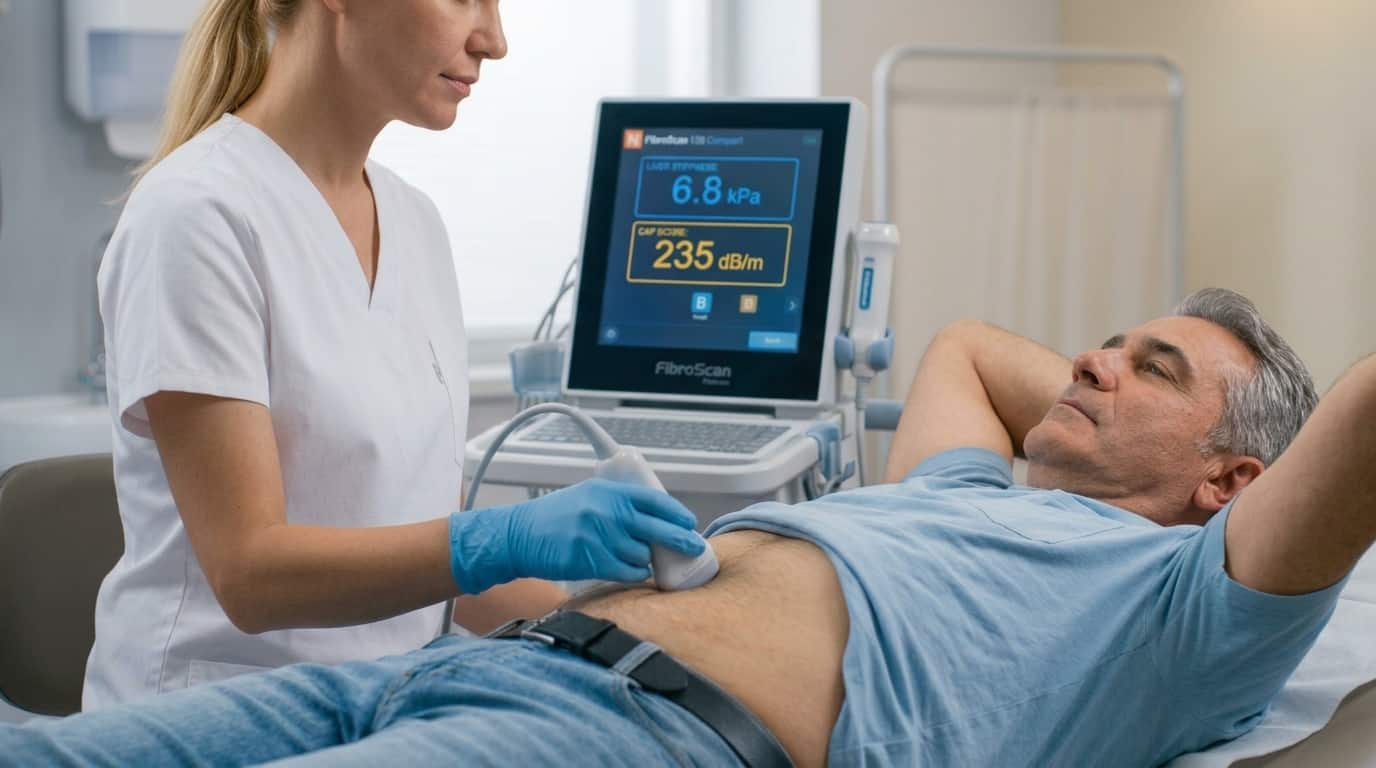


A FibroScan is a widely used, noninvasive test that assesses liver health by measuring liver stiffness and estimating fat accumulation. It uses a technique called liver elastography to evaluate two important features: liver stiffness, which can indicate scarring known as fibrosis, and liver fat, which reflects the amount of fat accumulated in the liver.
Unlike a conventional ultrasound, which produces images of the liver, FibroScan provides numerical measurements that help doctors assess the condition of liver tissue.
Doctors may recommend a FibroScan for people with fatty liver disease, hepatitis B or C, diabetes, obesity, or persistently abnormal liver blood tests. The test can help evaluate the extent of liver damage and monitor changes over time.
Because many liver conditions develop without noticeable symptoms in their early stages, liver elastography can provide valuable information for identifying potential problems and guiding further evaluation before complications develop.
What is a FibroScan?
A FibroScan for the liver is a specialized form of ultrasound examination that uses a technique called transient elastography to measure liver stiffness. Rather than producing conventional images, the device sends a gentle vibration through the liver and measures how quickly the resulting waves travel through the tissue. These measurements help estimate liver stiffness, as waves generally travel faster through stiffer tissue.
A healthy liver is relatively soft and flexible. When the liver is repeatedly damaged by conditions such as chronic hepatitis, fatty liver disease, or long-term alcohol-related injury, scar tissue may gradually develop. This process, known as liver fibrosis, can progress over time and, in advanced cases, lead to cirrhosis. FibroScan helps doctors assess the likelihood and severity of fibrosis without requiring a liver biopsy in many cases.
The scan provides two main measurements:
Liver stiffness: Measured in kilopascals (kPa), this indicates how stiff the liver tissue is and helps doctors assess the likelihood of fibrosis. Higher values may suggest more advanced scarring, although inflammation and other conditions can also increase stiffness.
CAP score: The controlled attenuation parameter (CAP), measured in decibels per meter (dB/m), estimates the amount of fat accumulated in the liver. Higher values generally indicate greater liver fat content.
Together, these measurements help doctors evaluate both liver scarring and fat accumulation. However, FibroScan results do not establish a diagnosis on their own and must be interpreted alongside the patient's medical history, blood tests, and other clinical findings.
Why is Liver Stiffness Important?
When the liver is repeatedly irritated or damaged, it tries to heal itself. Over time, this healing process can leave scar tissue. The more scar tissue there is, the stiffer the liver becomes.
A FibroScan helps your doctor see whether there is:
No or mild scarring
Moderate scarring
Severe scarring
Advanced scarring, known as cirrhosis
Finding scarring early gives you the best chance to protect your liver and prevent further damage.
What Happens During the FibroScan?
Fibroscanning is simple and usually takes about 10–20 minutes. You lie on your back, raise your right arm, and a technician places a small probe on the skin over your liver.
The probe sends a gentle vibration into your liver. You may feel a light tapping, but the test is not painful. There are no needles, no cuts, and no need to stay in hospital.
Your doctor may ask you not to eat or drink for a few hours before the test, because food can sometimes affect the result.
Understanding FibroScan Results
Your FibroScan results include a stiffness score and a CAP score. Your doctor will explain what they mean for you, because results depend on your overall health and the cause of your liver problem.
Liver Stiffness Score
The stiffness score is measured in kPa. In general, for people with fatty liver disease (hepatic steatosis):
| FibroScan score | What it may mean |
|---|---|
| 2–7 kPa | Little or mild scarring |
| 7.5–10 kPa | Moderate scarring |
| 10–14 kPa | Severe scarring |
| 14 kPa or more | Advanced scarring or cirrhosis |
These numbers are only a guide. A high result does not automatically mean you have cirrhosis, and a normal result does not always rule out every liver problem. Your doctor will look at the full picture, including your symptoms, blood tests, medical history, and other scans.
CAP Score: Fat in the Liver
The CAP score on a FibroScan shows how much fat is stored in your liver. It ranges from 100 to 400 dB/m.
A higher CAP score usually means more fat in the liver. A score of 275 dB/m or higher often suggests a significant amount of liver fat.
The normal range of CAP score on FibroScan is not the same for everyone. Your doctor will consider your weight, diabetes, cholesterol, alcohol use, and liver stiffness result when explaining your score.
What Can Affect the Results?
Sometimes a FibroScan result can be higher than expected or hard to measure. This can happen if you have:
Recent liver inflammation
Drunk alcohol shortly before the test
Heart problems causing liver congestion
Obesity that makes the scan harder to perform
Fluid in the abdomen
Bile duct blockage
Previous surgery or scars near the liver
If your result is unclear, your doctor may repeat the test or arrange other checks, such as blood tests, ultrasound, MRI, or MR elastography.
FibroScan vs. MR Elastography: What is the Difference?
MR elastography, or MRE, is another test that measures liver stiffness. It uses MRI with gentle vibrations to create a detailed map of the liver.
A FibroScan is usually quicker, easier, and less expensive. MR elastography may be recommended if a FibroScan is difficult to perform or the results are unclear—for example, in some people with obesity or fluid in the abdomen.
FibroScan Cost in Turkey
The FibroScan cost in Turkey depends on the clinic, city, and whether your appointment includes a specialist consultation or blood tests. Many clinics offer liver check-up packages that include FibroScan, laboratory tests, and a doctor’s review.
Before booking, ask whether the price includes:
The FibroScan scan
Liver stiffness and CAP score results
A consultation with a liver specialist
Liver blood tests
Follow-up advice
Prices can vary, so it is best to confirm the full cost directly with the clinic.
When Should You Consider a FibroScan?
Talk to your doctor about liver elastography if you have fatty liver disease, diabetes, obesity, high cholesterol, hepatitis B or C, or regularly drink alcohol. It may also be useful if your liver blood tests are abnormal.
A FibroScan is a safe and helpful way to check your liver health early. If the scan shows fat or scarring, your doctor can help you make a plan to protect your liver and prevent further damage.
FibroScan and Advanced Liver Care at Medical Park
Medical Park provides FibroScan at several locations across its hospitals, helping specialists assess liver stiffness and fat accumulation in a non-invasive way. The results can support the evaluation of liver conditions such as fatty liver disease and liver fibrosis, particularly in patients with diabetes, obesity, hepatitis, or abnormal liver blood tests.
Because FibroScan findings do not establish a diagnosis on their own, specialists interpret them alongside medical history, laboratory results, symptoms, and other imaging findings to determine whether further investigation is necessary.
When liver damage or an underlying liver condition is identified, the next steps depend on its cause, severity, and potential impact on liver function. Medical Park's Gastroenterology specialists can evaluate these findings, recommend additional diagnostic tests when appropriate, and develop a treatment and monitoring plan tailored to each patient's needs.
Depending on the diagnosis, care may include managing underlying conditions, addressing risk factors that contribute to liver damage, and arranging follow-up assessments to monitor changes in liver health.
For international patients considering FibroScan, liver evaluation, or treatment in Turkey, Medical Park's International Patient Services Center can assist with appointment coordination and provide information about available services at its hospitals.


 Makaleye Dön
 E-Result
 WhatsApp