


 TR
 EN
 RU
 AR
 FR


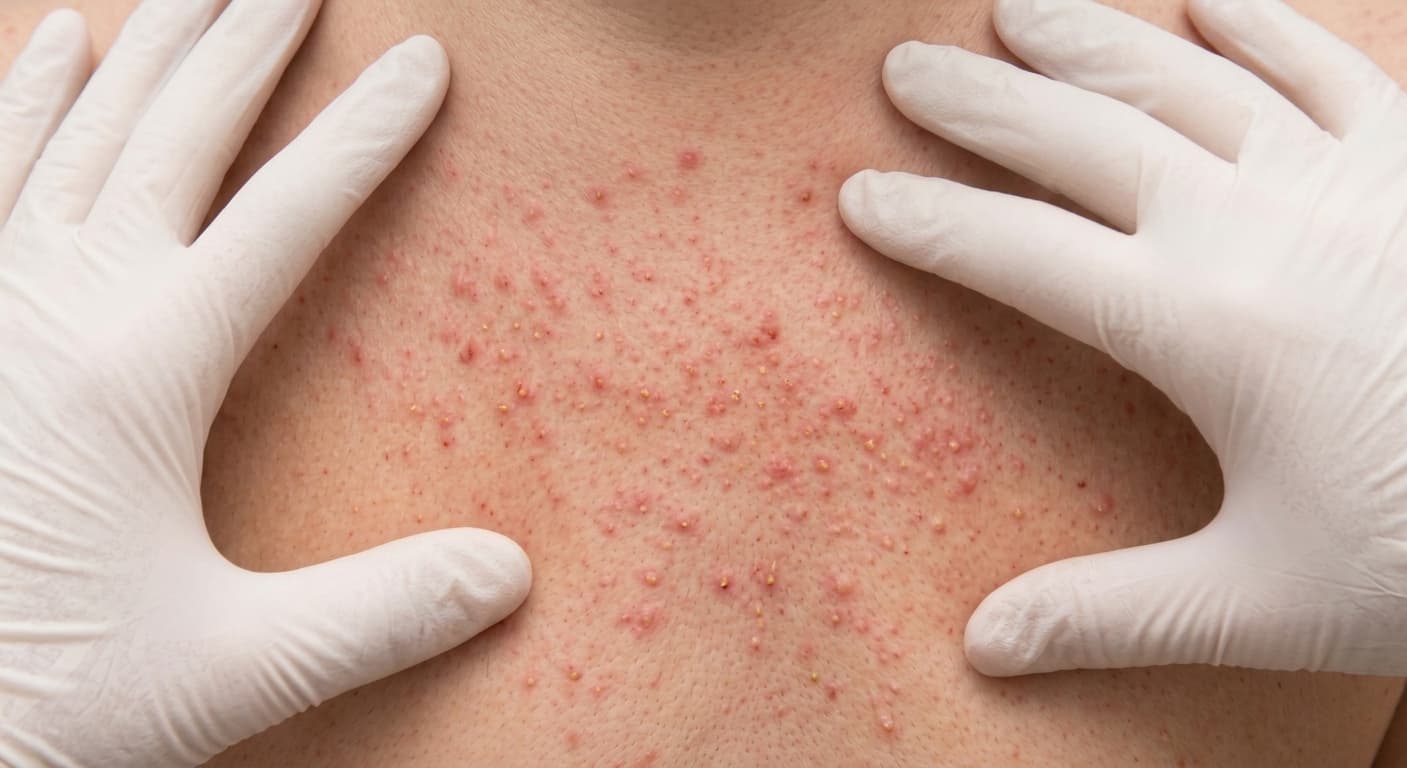

Folliculitis is inflammation of a hair follicle, the tiny opening in the skin from which a hair grows. It can cause small red bumps, itchy spots, or pus-filled pimples anywhere hair grows, and it is often mild and clears on its own. The right treatment depends on the cause.
Bacterial, fungal, hot tub, razor bump, and immune-related folliculitis can look similar but need different approaches, while deeper infections called boils may need medical assessment.
This guide explains how to recognize folliculitis, what can trigger it, how boils differ from ordinary bumps, and when self-care is enough or medical treatment is needed.
What Is Folliculitis?
Folliculitis is inflammation or infection of a hair follicle. A hair follicle is the tiny structure in the skin that holds and produces a hair. When a follicle becomes irritated, blocked, or infected, it can develop a small red bump, a white-headed pustule, or a tender spot. The condition can affect one follicle or many, and it may be superficial or deeper in the skin.
Folliculitis is common and often mild, but some types can be uncomfortable, recurrent, or lead to scarring if they are not treated properly.
Where Folliculitis Appears
Folliculitis can occur anywhere there is hair, but some areas are more prone to it because of friction, sweating, shaving, or moisture.
- Scalp: Bumps, tenderness, or itchy spots may develop along the hairline or scalp
- Beard area: Shaving can irritate follicles and contribute to bumps or ingrown hairs
- Chest and back: Sweat, friction, and yeast overgrowth can cause acne-like bumps
- Thighs and buttocks: Tight clothing, sweating, and friction can irritate follicles
- Groin: Moisture, shaving, and friction can contribute to irritation
- Legs: Shaving, friction, and sweating can trigger bumps or ingrown hairs
On lighter skin, folliculitis often looks red or pink. On darker skin, redness may be harder to see, and dark marks can remain after the bumps heal.
Folliculitis vs. Acne and Other Look-Alikes
Folliculitis can look like acne, especially when it appears on the chest, back, or shoulders. However, acne involves oil glands and pores as well as hair follicles, while folliculitis is centered on the follicle itself.
Other conditions that can look similar include:
- Keratosis pilaris: Small rough bumps, often on the upper arms or thighs, caused by blocked hair follicles
- Hidradenitis suppurativa: Painful, recurring lumps in areas such as the armpits, groin, or under the breasts
- Razor bumps: Bumps caused by hairs growing back into the skin after shaving or tweezing
- Heat rash: Small itchy bumps caused by blocked sweat ducts, often after sweating or heat exposure
Types of Folliculitis
There are several types of folliculitis, and identifying the type is the first step in choosing the right treatment. Bacterial, fungal, hot tub, razor bump, and immune-related folliculitis can all cause bumps, but they have different causes and treatments.
| Type | Cause | Typical look and location | Usual treatment approach |
|---|---|---|---|
| Bacterial folliculitis | Bacteria, often Staphylococcus | Small red bumps or pus-filled spots, often on the face, scalp, or body | Gentle cleansing, antibacterial wash, topical or oral antibiotics when needed |
| Pseudomonas folliculitis (Hot tub folliculitis) | Pseudomonas bacteria from contaminated water | Itchy red bumps, often under swimwear, after hot tub or pool exposure | Usually clears on its own; avoid the source and seek care if severe |
| Fungal folliculitis | Yeast, especially Malassezia | Itchy, uniform small bumps on the chest, back, or shoulders | Antifungal wash, cream, or tablets; avoid unnecessary antibiotics |
| Pseudofolliculitis barbae (Razor bumps) | Ingrown hairs after shaving or hair removal | Razor bumps, often in the beard, bikini line, or legs | Change shaving technique, allow hair to grow, consider laser hair removal |
| Eosinophilic folliculitis | Immune-related, non-infectious | Intensely itchy bumps, often on the face, scalp, or upper body | Needs dermatologist assessment and targeted treatment |
| Scalp folliculitis | Bacteria, fungi, irritation, or other scalp conditions | Tender or itchy bumps on the scalp, sometimes with hair loss | Depends on cause; dermatology assessment is important if hair loss occurs |
Bacterial Folliculitis
Bacterial folliculitis is one of the most common types. It is often caused by Staphylococcus bacteria, which can enter through tiny breaks in the skin or irritate hair follicles. It usually causes small red bumps or pustular folliculitis, meaning bumps with visible pus. The bumps may be itchy, tender, or uncomfortable, and they can appear on the face, scalp, chest, back, buttocks, or legs.
Mild cases may clear with gentle cleansing and avoiding irritation. More persistent or widespread cases may need an antibacterial wash or antibiotics prescribed by a doctor.
Hot Tub Folliculitis
Hot tub folliculitis, also called Pseudomonas folliculitis, is caused by Pseudomonas aeruginosa bacteria in poorly maintained hot tubs, pools, or sponges. It usually appears within a couple of days after exposure. The rash often appears as itchy red bumps under swimwear or in areas that stayed wet. It is usually self-limiting, meaning it clears on its own once exposure to the contaminated water stops.
Avoiding the source, ensuring the water is properly treated, and keeping the skin clean can help. People with weakened immunity or severe symptoms should seek medical advice.
Fungal Folliculitis
Fungal folliculitis is caused by yeast or fungi, most commonly Malassezia. It is also called pityrosporum folliculitis, Malassezia folliculitis, or yeast folliculitis. It often causes itchy, uniform small bumps on the upper back, chest, and shoulders. The bumps can look like acne, but they are not caused by the same process.
Antibiotics for folliculitis do not help fungal folliculitis and can sometimes make it worse by disrupting normal skin bacteria. Treatment usually involves antifungal washes, creams, or tablets prescribed by a doctor.
Pseudofolliculitis Barbae (Razor Bumps)
Pseudofolliculitis, also called razor bumps or pseudofolliculitis barbae, is not an infection. It happens when shaved or tweezed hairs curl back into the skin and cause irritation. It is especially common in people with tightly curled hair and in men of African descent in the beard area. The bumps can be itchy, tender, or inflamed, and they can sometimes lead to dark marks or scarring.
The main approach is to change hair removal technique rather than use antibiotics. Allowing hair to grow, using proper shaving methods, and considering laser hair removal for suitable skin types can help.
Eosinophilic Folliculitis
Eosinophilic folliculitis is an uncommon, itchy, non-infectious type of folliculitis. It is most often seen in people with HIV or other forms of weakened immunity, although it can also occur in other situations. It causes intensely itchy bumps, often on the face, scalp, or upper body. Because it is not caused by bacteria, antibiotics do not help.
This type needs a doctor’s diagnosis and targeted treatment. It should not be treated with home remedies or over-the-counter products alone.
Scalp Folliculitis
Scalp folliculitis can be caused by bacteria, fungi, irritation, or other scalp conditions. It may cause itchy or tender bumps along the hairline, scalp, or neck. Some scalp conditions that look like folliculitis can cause scarring and permanent hair loss. Scalp bumps with hair loss, pain, or scarring need a dermatologist’s assessment.
It can be difficult to tell scalp folliculitis and dandruff apart because both can cause itching and flaking. However, dandruff is usually related to scalp flaking and irritation, while folliculitis involves inflamed hair follicles.
Symptoms of Folliculitis
Folliculitis symptoms can vary depending on the type and severity. Most people notice small bumps around hair follicles, often with itching, tenderness, or burning.
The bumps may be red, skin-colored, or darker than the surrounding skin. Some may have a white or yellow center, which is called a pustule.
Common Symptoms
- Small red bumps: These may appear around hair follicles and can be itchy or tender
- White-headed pustules: Some bumps develop a visible pus-filled center
- Itching or burning: The skin may feel irritated, especially after sweating or shaving
- Tenderness: The area may be sore to touch, especially if the follicle is inflamed
- Bumps in clusters: Folliculitis can affect several follicles at once, creating a rash-like appearance
- Bumps that improve with avoidance: Avoiding friction, sweating, or shaving may help symptoms settle
Folliculitis rash can look different depending on skin tone. On darker skin, redness may be less obvious, and dark marks after healing are more common.
What Causes Folliculitis?
The cause depends on the type. Bacteria, fungi, irritation, friction, and blocked follicles can all contribute. Some cases are infectious, while others are related to shaving, sweating, or skin barrier irritation. Identifying the cause helps guide treatment.
Bacteria, Fungi, and Irritation
Bacteria such as Staphylococcus can infect hair follicles and cause pustules. Fungi, especially Malassezia yeast, can also cause folliculitis, particularly on the chest and back.
Non-infectious causes include friction from clothing, shaving, sweating, and blocked follicles. These do not always need antibiotics and may respond better to avoiding irritation.
Risk Factors
Several factors can increase the risk of folliculitis.
- Shaving and hair removal: Especially with dull blades, tight shaving, or frequent hair removal
- Heat and sweating: Hot, humid environments can increase irritation
- Tight or non-breathable clothing: Friction and trapped moisture can irritate follicles
- Hot tubs and pools: Poorly maintained water can expose skin to Pseudomonas bacteria
- Diabetes: High blood sugar can increase the risk of skin infections
- Weakened immune system: This can make infections more likely or harder to clear
- Long-term antibiotic or steroid use: These can disrupt normal skin bacteria and increase the risk of yeast overgrowth
- Obesity: Friction and moisture in skin folds can contribute
Is Folliculitis Contagious?
Usually not from casual contact. However, bacteria can spread through shared razors, towels, or close skin contact in some cases. Good hygiene, avoiding shared personal items, and keeping the skin clean can reduce the risk of spreading bacteria. Fungal folliculitis is not usually spread through casual contact in the same way.
Boils (Furunculosis)
A boil, also called a furuncle, is a deeper and more painful infection of a hair follicle than ordinary folliculitis. It develops when bacteria, most often Staphylococcus aureus, enter through a tiny break in the skin and cause pus to collect beneath the surface.
A boil usually begins as a tender, red, or skin-colored lump that becomes larger, firmer, and more painful over several days. The overlying skin may look shiny or stretched, and a white or yellow center may eventually appear as pus collects.
Unlike a small pimple, a boil can be warm, swollen, and painful to touch. It may take days or weeks to settle, and larger boils can leave a temporary mark or scar after they heal.
What Is a Boil?
A boil is a pus-filled infection that starts in a hair follicle and extends into the surrounding skin. The medical term is furuncle, while furuncle disease is an informal way of referring to the same problem. Furunculosis refers to recurrent or multiple boils over time. It can happen when bacteria remain on the skin or in the nose, or when an underlying condition makes infections more likely.
A carbuncle is a cluster of connected boils that forms a larger, deeper, and more painful area of infection. It is more likely to cause fever, fatigue, or a feeling of being unwell.
A pimple is usually smaller, closer to the skin surface, and less painful, while a boil is deeper, firmer, and more likely to throb or feel warm. A cyst, by contrast, is a sac-like structure under the skin that may contain fluid or other material, while a boil is an active infection that forms pus.
What Causes Boils
Boils are usually caused by Staphylococcus bacteria entering the skin through a small cut, insect bite, shaving irritation, or other break in the skin. Once inside, the bacteria can trigger infection and pus formation.
Some people carry Staphylococcus bacteria on their skin or inside their nose without having symptoms. This is called bacterial carriage, and it can increase the chance of repeated boils.
Risk factors for boils include:
Diabetes: High blood sugar can impair healing and increase the risk of skin infections
Weakened immunity: Conditions or medicines that suppress the immune system can make infections more likely
Close contact with someone who has boils: Bacteria can spread through shared towels, razors, bedding, or close skin contact
Repeated friction or sweating: Areas such as the armpits, groin, buttocks, and thighs are more prone to irritation
Poorly controlled skin conditions: Eczema, acne, or other conditions that damage the skin barrier can make infection easier
MRSA: Methicillin-resistant Staphylococcus aureus is a type of bacteria that can be harder to treat with standard antibiotics
MRSA folliculitis refers to folliculitis or boils caused by MRSA. It needs proper assessment because the choice of antibiotic depends on the bacteria involved and local resistance patterns.
How to Treat a Boil
How to treat a boil at home depends on its size, location, and severity. Small, uncomplicated boils may improve with warm compresses and careful hygiene, while larger, recurrent, or worsening boils need medical assessment.
Use warm compresses: Apply a warm, moist cloth to the area for short periods several times a day to encourage the boil to come to a head
Keep the area clean and covered: Gently wash the skin, pat it dry, and use a clean dressing if the boil is leaking
Wash your hands: Clean your hands before and after touching the area to avoid spreading bacteria
Do not squeeze or pop it: Squeezing can push bacteria deeper into the skin and increase the risk of spreading infection
Do not cut or lance it at home: Draining a boil should only be done by a trained clinician using sterile equipment
Avoid sharing personal items: Do not share razors, towels, clothing, or bedding while you have an active boil
Seek medical care if needed: A doctor may drain a large or persistent boil and prescribe antibiotics if appropriate
Boil antibiotics are not always needed. Many small boils improve with warm compresses and careful hygiene, but antibiotics may be prescribed if there is fever, spreading redness, multiple boils, or signs that the infection is spreading.
Boil drainage may be needed for large, painful, or persistent boils. A doctor can make a small cut under sterile conditions to allow pus to drain, which can relieve pressure and help the area heal.
Recurrent Boils
Recurrent boils can be frustrating and may need further assessment. They can happen when bacteria remain on the skin or in the nose, or when an underlying condition increases susceptibility.
Repeated boil-like lumps in the armpits, groin, or under the breasts can be a sign of hidradenitis suppurativa, a chronic inflammatory condition that is often mistaken for recurrent infection. A dermatologist can help distinguish between the two and recommend appropriate treatment.
Checks for diabetes, immune problems, and bacterial carriage, including MRSA, may be considered in people with recurrent boils. Mupirocin decolonization and bleach baths for recurrent boils are sometimes used under medical guidance to reduce bacterial carriage.
When a Boil Is Urgent
Seek medical care urgently if you have:
A boil on the face or spine: These areas need careful assessment because of the risk of spread
Fever or feeling unwell: This can suggest the infection is spreading
Spreading redness or red streaks: These can indicate cellulitis or a more serious infection
Severe or worsening pain: This may need drainage or antibiotics
A boil that does not improve in about two weeks: Further assessment may be needed
A boil in someone with diabetes or a weakened immune system: These people may need earlier medical care
How Is Folliculitis Diagnosed?
How is folliculitis diagnosed? Most cases are diagnosed through a physical examination. A doctor will look at the pattern of bumps, ask about symptoms, and check for possible triggers.
If the cause is unclear, further tests may be needed. These can help identify bacteria, fungi, or other underlying conditions.
Tests Used When the Cause Is Unclear
- Skin swab culture: A sample from a pustule can identify bacteria and guide antibiotic choice
- Fungal culture: A skin sample can help identify fungal or yeast causes
- Skin biopsy: This may be used for unusual or persistent cases to examine the tissue more closely
- Blood tests: These may be considered if diabetes, immune problems, or recurrent infections are suspected
Folliculitis Treatment
How to treat folliculitis depends on the type and severity. Mild cases often clear without treatment, while persistent, widespread, or recurrent cases may need medical care.
The goal is to reduce irritation, treat the underlying cause, and prevent scarring or recurrence. Treatment should be matched to the type of folliculitis rather than using a one-size-fits-all approach.
Self-Care for Mild Folliculitis
For mild cases, simple self-care can help reduce irritation and support healing.
- Use warm compresses: Applying a warm, moist cloth can soothe the area and encourage drainage
- Gently cleanse the skin: Avoid harsh scrubs or irritating products
- Avoid shaving or tight clothing: These can worsen friction and irritation
- Do not pick or squeeze: This can push bacteria deeper and increase the risk of scarring
- Keep the area dry: Moisture and sweat can worsen irritation
Treating Bacterial Folliculitis
Bacterial folliculitis may need an antibacterial wash or antibiotics, depending on severity. A doctor can decide whether topical or oral treatment is appropriate.
- Antibacterial wash: This can reduce bacteria on the skin and help prevent recurrence
- Topical antibiotics: These may be used for limited areas of infection
- Oral antibiotics: These may be needed for widespread, persistent, or deeper infections
- Avoid leftover antibiotics: Using the wrong antibiotic can delay proper treatment and contribute to resistance
Treating Fungal and Pityrosporum Folliculitis
Fungal folliculitis needs antifungal treatment, not antibiotics. A doctor may recommend an antifungal wash, cream, or tablets depending on the severity.
- Antifungal wash: This can reduce yeast on the skin and prevent recurrence
- Antifungal cream: This may be used for localized areas
- Oral antifungal tablets: These may be needed for widespread or persistent cases
- Avoid unnecessary antibiotics: These can worsen fungal folliculitis by disrupting normal skin bacteria
Benzoyl peroxide for folliculitis may help some types of bacterial folliculitis, but it does not treat fungal folliculitis. It should not be used as a substitute for proper diagnosis.
Treating Razor Bumps
Razor bumps are best managed by changing hair removal technique rather than using antibiotics.
- Use a sharp, clean razor: This reduces friction and irritation
- Shave with the grain: Avoid going against the direction of hair growth
- Avoid tight shaving: Leave a small amount of stubble rather than shaving too close
- Allow hair to grow: Taking a break from shaving can reduce irritation
- Consider laser hair removal: This may be an option for suitable skin types and can reduce ingrown hairs over time
How to get rid of razor bumps depends on the cause and severity. A dermatologist can advise on the best approach for your skin type and hair texture.
Treating Eosinophilic and Scalp Folliculitis
Eosinophilic and scalp folliculitis often need specialist assessment. Treatment depends on the underlying cause and may include targeted creams, tablets, or other approaches.
- Eosinophilic folliculitis: Needs a doctor’s diagnosis and targeted treatment, often in the context of immune suppression
- Scalp folliculitis: May need antibacterial or antifungal treatment, depending on the cause
- Scalp folliculitis with hair loss: Needs dermatology assessment to rule out scarring conditions
- Folliculitis decalvans: A rare form of scalp folliculitis that can cause scarring and permanent hair loss
Home Remedies and What Not to Do
Some home remedies are popular but have limited evidence. Tea tree oil, apple cider vinegar, and similar products can irritate or sensitize the skin.
- Avoid squeezing or cutting: This can push bacteria deeper and increase the risk of scarring
- Do not use leftover antibiotics: Using the wrong antibiotic can delay proper treatment and contribute to resistance
- Avoid harsh scrubs or irritating products: These can worsen irritation and delay healing
- Do not rely on home remedies alone: If symptoms persist, seek medical advice
Preventing Folliculitis and Boils
Preventing folliculitis and boils involves reducing irritation, keeping the skin clean, and avoiding shared personal items. Small changes to daily habits can make a difference.
- Clean razors and skin before shaving: This reduces the risk of introducing bacteria
- Use a sharp blade and shave with the grain: This reduces friction and irritation
- Avoid sharing razors or towels: This can reduce the risk of spreading bacteria
- Wash after sweating: This helps remove sweat and bacteria from the skin
- Wear loose, breathable clothing: This reduces friction and trapped moisture
- Ensure hot tubs and pools are well maintained: This reduces the risk of Pseudomonas exposure
- Practice good hand hygiene: This helps prevent spreading bacteria to other areas
- Look after skin conditions and diabetes: Managing these can reduce the risk of infections
When to See a Doctor About Folliculitis or a Boil
See a doctor if you have fever, spreading redness or red streaks, severe or increasing pain, a boil on the face, spine, or near the eyes, bumps that do not improve after one to two weeks of self-care, recurrent infections, hair loss or scarring on the scalp, or any skin infection in a person with diabetes or weakened immunity.
These symptoms can indicate a more serious infection or an underlying condition that needs treatment.
Dermatology Care for Recurrent and Stubborn Skin Infections at Medical Park
Folliculitis and boils can be frustrating, especially when they keep coming back or do not settle with basic self-care. At Medical Park Hospitals in Turkey, our Dermatology specialists can help identify what is causing the problem and recommend a treatment plan that fits your skin, medical history, and daily routine.
During your consultation, the dermatologist will examine the affected area and ask about when the bumps began, whether they are painful or itchy, and what seems to trigger them. Shaving habits, sweating, tight clothing, recent illness, medicines, diabetes, and previous skin infections can all provide useful clues.
If the cause is unclear, the dermatologist may recommend a skin swab, fungal testing, or other tests to identify bacteria, yeast, or an underlying condition. This is particularly important when bumps keep returning, spread, cause hair loss, or leave scars.
Treatment is tailored to the type of folliculitis or boil. It may include gentle skin care, an antibacterial or antifungal wash, topical or oral medication, or drainage of a boil when needed. For recurrent problems, the dermatologist may also assess for diabetes, immune problems, bacterial carriage including MRSA, or hidradenitis suppurativa.
Medical Park hospitals across Turkey offer access to experienced dermatologists, infectious disease specialists, and other relevant clinicians. Whether you need treatment for a single boil or ongoing care for recurrent folliculitis, our teams focus on accurate diagnosis, clear communication, and personalized care.
For international patients, the Medical Park International Patient Services Center can help coordinate appointments, treatment, and follow-up care around travel plans.


 Makaleye Dön
 E-Result
 WhatsApp