


 TR
 EN
 RU
 AR
 FR


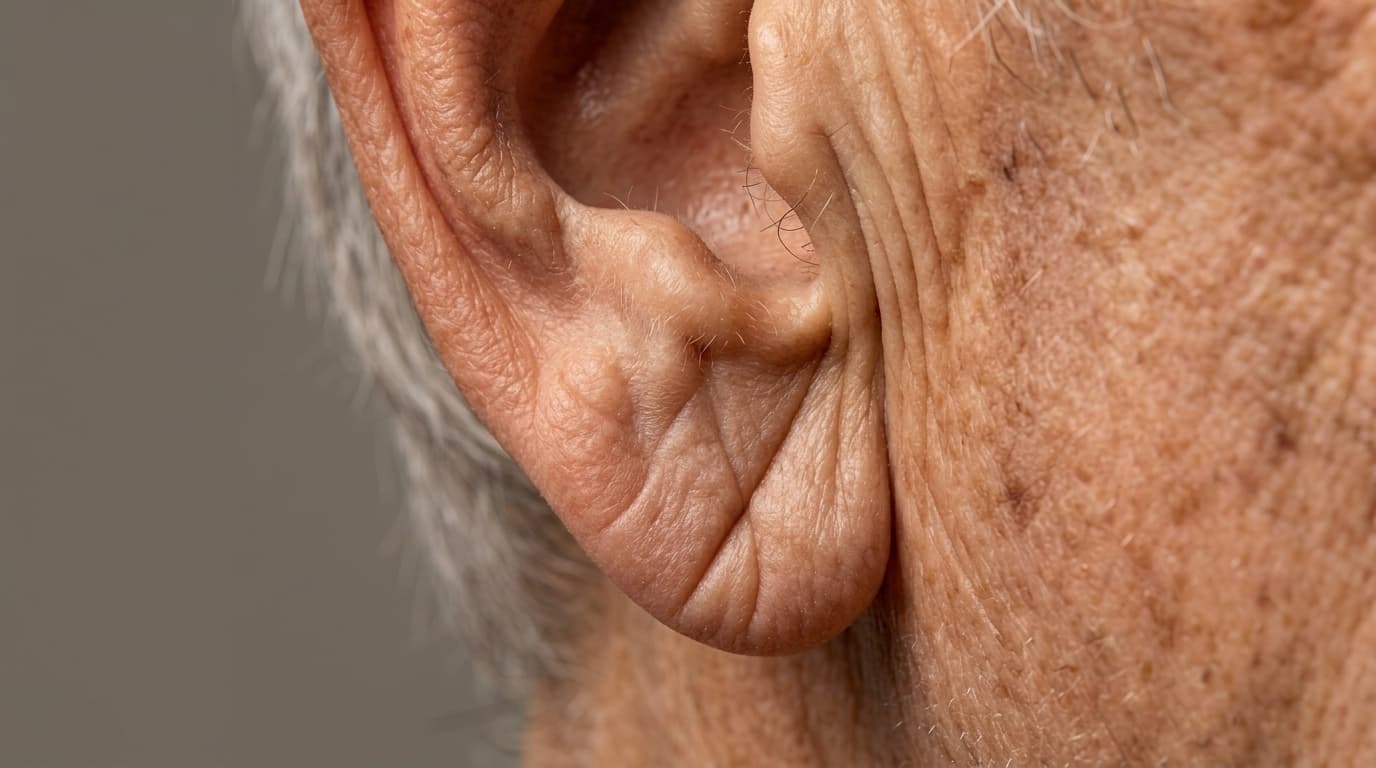


A crease in earlobe may seem like a minor physical feature, but one particular diagonal line has been studied as a possible clue to cardiovascular health. Known as Frank’s sign, a diagonal crease across the earlobe has been associated in some studies with coronary artery disease and other conditions that affect blood vessels.
However, a wrinkle on ear does not diagnose heart disease by itself. Earlobe creases become more common with age, and the sign alone does not reliably confirm or rule out cardiac disease. It should be considered alongside symptoms, established risk factors, and appropriate cardiac screening.
This guide explains what Frank’s sign is, why it may be linked with heart problems, and when a cardiovascular assessment may be appropriate.
What Is Frank’s Sign?
Frank’s sign is a diagonal crease in the soft, lower part of the ear, called the earlobe. The crease typically runs from the small cartilage projection near the ear canal toward the lower outer edge of the earlobe. It was named after Dr. Sanders T. Frank, who described a possible association between this earlobe feature and coronary heart disease in 1973. It is also called a diagonal earlobe crease.
Frank’s sign may appear as:
- A shallow or deep crease in earlobe
- A wrinkle on ear that runs diagonally rather than horizontally
- A visible line on earlobe affecting one ear or both ears
- A complete diagonal crease across the earlobe
- A more noticeable fold with increasing age
A crease on both earlobes is called a bilateral diagonal earlobe crease. Some studies have reported a stronger association with cardiovascular disease when creases are deep, complete, and present on both ears. However, Frank’s sign remains a possible marker rather than a diagnostic test.
Why Is Frank’s Sign Linked to Heart Disease?
The reason for the relationship between Frank’s sign and heart disease is not fully known. One explanation is that the earlobe and heart may be affected by similar changes in very small blood vessels, known as the microvasculature.
Researchers have also proposed that a loss of elastic and vascular fibers may contribute to the formation of a diagonal crease across the earlobe. Elastic fibers help skin and blood vessels stretch and return to shape. Changes in these fibers may reflect processes that also affect blood vessels supplying the heart.
Possible explanations for Frank’s sign include:
- Age-related changes in skin structure
- Loss of elastic and vascular fibers in the earlobe
- Changes in the microvasculature
- Reduced blood flow in very small vessels
- The presence of more widespread blood-vessel disease
These theories do not mean that a line on earlobe causes heart problems. Instead, the crease may sometimes be a visible feature that encourages a fuller review of cardiovascular health.
Common Misconceptions About Frank’s Sign
A common misunderstanding is that Frank’s sign confirms coronary artery disease. In reality, it is a physical observation that may be associated with cardiovascular risk but cannot diagnose blocked arteries, cardiac disease, or a heart attack.
Another misconception is that the crease only matters in older adults. Because a crease in earlobe is more common with ageing, it is less specific in older people. A clear crease in a younger person may be a useful reason to review cardiovascular risk factors, but it still does not confirm heart disease.
Frank’s Sign and Coronary Artery Disease
Coronary artery disease occurs when fatty deposits build up in the arteries that supply blood and oxygen to the heart. This narrowing can reduce blood flow to the heart muscle and may cause chest discomfort, shortness of breath, or, in some cases, a heart attack.
Studies have found an association between Frank’s sign and coronary artery disease, including in people who have other established risk factors such as smoking, diabetes, or high cholesterol. The association has also been reported with more extensive coronary artery disease in some research.
Still, Frank’s sign is not accurate enough to be used as a stand-alone test for cardiac disease. A person can have a crease in earlobe without blocked coronary arteries, and coronary artery disease can occur without a visible earlobe crease.
Frank’s Sign and Other Vascular Conditions
Research has also reported links between Frank’s sign and conditions affecting blood vessels outside the heart. These include cerebrovascular disease, which involves blood flow to the brain, and peripheral vascular disease, which affects blood vessels in areas such as the legs.
Cerebrovascular disease may raise the risk of stroke or transient ischaemic attack, sometimes called a mini-stroke. Peripheral arterial disease can reduce blood flow to the legs and may cause pain while walking, slow-healing wounds, or cold feet.
These findings do not mean that everyone with a line on earlobe has vascular disease. Rather, they support the importance of reviewing broader risk factors when Frank’s sign is present, especially in younger people or those with symptoms.
Who Should Consider Cardiac Screening?
A diagonal crease across the earlobe is worth mentioning at a routine medical appointment, especially if it appears on both ears or develops alongside other concerns. Cardiac screening should be based on the whole person, not only on the presence of a wrinkle on ear.
Risk factors that may make a cardiovascular assessment more important include:
- High blood pressure
- High cholesterol
- Diabetes
- Smoking or tobacco use
- A family history of early heart disease
- Obesity
- Physical inactivity
- Older age
- Chronic kidney disease
- Previous heart attack, stroke, or peripheral vascular disease
A clinician may measure blood pressure and assess weight, lifestyle, family history, and current symptoms. Blood tests may check cholesterol and blood sugar levels, while other tests are selected only when clinically appropriate.
Symptoms That Need Medical Attention
Frank’s sign is not an emergency. However, urgent medical assessment is needed when symptoms suggest a possible heart attack, stroke, or serious circulation problem.
Heart Attack Symptoms
Seek emergency help for possible heart attack symptoms, including:
- Chest pressure, tightness, heaviness, or pain
- Pain spreading to the arm, shoulder, neck, jaw, back, or upper stomach
- Sudden shortness of breath
- Cold sweats, nausea, or vomiting
- Severe, unexplained weakness, dizziness, or fainting
Cerebrovascular Disease Symptoms
Possible symptoms of cerebrovascular disease or stroke include:
- Sudden weakness or numbness on one side of the body
- Facial drooping
- Difficulty speaking or understanding speech
- Sudden vision loss or changes in vision
- Sudden loss of balance or coordination
- A sudden, severe headache
Peripheral Vascular Disease Symptoms
Symptoms that may occur with peripheral vascular disease include:
- Leg pain or cramping during walking that improves with rest
- Persistent coldness, numbness, or colour changes in a foot or leg
- Wounds on the feet or legs that heal slowly
- Sudden swelling, pain, or redness in an arm or leg
How Is Heart Disease Assessed?
A heart-health assessment starts with a discussion about symptoms, medical history, medications, family history, smoking, diet, physical activity, and known health conditions. A doctor will also carry out a physical examination and assess major cardiovascular risk factors.
Cardiac screening or diagnostic tests may include:
- Blood-pressure measurement
- Cholesterol and blood-sugar tests
- Electrocardiogram, also called an ECG, to record the heart’s electrical activity
- Echocardiogram, which uses ultrasound to assess heart structure and pumping function
- Exercise stress testing
- Heart-rhythm monitoring
- Coronary CT angiography to examine the heart arteries
- Cardiac catheterisation and coronary angiography when more detailed assessment is needed
Not everyone with a line on earlobe needs every test. The most appropriate approach depends on age, symptoms, risk factors, and the findings of the initial assessment.
Supporting Cardiovascular Health
Whether or not Frank’s sign is present, healthy daily choices can reduce the risk of heart disease and support long-term cardiovascular health. The goal is not perfection but consistent steps that improve blood pressure, cholesterol, blood sugar, fitness, and overall wellbeing.
Ways to support heart health include:
- Avoid smoking and tobacco products
- Check blood pressure regularly and follow treatment advice
- Manage cholesterol and diabetes with lifestyle changes and prescribed medication
- Choose a balanced diet rich in vegetables, fruits, whole grains, and healthy protein sources
- Limit highly processed foods, excess salt, and added sugars
- Stay physically active in a way that is safe and suitable for individual health
- Maintain a weight that supports overall health
- Take medication as prescribed
- Attend recommended health checks and follow-up appointments
People who already have coronary artery disease, diabetes, high blood pressure, or peripheral vascular disease may need a personalised check-up plan and regular cardiovascular follow-up.
Comprehensive Cardiovascular Risk Assessment at Medical Park
Medical Park Hospitals provide comprehensive cardiovascular risk assessment in Turkey for local and international patients who have symptoms, cardiovascular risk factors, or concerns about their heart health. While Frank’s sign alone does not diagnose heart disease, noticing a diagonal crease across the earlobe can be an opportunity to discuss overall cardiovascular risk with a doctor.
At Medical Park, cardiology specialists assess patients based on their medical history, family history, lifestyle habits, blood pressure, cholesterol and blood sugar levels, and any symptoms that could indicate heart or vascular disease. The Cardiology departments at Medical Park Hospitals offer access to diagnostic tests such as electrocardiography, echocardiography, exercise testing, heart-rhythm monitoring, and coronary CT imaging when clinically appropriate.
For international patients seeking cardiovascular assessment in Turkey, Medical Park provides support with appointment coordination, medical record review, diagnostic evaluation, treatment planning, and follow-up. Each patient’s assessment is tailored to their symptoms, risk factors, and individual medical needs.








 Makaleye Dön
 E-Result
 WhatsApp