


 TR
 EN
 RU
 AR
 FR


Hair loss is one of the most widespread cosmetic concerns of the modern era, affecting millions of people regardless of age, gender, or ethnicity. Whether caused by male pattern baldness, androgenic alopecia, hormonal shifts, or other underlying conditions, hair loss can significantly impact self-confidence and quality of life. The global hair transplant market is projected to reach approximately $21 billion by 2028 — a figure that reflects just how in-demand effective hair loss treatment has become worldwide.
Turkey has emerged as the world's leading destination for hair transplant surgery, combining internationally accredited facilities, highly experienced surgeons, and significantly lower costs than the UK, USA, or Western Europe. This guide covers everything you need to know about hair transplant procedures in Turkey — from candidacy and technique types to costs, recovery, and why Medical Park Hospitals is a trusted choice for international patients.
What Is a Hair Transplant?
A hair transplant is a minimally invasive cosmetic surgical procedure designed to permanently address hair loss that has not responded to other treatments. The procedure involves harvesting healthy hair follicles from a donor site — typically the back or sides of the scalp, where hair is genetically resistant to thinning — and implanting them into the area of hair loss, known as the recipient site.
Unlike topical treatments or medications, a hair transplant addresses hair loss at the follicular level, offering a long-term solution rather than temporary improvement. Because the transplanted follicles are taken from areas resistant to the hormonal effects of androgenic alopecia, results are permanent for the vast majority of patients.
Hair transplant surgery is no longer limited to men. Hair transplants for women have grown significantly in recent years, as female pattern hair loss and traction alopecia become increasingly recognized and treatable through the same techniques.
What Does a Hair Transplant Treat?
Hair transplant surgery is most commonly performed to treat the following conditions:
- Male pattern baldness (androgenic alopecia) — the most common cause of hair loss in men, driven by genetic sensitivity to DHT (dihydrotestosterone)
- Female pattern hair loss — diffuse thinning along the crown or hairline in women
- Traction alopecia — hair loss caused by prolonged tension on the follicles from tight hairstyles
- Scarring alopecia — hair loss resulting from scarring due to injury, burns, or previous surgeries
- Hairline recession — gradual retreat of the frontal hairline, common in both men and women
It is worth noting that hair transplant costs vary depending on the technique used, the extent of hair loss, the number of grafts required, and the location of the clinic. In most countries, hair transplants are considered cosmetic procedures and are not covered by insurance. Turkey offers a significantly more cost-effective alternative without compromising on clinical outcomes.
Types of Hair Transplant: FUE, FUT, and DHI Explained
Choosing the right hair transplant technique is one of the most important decisions in the process. The best hair transplant method depends on the individual patient's hair type, degree of hair loss, scalp condition, and personal goals.
FUT (Follicular Unit Transplantation)
FUT (Follicular Unit Transplantation) is the older of the main techniques. A strip of scalp containing hair follicles is surgically removed from the donor area, divided into individual grafts under a microscope, and implanted at the recipient site. FUT can yield a high number of grafts in a single session, making it suitable for patients with extensive hair loss, but it does leave a linear scar at the donor site.
FUE (Follicular Unit Extraction)
FUE (Follicular Unit Extraction) is currently the most widely practiced technique worldwide and the gold standard for most patients. Individual hair follicles are extracted directly from the donor area using a micro-punch tool, leaving only tiny, circular marks that are virtually undetectable once healed. FUE hair transplant procedures produce natural-looking results with minimal downtime and no linear scarring, making them popular with patients who prefer to wear their hair short.
DHI (Direct Hair Implantation)
DHI (Direct Hair Implantation) is an advanced evolution of the FUE technique. Using a specialized Choi implanter pen, hair follicles are extracted and implanted in a single, continuous step — without the need to create recipient channels separately. DHI offers greater precision in controlling the angle, depth, and direction of implanted follicles, resulting in a more natural hair growth pattern. Patients who undergo DHI typically experience faster healing, less post-operative bleeding, and a lower risk of scarring compared to traditional methods.
Hair Transplant for Men
Male pattern baldness is the single most common reason men seek hair transplant surgery. Affecting an estimated 50% of men by the age of 50, androgenic alopecia follows a predictable progression that is classified using the Norwood Scale — a seven-stage system that maps hairline recession and crown thinning from early loss through to complete baldness.
The earlier hair loss is addressed, the more options a patient has. However, surgeons typically recommend waiting until hair loss has stabilized before proceeding, to ensure the transplant plan accounts for future thinning and avoids an unnatural appearance over time.
Common Treatment Areas for Men
- Hairline restoration — rebuilding a receded frontal hairline to a natural and age-appropriate position
- Crown coverage — filling in thinning or completely bald areas at the top of the scalp
- Temple reconstruction — restoring the temple points that recede in early-stage male pattern baldness
- Full scalp coverage — for patients with advanced hair loss (Norwood Stage 4–6), multiple sessions may be planned to achieve comprehensive coverage
Choosing the Right Technique
FUE is the most popular choice for male patients due to its versatility and scarless healing, making it suitable for men who wear their hair short. DHI is increasingly preferred for hairline work, where precision in graft angle and direction is critical to achieving a natural-looking result. FUT remains a viable option for men requiring a very high number of grafts in a single session.
Graft Estimates by Norwood Stage
- Norwood Stage 1–2 (early recession): 500–1,500 grafts
- Norwood Stage 3–4 (moderate loss): 1,500–3,000 grafts
- Norwood Stage 5–6 (advanced loss): 3,000–5,000+ grafts
Planning for long-term results is especially important for male patients. Because androgenic alopecia is progressive, a good surgeon will design a hairline and coverage plan that looks natural not just today, but as natural hair in untreated areas continues to thin with age. This often involves a conservative hairline placement and strategic preservation of the donor supply for potential future sessions.
Hair Transplant for Women: An Increasingly Popular Option
Female hair transplant procedures have grown substantially in recent years as awareness of female pattern hair loss has increased. Women experiencing diffuse thinning, recession at the temples, or hair loss due to traction alopecia are increasingly turning to FUE and DHI techniques for natural-looking restoration. The approach differs slightly from male procedures — preserving overall density and recreating a natural hairline are paramount — but outcomes are equally impressive when performed by experienced surgeons.
Hair Transplant Before and After: What to Expect
Understanding what happens before and after surgery is essential to making an informed decision and achieving the best possible outcome.
- Before your hair transplant: A thorough consultation is conducted to assess your degree of hair loss, donor hair density, scalp condition, and medical history. Surgeons use tools such as the Norwood Scale (for men) or Ludwig Scale (for women) to classify the extent of hair loss and plan the number of grafts required. Patients are advised to stop smoking, avoid blood-thinning medications, and refrain from alcohol in the days leading up to surgery. Maintaining realistic expectations is crucial — a good surgeon will provide an honest assessment of what is achievable based on your individual donor supply.
- After your hair transplant: Some redness, swelling, and scabbing around the grafts is normal in the first 1–2 weeks. Most patients experience a phase called "shock loss" between weeks 2 and 6, where transplanted hairs temporarily shed before re-entering the growth cycle — this is completely normal and expected. New hair growth typically becomes visible between 3 and 4 months post-surgery, with significant density improvements visible by the 6–8 month mark. Full, final results — including the complete hair transplant before and after transformation — are usually appreciated at 12 months or beyond.
Hair Transplant Procedure: Step by Step
A hair transplant in Turkey typically takes between 4 and 10 hours depending on the technique and the number of grafts being transplanted. The procedure is performed under local anesthesia, keeping patients comfortable throughout. The general steps include:
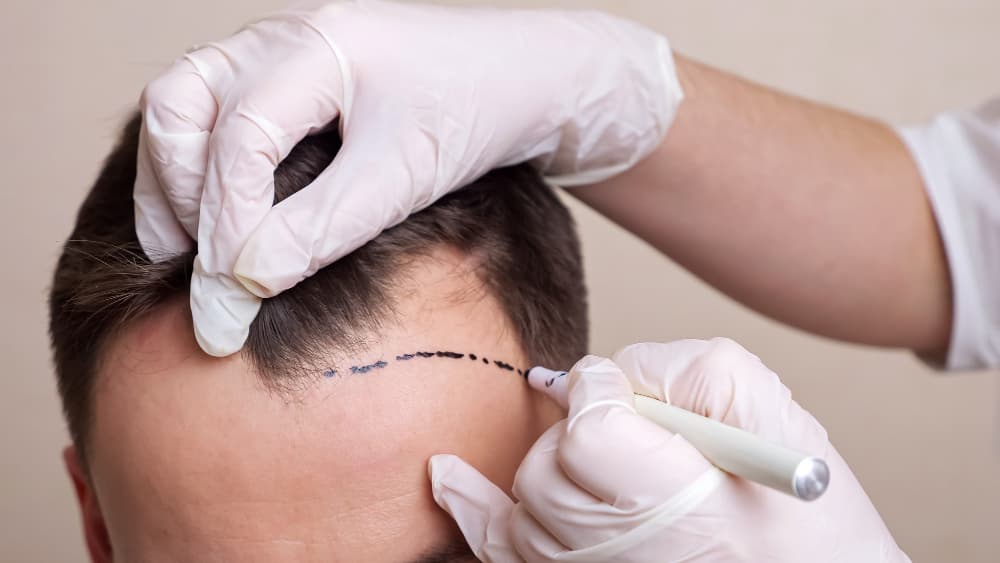
- Pre-operative consultation and hairline design
- Administration of local anesthesia to both donor and recipient areas
- Preparation of the donor site (shaving if required)
- Harvesting of individual follicles or strip (depending on FUE, FUT, or DHI)
- Graft preparation and sorting under magnification
- Creation of recipient channels at precise angles and depths
- Implantation of follicular grafts at the recipient site
- Post-operative care instructions and follow-up planning
Hair Transplant Recovery Timeline
- Days 1–3: Some swelling, redness, and tenderness around the donor and recipient areas
- Week 1–2: Scabbing forms and gradually resolves; patients can usually return to desk-based work within 7–10 days
- Weeks 2–6: Shock loss phase — transplanted hairs shed temporarily (this is normal)
- Months 3–4: New hair begins to emerge from the transplanted follicles
- Months 6–8: Noticeable density and coverage improvements become visible
- 12 months+: Full results achieved; hair continues to thicken and mature
Read our dedicated guide on hair transplant results after 10 years to understand how transplanted hair ages, what long-term maintenance looks like, and what patients can realistically expect from their results over the following decade.
Why Choose Turkey for Your Hair Transplant?
Turkey performs more hair transplant procedures annually than any other country, and the reasons are clear. Patients who travel to Turkey for hair graft surgery benefit from:
- Significantly lower costs than Western Europe and North America, without compromising on outcomes
- World-class surgical facilities with international accreditations including JCI certification
- Highly experienced surgeons who perform hundreds of hair transplant procedures each year across diverse patient profiles
- Advanced techniques including FUE, DHI, and sapphire FUE, many pioneered or refined in Turkey
- Comprehensive all-inclusive packages that handle logistics from arrival to departure
- Short waiting times compared to many countries where demand exceeds availability
Hair Transplant Cost in Turkey: What's Included in Packages?
One of the most compelling reasons patients choose Turkey for hair transplant surgery is cost. Hair transplant prices in Turkey 2025 remain significantly lower than equivalent procedures in the UK, USA, Germany, or Australia — often by 60–70% — without any reduction in quality or safety standards.
Hair transplant packages in Turkey typically include:
- All-inclusive surgical costs (consultation, procedure, anesthesia, post-op care)
- Airport transfers and local transportation
- Hotel accommodation for the duration of the stay
- Translator and patient coordinator services
- Free follow-up consultations after returning home
The cost of a hair transplant in Turkey varies based on the technique chosen (FUE, FUT, or DHI), the number of grafts required, the facility's reputation and location, and any additional services included in the package. Istanbul is the most popular city for international patients, offering a wide range of accredited clinics and the added appeal of one of the world's most vibrant cities.
Why Choose a Trusted, Internationally Accredited Hospital Over a Hair Transplant Clinic in Turkey?
Turkey's popularity as a hair transplant destination has created a highly competitive market — and not all providers operate to the same standard. While standalone clinics are widely available and heavily marketed to international patients, there are compelling reasons to choose a fully accredited hospital for a procedure that permanently alters your appearance.
In many standalone clinics, the consulting surgeon assesses you at the initial appointment but hands the actual extraction and implantation work to technicians. At accredited hospitals, the procedure is performed by qualified, board-certified dermatologists or plastic surgeons who remain actively involved throughout. The skill and judgment of the person holding the instruments directly determines your outcome.
What accredited hospitals offer that clinics typically cannot:
- JCI-certified safety standards — independent verification of surgical protocols, infection control, staff qualifications, and clinical governance that standalone clinics are rarely subject to
- Full medical infrastructure — emergency departments, on-call physicians, ICUs, and diagnostic labs on site to manage any complications promptly
- Comprehensive pre- and post-operative care — multi-disciplinary assessments before surgery and structured dermatological follow-up afterward, including remote support for international patients managing recovery from home
- Strict sterilization standards — operating theaters held to the same hygiene protocols as any other surgical procedure in the facility
- Transparent patient rights and accountability — formal governance frameworks, clear informed consent processes, and established channels for complaints or concerns
- Institutional reputation and track record — decades of documented outcomes across thousands of patients, rather than marketing-led before-and-after galleries
For international patients traveling abroad and placing significant trust in a team they cannot easily vet in advance, choosing a hospital with independently verified accreditation meaningfully reduces the risk of complications, poor results, and costly corrective procedures.
Medical Park Hospitals holds JCI accreditation and has over 30 years of surgical experience — providing the full safety infrastructure, qualified medical personnel, and post-operative support that every hair transplant patient deserves.
Hair Transplant at Medical Park Hospitals, Turkey
Hair transplant procedures are performed year-round at Medical Park facilities by qualified, board-certified dermatologists and plastic surgeons — not technicians. Medical Park Hospitals holds multiple national and international accreditations, including JCI (Joint Commission International) certification — the globally recognized gold standard in healthcare quality. JCI accreditation is awarded only to institutions that meet rigorous independent standards across patient safety, surgical protocols, infection control, staff qualifications, and clinical governance. For international patients, this certification provides independently verified assurance that care at Medical Park meets the same benchmarks expected at leading hospitals in the UK, USA, and Western Europe.
- A genuinely international patient experience: Medical Park Hospitals has extensive experience serving patients from across Europe, the Middle East, Central Asia, and beyond. Dedicated international patient coordinators guide overseas patients through every stage of the process — from initial inquiry and pre-operative assessment to travel logistics, in-hospital care, and remote post-operative follow-up after returning home. Translation services are available in multiple languages, and all-inclusive hair transplant packages can be tailored to individual needs and budgets.
- Pre- and post-operative care: Unlike standalone clinics, Medical Park provides a fully integrated care pathway. Before surgery, patients undergo thorough medical evaluation including dermatological assessment, blood work, and review of any relevant health conditions. After the procedure, patients receive structured follow-up care with access to dermatologists and specialist nursing staff — both during their stay in Turkey and remotely once they have returned home. This continuity of care is a significant advantage for international patients and contributes directly to better long-term outcomes.
- Proven outcomes and patient volume: Medical Park Hospitals performs thousands of hair transplant procedures annually across its network, accumulating one of the largest and most diverse patient outcome records in Turkey. High surgical volume translates directly into refined technique, experienced teams, and the ability to handle the full spectrum of hair loss cases — from early hairline recession to advanced androgenic alopecia requiring 5,000+ grafts.
For patients seeking the best hair transplant in Turkey, Medical Park Hospitals offers the reassurance of a fully accredited hospital environment, transparent pricing, experienced surgical teams, and end-to-end support — from your first consultation to your final follow-up.




 Makaleye Dön
 E-Result
 WhatsApp