


 TR
 EN
 RU
 AR
 FR


Hypothyroidism is one of the most common thyroid disorders worldwide, yet it frequently goes unrecognised for years. Because its symptoms — fatigue, weight gain, hair thinning, low mood — tend to develop slowly and overlap with many other conditions, a significant number of people live with an underactive thyroid without ever receiving a proper diagnosis. Left untreated, hypothyroidism can have a meaningful impact on quality of life and long-term health, affecting everything from heart function and fertility to mental wellbeing and metabolic balance.
This guide covers everything you need to know: from the earliest signs of an underactive thyroid and the blood tests used to detect it, to treatment options, dietary considerations, and the full range of conditions that fall under the hypothyroidism umbrella — including Hashimoto's thyroiditis, subclinical hypothyroidism, and thyroid nodules.
What Is Hypothyroidism?
Hypothyroidism, commonly known as underactive thyroid, is a condition in which the thyroid gland fails to produce enough thyroid hormone to meet the body's needs. The thyroid is a small, butterfly-shaped gland located at the base of the neck, just below the Adam's apple. Despite its size, it plays a powerful role in regulating nearly every system in the body — from metabolism and heart rate to body temperature and protein production.
When thyroid hormone levels fall too low, the body's processes begin to slow down. In its early stages, hypothyroidism may cause no noticeable symptoms at all. Over time, however, an untreated underactive thyroid can contribute to serious complications, including high cholesterol and cardiovascular disease. The good news is that once diagnosed, hypothyroidism is typically straightforward to manage with thyroid hormone medication, and most patients go on to live full, healthy lives.
Hypothyroidism Symptoms: What to Look For
One of the challenges of hypothyroidism is that its symptoms tend to develop gradually, often over several years, and can easily be mistaken for normal signs of aging or everyday stress. In the early stages, you may notice only mild fatigue or slight weight gain. As thyroid hormone levels continue to drop, the symptoms become more pronounced.
Common Hypothyroidism Symptoms in Adults
The most frequently reported signs of an underactive thyroid include:
- Persistent tiredness and fatigue — feeling exhausted even after a full night's sleep
- Weight gain, often without any change in diet or activity level
- Increased sensitivity to cold — feeling cold when others around you do not
- Constipation, dry skin, and coarse hair
- Thinning hair — one of the more distressing and commonly reported symptoms of hypothyroidism, particularly among women, which can range from general shedding to more pronounced patterned hair loss
- Puffy face, especially around the eyes, and a hoarse voice
- Muscle weakness, aches, and stiffness
- Slowed heart rate (bradycardia)
- Depression, low mood, and difficulty concentrating
- Memory problems
- Heavier or irregular menstrual cycles
Hypothyroidism Symptoms in Females
While hypothyroidism affects people of all genders, women are significantly more likely to develop the condition. Hypothyroidism symptoms in females often include heavier-than-normal periods, irregular menstrual cycles, reduced fertility, and difficulties during pregnancy. If you are a woman experiencing unexplained changes in your menstrual cycle alongside fatigue, weight changes, or hair thinning, thyroid function is worth investigating.
Hypothyroidism in Infants
Most newborns with an underactive thyroid do not show symptoms immediately after birth, which is why routine newborn thyroid screening is essential. If hypothyroidism in infants goes undetected and untreated, even mild cases can lead to serious physical and mental development problems. Signs to watch for include:
- Feeding difficulties and poor weight gain
- Yellowing of the skin and eyes (jaundice)
- Constipation and poor muscle tone
- Dry skin and a hoarse cry
- An enlarged tongue and a soft bulge near the belly button (umbilical hernia)
Hypothyroidism in Children and Teens
Children and adolescents with hypothyroidism generally experience symptoms similar to those seen in adults, but may also show:
- Poor growth resulting in short stature
- Delayed development of permanent teeth
- Delayed puberty
- Impaired mental development
Causes of Hypothyroidism
Hypothyroidism can develop for a number of reasons, ranging from autoimmune disease (by far the most common cause) to surgical intervention, medication side effects, and nutritional deficiencies.
Hashimoto's Disease (Hashimoto's Thyroiditis)
The most common cause of hypothyroidism worldwide is Hashimoto's disease, also known as Hashimoto's thyroiditis. This is an autoimmune condition in which the body's immune system mistakenly attacks the thyroid gland, gradually impairing its ability to produce hormones. Hashimoto's thyroiditis tends to run in families and is far more prevalent in women than in men. It is often associated with other autoimmune conditions, such as type 1 diabetes and celiac disease.
It is worth noting that Graves' disease — another autoimmune thyroid condition — causes the opposite problem: hyperthyroidism (overactive thyroid). However, some of the immune mechanisms overlap, and treatment for Graves' disease symptoms (such as radioactive iodine therapy) can sometimes result in hypothyroidism as a secondary consequence.
Other Common Causes
Beyond Hashimoto's thyroiditis, hypothyroidism can also result from:
- Thyroid surgery — removal of all or part of the thyroid gland can significantly reduce or eliminate its hormone-producing capacity
- Radiation therapy — treatment for cancers of the head and neck can damage thyroid tissue over time
- Thyroiditis — inflammation of the thyroid, triggered by infections or autoimmune processes, sometimes causes a temporary surge in thyroid hormone followed by an underactive phase
- Medications — certain drugs, most notably lithium used in psychiatric treatment, can interfere with thyroid hormone production
- Iodine deficiency — while rare in countries where iodized salt is widely used, insufficient dietary iodine remains a cause of hypothyroidism in some parts of the world
- Pituitary disorders — a failure of the pituitary gland to produce enough thyroid-stimulating hormone (TSH), often due to a benign tumor, can also impair thyroid function
- Pregnancy — some women develop hypothyroidism during or after pregnancy, and if left untreated it carries increased risks of miscarriage, premature delivery, and developmental problems in the baby
Subclinical and Asymptomatic Hypothyroidism
Not all cases of hypothyroidism present with obvious symptoms. Subclinical hypothyroidism refers to a condition in which TSH levels are mildly elevated but thyroid hormone levels (T3 and T4) remain within the normal range. This is also often described as asymptomatic hypothyroidism because many affected individuals feel perfectly well.
Subclinical hypothyroidism is relatively common, particularly in older women. While it does not always require immediate treatment, it is worth monitoring closely, as it can progress to overt hypothyroidism over time and may carry subtle risks for cardiovascular health. Your doctor will consider your individual circumstances — including your age, symptom profile, and whether thyroid antibodies are present — when deciding whether treatment is appropriate.
Hypothyroidism with Nodule
Thyroid nodules — small lumps or growths within the thyroid gland — are a common finding and often occur alongside hypothyroidism. Most nodules are benign and do not require treatment beyond regular monitoring. However, the presence of a nodule alongside hypothyroidism warrants careful evaluation, including ultrasound imaging and, in some cases, a fine needle biopsy, to rule out any concern for malignancy. The coexistence of hypothyroidism with nodule does not necessarily change the treatment approach for the thyroid condition itself, but it does require attentive follow-up.
Diagnosing Hypothyroidism: The TSH Blood Test
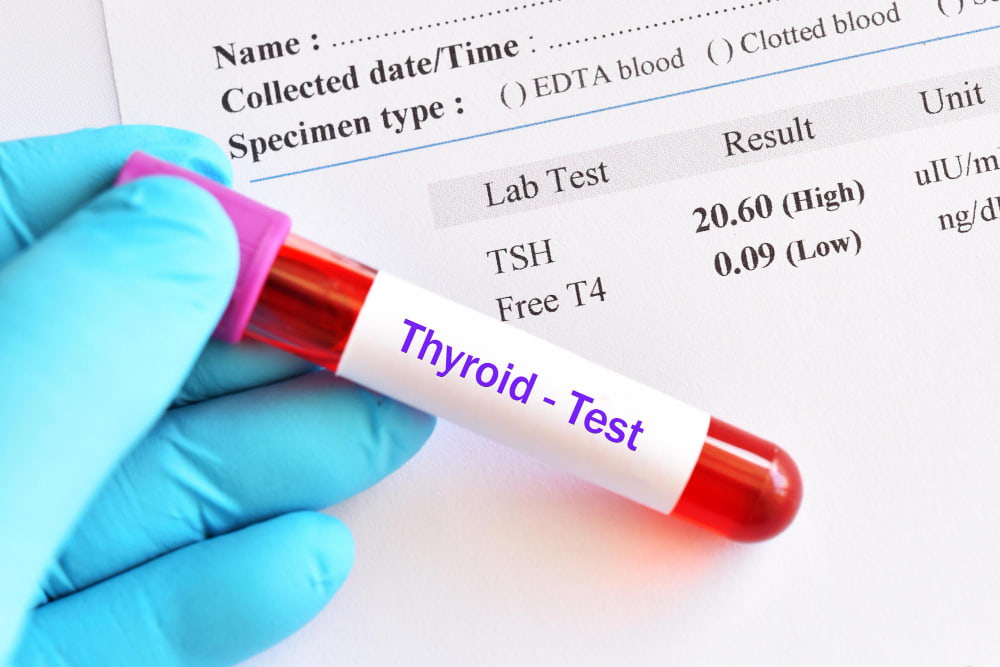
Hypothyroidism is diagnosed through a blood test. The primary test used is the TSH blood test, which measures the level of thyroid-stimulating hormone in the blood. TSH is produced by the pituitary gland and acts as a signal to the thyroid to produce more hormone. When thyroid output is low, the pituitary compensates by releasing more TSH — so an elevated TSH level is the key indicator of an underactive thyroid.
In addition to the TSH test, your doctor may also order measurements of free T4 (thyroxine) to get a fuller picture of thyroid function. If autoimmune thyroid disease is suspected, testing for thyroid peroxidase (TPO) antibodies can help confirm a diagnosis of Hashimoto's thyroiditis.
If you are experiencing symptoms that could point to a thyroid condition, thyroid function panels are also commonly included as part of a comprehensive check-up, making it easy to assess thyroid health alongside a broader evaluation of your overall wellbeing.
Hypothyroidism Treatment
The standard treatment for hypothyroidism is daily oral supplementation with synthetic thyroid hormone, most commonly levothyroxine. This medication is taken once a day, usually in the morning on an empty stomach, and effectively replaces the hormone that the thyroid is unable to produce in sufficient quantities.
Finding the right dosage may take some time and adjustment. Your doctor will monitor your TSH levels through regular blood tests — typically every six to twelve weeks initially, and then annually once your levels have stabilised. Most people with hypothyroidism take thyroid hormone medication for life, but with correct dosing, the condition is very well controlled and patients typically experience full symptom relief.
Losing Weight with Hypothyroidism
Weight gain is one of the most frustrating aspects of an underactive thyroid, and many people wonder whether it is possible to lose weight with hypothyroidism. The answer is yes — but it requires patience. Once thyroid hormone levels are properly restored with medication, the metabolic slowdown that caused the weight gain begins to reverse. However, thyroid treatment alone is not a rapid weight-loss solution, and the amount of weight lost through medication alone is usually modest. To support healthy weight management, regular physical activity, adequate sleep, and mindful eating habits all play important roles alongside treatment.
Hypothyroidism Diet: What to Eat and What to Limit
While no specific hypothyroidism diet has been proven to treat the condition, nutrition choices can support overall thyroid health and general wellbeing.
Foods that support thyroid function include those rich in iodine (fish, seafood, dairy, and eggs), selenium (Brazil nuts, tuna, and sunflower seeds), and zinc (meat, shellfish, and legumes). A balanced, varied diet rich in whole foods is the foundation.
A few things are worth being mindful of:
- Very large quantities of raw cruciferous vegetables (cabbage, broccoli, cauliflower) contain goitrogens that can mildly interfere with thyroid hormone production — though cooking reduces this effect significantly
- Soy products and high-fiber foods, when consumed in large amounts close to the time of taking thyroid medication, can reduce absorption
- Calcium supplements, iron supplements, and antacids should be taken several hours apart from levothyroxine, as they can all interfere with how the medication is absorbed
Complications of Untreated Hypothyroidism
When hypothyroidism is left undiagnosed or inadequately treated over a prolonged period, the effects extend well beyond tiredness and weight gain. The gradual lack of thyroid hormone begins to affect multiple organ systems, and the complications that develop can be serious and, in some cases, irreversible.
- Goiter — Persistently high TSH levels, produced by the pituitary gland in an attempt to stimulate a failing thyroid, can cause the thyroid gland to enlarge. This swelling at the base of the neck may become visible and, in larger cases, cause discomfort when swallowing or breathing.
- Heart disease — An underactive thyroid leads to elevated LDL cholesterol, which accumulates in the arteries and raises the risk of heart disease and heart failure over time. Cardiovascular complications are among the most serious consequences of long-term unmanaged hypothyroidism.
- Peripheral neuropathy — Prolonged thyroid hormone deficiency can damage the peripheral nerves, which carry signals between the brain, spinal cord, and the rest of the body. This typically presents as pain, numbness, or tingling in the arms and legs.
- Infertility and pregnancy complications — Low thyroid hormone interferes with ovulation and raises the risk of miscarriage, premature birth, and preeclampsia in pregnant women. Babies born to mothers with untreated hypothyroidism also face a higher risk of developmental problems.
- Mental health and cognitive decline — Chronic hypothyroidism has a well-documented effect on mood and cognitive function, with persistent depression, slowed thinking, and memory difficulties common in people whose thyroid levels remain uncontrolled.
- Myxedema coma — In rare but extreme cases, severely untreated hypothyroidism can result in myxedema coma, a life-threatening emergency characterised by dangerously low body temperature, slowed breathing, and loss of consciousness. It requires immediate medical intervention and carries a significant mortality risk even with treatment.
Endocrinology and Thyroid Care at Medical Park
For international patients seeking diagnosis or treatment for thyroid conditions in Turkey, Medical Park Hospital Group offers a compelling combination of clinical expertise, advanced diagnostic infrastructure, and accessible, high-quality care in Turkey.
Specialists at Medical Park's Endocrinology departments are experienced in evaluating and treating the full spectrum of thyroid disorders, including:
- Hypothyroidism and Hashimoto's thyroiditis
- Subclinical and asymptomatic hypothyroidism
- Hyperthyroidism and Graves' disease
- Thyroid nodules and goiter
- Thyroid conditions related to pregnancy or other autoimmune diseases
End-to-End Thyroid Care for International Patients
International patients frequently choose Medical Park for thyroid care because comprehensive evaluation — including TSH and thyroid hormone blood panels, thyroid antibody testing, and ultrasound imaging — can often be completed within a single visit or a short stay. For patients who have been living with undiagnosed or poorly managed hypothyroidism in their home country, this efficient, end-to-end diagnostic process can be genuinely life-changing.
Medical Park's hospitals are equipped with international patient services teams that provide support with appointment coordination, translation, travel logistics, and continuity of care after returning home. Treatment plans and follow-up protocols are shared with patients in full, enabling your local physician to continue managing your care seamlessly once you are back.
Whether you are seeking a second opinion, a first diagnosis, or a more thorough evaluation than has been available to you locally, Medical Park combines the standards of internationally accredited hospital care with the accessibility and value that make Turkey one of Europe's leading destinations for medical tourism.





 Makaleye Dön
 E-Result
 WhatsApp