


 TR
 EN
 RU
 AR
 FR




Kidney diseases are a group of conditions that affect the structure or function of the kidneys, which play an essential role in filtering waste from the blood, balancing fluids and minerals, regulating blood pressure, and supporting other processes in the body. Kidney disease can develop gradually, as in chronic kidney disease (CKD), or occur suddenly, as in acute kidney injury (AKI). It can also result from conditions such as diabetes and high blood pressure, inflammation, inherited disorders, infections, urinary obstruction, or other factors.
Because different kidney diseases can affect the body in different ways, their symptoms, progression, and treatment can vary considerably. Some kidney conditions cause few or no noticeable symptoms in their early stages, while others may lead to pain, changes in urination, swelling, fatigue, or more serious problems with kidney function.
This guide provides a comprehensive overview of kidney disease, including how the kidneys are affected, the stages of chronic kidney disease, common symptoms and causes, acute kidney injury, diagnostic tests, and available treatment options.
What Do the Kidneys Do, and What Is Kidney Disease?
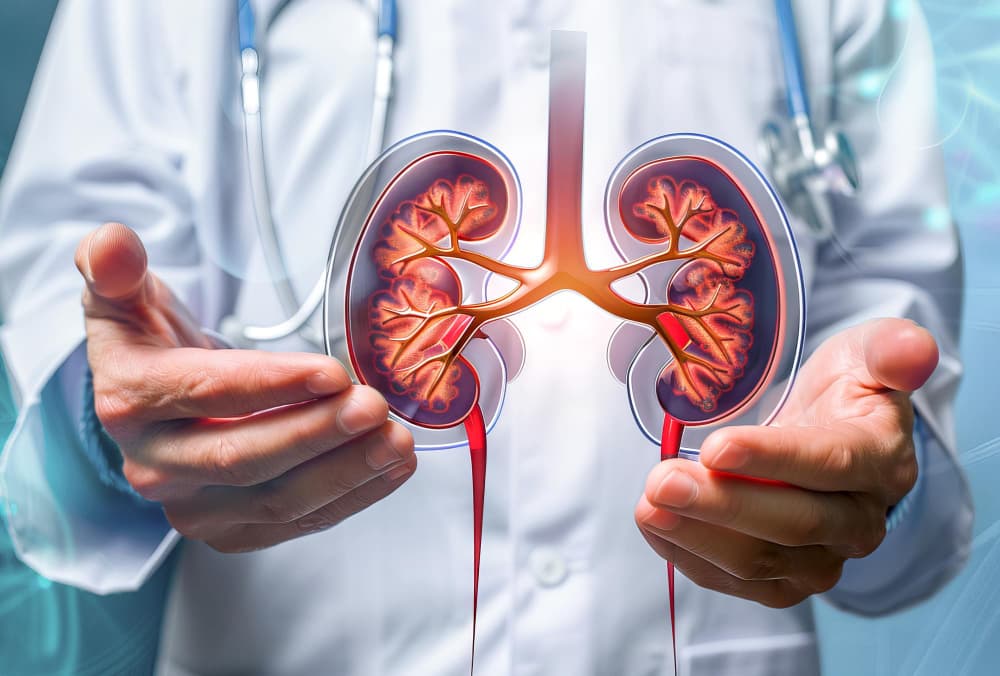
The kidneys are two organs located toward the back of the abdomen. They continuously filter the blood and remove waste products and excess water through urine. They also help maintain the body's balance of minerals and fluids and contribute to blood pressure regulation and red blood cell production.
Kidney disease occurs when a condition damages the kidneys or interferes with their ability to perform these functions. The problem may affect the filtering units of the kidneys, the blood vessels supplying them, the structures involved in urine production, or the urinary tract.
Not every kidney condition causes permanent loss of function. For example, some episodes of acute kidney injury can improve substantially after the underlying cause is treated. By contrast, chronic kidney disease persists for at least three months and may gradually progress, although appropriate treatment can often slow this process.
When kidney function becomes severely impaired, waste products and excess fluid can accumulate in the body. This is known as kidney failure. Kidney disease and kidney failure are therefore not interchangeable terms: kidney disease can range from mild abnormalities with preserved kidney function to severe disease requiring kidney replacement therapy.
Chronic Kidney Disease (CKD) Stages
Chronic kidney disease can range from very mild kidney damage to severe loss of kidney function. Doctors use several measurements to determine how advanced the disease is, but one of the most important is the estimated glomerular filtration rate (eGFR). This is a blood-test result that gives an estimate of how well the kidneys are filtering waste from the blood.
The eGFR is used to place CKD into five stages. In general, a higher number means better filtering function. However, the number needs to be considered alongside other findings, such as protein or albumin in the urine, because a mildly reduced eGFR does not necessarily mean that a person has CKD.
| CKD Stage | eGFR (mL/min/1.73 m²) | What It Generally Means |
|---|---|---|
| Stage 1 (G1) | ≥90 | Kidney function is normal or high, but there is other evidence of kidney damage |
| Stage 2 (G2) | 60–89 | Kidney function is mildly reduced, with other evidence of kidney damage |
| Stage 3a (G3a) | 45–59 | Mild to moderate reduction in kidney function |
| Stage 3b (G3b) | 30–44 | Moderate to severe reduction in kidney function |
| Stage 4 (G4) | 15–29 | Severe reduction in kidney function |
| Stage 5 (G5) | <15 | Kidney failure |
The stage gives doctors an idea of how much kidney function has been affected, but it does not tell the whole story. The cause of CKD, the amount of albumin in the urine, whether kidney function is changing over time, and other health conditions can all affect how the disease is managed.
Early-Stage Kidney Disease (Stages 1–2)
In stages 1 and 2, the kidneys can still filter blood relatively well. In fact, many people have no symptoms at all. CKD may be discovered through urine and blood tests during a routine check-up or screening rather than because a person feels unwell.
Tests may show small amounts of albumin or blood in the urine, or imaging may reveal changes in the kidneys. Diabetes, high blood pressure, or a family history of kidney disease may also lead a doctor to recommend regular kidney testing.
At this stage, treatment focuses on finding and managing the cause of kidney damage and protecting kidney function for as long as possible. Keeping blood pressure and blood glucose under control when needed can be particularly important.
Moderate Kidney Disease (Stage 3)
Stage 3 is divided into stage 3a and stage 3b, depending on the eGFR. Kidney function is more noticeably reduced than in earlier stages, although some people still have few symptoms.
As CKD progresses, some people may develop:
Tiredness or reduced energy
Swelling in the ankles, feet, or around the eyes
Changes in urination
High blood pressure
Anemia
Changes in blood levels of minerals or other substances normally regulated by the kidneys
Regular follow-up becomes increasingly important at this stage. Doctors may monitor kidney function, urine albumin, blood pressure, blood counts, and other tests while adjusting treatment according to the person's needs.
Advanced Kidney Disease (Stage 4)
Stage 4 means that kidney function is severely reduced, with an eGFR of 15–29. Symptoms and complications become more likely as the kidneys become less able to remove waste and maintain the body's normal fluid and mineral balance.
Treatment continues to focus on slowing further kidney damage and managing complications. This is also an important stage for discussing what may be needed if kidney function declines further, including dialysis or kidney transplantation.
Planning ahead does not mean that dialysis or transplantation is immediately necessary. Rather, it gives patients and their healthcare team time to understand the available options and prepare if kidney replacement therapy eventually becomes appropriate.
Kidney Failure (Stage 5)
Stage 5 CKD, often referred as kidney failure or end-stage kidney disease, occurs when the eGFR falls below 15. At this point, kidney function is severely impaired and the kidneys may no longer be able to remove enough waste and excess fluid to keep the body in balance.
Some people with stage 5 CKD may develop significant fatigue, nausea, loss of appetite, itching, swelling, shortness of breath, or other symptoms. However, symptoms and their severity vary from person to person.
When kidney function is no longer sufficient to meet the body's needs, treatment options may include dialysis or kidney transplantation. In some situations, conservative kidney management may also be considered. The appropriate approach depends on the person's symptoms, overall health, preferences, and medical circumstances.
Symptoms of Kidney Disease
Kidney disease symptoms vary considerably. Some people have significant kidney damage without obvious symptoms, which is why testing is important for people at increased risk.
Early and Subtle Signs
Early kidney disease may be difficult to recognize because the kidneys can continue performing many of their functions despite damage. When symptoms do occur, they may be mild or attributed to other causes.
Possible early signs include:
- Changes in how often a person urinates or the amount of urine produced
- Foamy or unusually frothy urine, which may be associated with excess protein in the urine
- Blood in the urine
- Increased need to urinate at night
- Mild swelling around the ankles or eyes
- Persistent tiredness or reduced energy
- High blood pressure that is difficult to control
These findings do not necessarily mean that a person has kidney disease. Persistent changes should be evaluated rather than interpreted on their own.
Signs of More Advanced Kidney Disease
As kidney function declines, waste products and excess fluid can accumulate, and disturbances in mineral, acid-base, and hormone regulation can develop. Symptoms may include:
- More pronounced swelling in the legs, feet, hands, or around the eyes
- Significant fatigue or weakness
- Nausea or loss of appetite
- Itching
- Muscle cramps
- Shortness of breath, particularly when excess fluid accumulates
- Changes in concentration or sleep
- Changes in urine output
Kidney disease can also contribute to anemia because damaged kidneys may produce less erythropoietin, a hormone involved in red blood cell production.
Renal Colic: A Different Kind of Kidney Pain
Severe pain in the side or lower back is more commonly associated with conditions such as kidney stones or urinary obstruction than with uncomplicated CKD.
Renal colic, also called nephritic or kidney stone colic in some contexts, is typically caused when a stone obstructs the flow of urine. The pain can be severe and may radiate from the back or side toward the abdomen or groin. Nausea, vomiting, blood in the urine, or urinary symptoms may occur at the same time.
This type of pain should not be treated as a typical symptom of chronic kidney disease. Kidney stones and urinary obstruction require their own evaluation, which may include urine testing and imaging such as an ultrasound or CT scan.
What Causes Kidney Disease?
Kidney disease is not a single condition, and different kidney diseases develop in different ways. Some are complications of other diseases, such as diabetes or long-standing high blood pressure. Others arise from inflammation of the kidney's filtering structures, inherited genetic changes, abnormal immune activity, infections, urinary obstruction, or structural abnormalities.
Understanding the specific disease affecting the kidneys is important because the symptoms, expected course, tests, and treatment can be very different from one condition to another.
Diabetic Kidney Disease
Diabetic kidney disease is a complication of diabetes that develops when persistently high blood glucose damages the small blood vessels and filtering structures of the kidneys. It is one of the most common causes of chronic kidney disease.
The damage can develop gradually, often without noticeable symptoms in its early stages. One of the earliest signs may be an increased amount of albumin, a type of protein, in the urine. As the disease progresses, kidney function may begin to decline.
Treatment focuses on controlling diabetes and other factors that can accelerate kidney damage. Regular monitoring of blood glucose, blood pressure, urine albumin, and kidney function can help identify changes early and guide treatment.
Hypertensive Kidney Disease
Hypertensive kidney disease is kidney damage associated with long-standing high blood pressure. Persistent pressure on the blood vessels can cause structural changes within the kidneys and gradually impair their ability to filter blood.
High blood pressure and kidney disease can also contribute to each other. Damaged kidneys may have difficulty regulating fluid and hormonal systems involved in blood pressure control, which can make hypertension more difficult to manage.
Treatment therefore includes careful blood pressure management alongside appropriate evaluation and treatment of the kidney disease itself. The aim is to reduce further damage and protect the kidney function that remains.
Glomerulonephritis and Glomerular Disease
Glomerular diseases affect the glomeruli, the tiny filtering structures inside the kidneys. Glomerulonephritis specifically refers to inflammation of the glomeruli, although not all glomerular diseases are inflammatory.
These conditions can have many different causes. Some result from abnormal immune activity, while others are associated with infections or systemic diseases. Different forms can affect the kidneys in different ways and may be either acute or chronic.
Depending on the condition, a person may develop:
- Blood or protein in the urine
- Swelling, particularly around the eyes, legs, or ankles
- High blood pressure
- Reduced kidney function
- Changes in urine output
Examples include IgA nephropathy, in which deposits of the antibody immunoglobulin A build up in the glomeruli, and lupus nephritis, in which systemic lupus erythematosus causes inflammation and damage within the kidneys.
Because glomerular diseases have different causes, diagnosis may involve blood and urine tests, imaging, immune-related testing, and sometimes a kidney biopsy. Treatment is determined by the specific disease and may range from monitoring and supportive treatment to medicines that target abnormal immune activity.
Polycystic Kidney Disease
Polycystic kidney disease is a genetic disorder in which multiple fluid-filled cysts develop in the kidneys. Unlike diabetic or hypertensive kidney disease, it is not caused by damage from high blood glucose or blood pressure. The cysts themselves can enlarge the kidneys and, over time, may interfere with their function.
The most common form is autosomal dominant polycystic kidney disease (ADPKD). Because it is inherited, a family history of the condition can be an important clue during assessment.
Polycystic kidney disease symptoms vary between individuals but may include:
- High blood pressure
- Blood in the urine
- Abdominal, side, or back discomfort
- Kidney stones
- Recurrent kidney or urinary tract infections
- Increasing abdominal fullness as the kidneys become enlarged
Some people maintain good kidney function for many years, while others develop progressive CKD and eventually kidney failure. Management depends on the person's age, kidney function, symptoms, rate of progression, and other complications associated with the disease.
Genetic and Autoimmune Causes of Kidney Disease
Some kidney diseases arise from genetic changes or abnormal immune activity. These conditions may be less common than diabetes or hypertension but are important to recognize because their diagnosis and treatment can differ considerably.
Alport Syndrome
Alport syndrome is a genetic disorder affecting collagen, a structural protein found in the kidneys, inner ear, and eyes. Abnormal collagen can damage the kidney's filtering structures and lead to persistent blood in the urine and, in some cases, progressive loss of kidney function.
Alport syndrome symptoms may also include hearing loss or certain eye abnormalities. The condition can be inherited in different patterns, including X-linked, autosomal recessive, and autosomal dominant forms.
Diagnosis may involve family history, urine and blood tests, hearing and eye assessments, genetic testing, and, in selected cases, kidney biopsy.
Fabry Disease and Fabry Nephropathy
Fabry disease is an inherited lysosomal storage disorder caused by changes affecting the production or activity of the enzyme alpha-galactosidase A. This leads to the accumulation of certain substances in cells throughout the body, including kidney cells.
Fabry disease symptoms can include pain in the hands and feet, skin findings, sweating abnormalities, gastrointestinal symptoms, hearing problems, and cardiovascular or kidney involvement. Fabry nephropathy refers specifically to kidney damage caused by the disease.
Fabry disease treatment may include enzyme replacement therapy or other disease-specific approaches, depending on the patient's diagnosis and clinical findings. Early recognition is important because treatment may help reduce the risk of progressive organ damage.
Autoimmune Kidney Disease
Autoimmune kidney disease occurs when an abnormal immune response damages kidney tissue. It can occur as part of a systemic autoimmune disorder or primarily affect the kidneys.
Examples include lupus nephritis and certain forms of glomerulonephritis. Treatment depends on the specific disease and may involve medicines that control inflammation or suppress abnormal immune activity.
Acute Kidney Injury (AKI)
Acute kidney injury develops over a short period, often over hours or days, with a sudden decline in kidney function. It is different from CKD, which develops or persists over a longer period.
AKI can occur in people whose kidneys were previously healthy or in those who already have CKD. Common causes include:
- Severe dehydration or significant blood loss
- Severe infection or sepsis
- Low blood pressure or reduced blood flow to the kidneys
- Certain medications or substances that can injure the kidneys
- Urinary obstruction
- Direct kidney injury or inflammation
Acute kidney injury symptoms can include reduced urine output, swelling, nausea, fatigue, confusion, or shortness of breath, although some cases are detected mainly through blood tests.
Creatinine levels are commonly monitored because a rise in blood creatinine can indicate a decline in kidney filtration. Additional testing is used to identify the cause.
Some people recover much of their kidney function after AKI when the underlying problem is treated. Recovery varies according to the cause, severity, previous kidney health, and other medical conditions. Severe cases may require temporary dialysis.
How Is Kidney Disease Diagnosed?
There is no single kidney function test that provides a complete picture. Doctors usually combine medical history, physical examination, blood tests, urine tests, and imaging, with additional investigations when necessary.
Common tests include:
- Blood creatinine and eGFR: Creatinine is a waste product measured in the blood. Its level is used together with other information to estimate kidney filtration.
- Urine albumin test: The urine albumin-to-creatinine ratio (ACR) can detect abnormal protein loss through the kidneys.
- Urinalysis: This can identify blood, protein, inflammatory findings, and other abnormalities.
- Blood tests: Additional tests may assess electrolytes, blood counts, glucose, and other factors relevant to the suspected cause.
- Kidney ultrasound: Ultrasound can show kidney size, structure, cysts, obstruction, and other abnormalities.
- Kidney biopsy: In selected cases, a small tissue sample is examined under a microscope to determine the type and severity of kidney damage.
A single abnormal result does not always establish chronic kidney disease. When CKD is suspected, abnormalities such as reduced eGFR or increased urine albumin generally need to be interpreted over time to establish whether they are persistent and to distinguish chronic disease from an acute problem.
Kidney Disease Treatment
Kidney disease treatment depends on the cause, stage, rate of progression, symptoms, and the person's overall health. Some conditions can be treated directly, while others require long-term measures to preserve remaining kidney function and prevent complications.
Managing the Underlying Cause
Treating the condition responsible for kidney damage is often central to protecting kidney function.
This may include:
- Improving blood glucose control in diabetic kidney disease
- Controlling high blood pressure
- Treating autoimmune or inflammatory kidney disease
- Managing infections when they are responsible for kidney injury
- Relieving urinary obstruction
- Providing disease-specific treatment for inherited kidney disorders
- Monitoring medications that may affect kidney function
The treatment plan should be individualized rather than based solely on the CKD stage.
Medications and Diet
Medications used in kidney disease vary according to the cause and complications. Depending on the patient's condition, treatment may include medicines that lower blood pressure, reduce protein loss through the kidneys, control blood glucose, correct anemia, or manage mineral and electrolyte abnormalities.
Nutrition also becomes increasingly important as CKD progresses. A kidney disease diet may need to address sodium, protein, potassium, phosphorus, fluid intake, or other nutritional factors. The appropriate diet depends on the individual's kidney function, laboratory results, medications, and other health conditions, so restrictive diets should not be started without professional guidance.
Dialysis and Kidney Transplant
When kidney function becomes severely impaired, kidney replacement therapy may be needed.
- Dialysis replaces some of the kidneys' filtering functions. The main forms are hemodialysis, which filters the blood through a dialysis machine, and peritoneal dialysis, which uses the lining of the abdomen as a filtering surface.
- Kidney transplantation involves placing a functioning kidney from a suitable donor into a person with kidney failure. For appropriate patients, transplantation can provide an alternative to long-term dialysis, but it requires evaluation, ongoing medical care, and medications to prevent rejection.
Treatment for Specific Causes
Some kidney diseases require specialized treatment beyond general CKD management. For example, autoimmune glomerular diseases may require immunosuppressive treatment, while certain inherited conditions may have targeted therapies.
Kidney stones and obstruction are treated according to their cause and location rather than according to CKD treatment principles. Similarly, AKI requires rapid identification and treatment of the problem responsible for the sudden decline in kidney function.
Living With Kidney Disease
A diagnosis of kidney disease does not automatically mean that kidney failure will develop. Many people with CKD remain stable for years, particularly when the condition is identified early and the factors contributing to kidney damage are well controlled.
Long-term kidney care may include regular blood and urine tests, blood pressure monitoring, medication adjustments, and treatment of related health conditions. The exact follow-up schedule depends on the stage and cause of kidney disease.
For many patients, protecting kidney function also means looking after overall metabolic and cardiovascular health. Depending on individual needs, these may include:
Keeping blood pressure under control
Managing diabetes effectively
Following individualized dietary advice
Staying physically active when appropriate
Avoiding smoking
Taking medications as prescribed
Attending regular follow-up appointments
Discussing potentially kidney-harming medications with a healthcare professional before using them regularly
The goal is not simply to improve a single laboratory result but to preserve kidney function and overall health for as long as possible. People with diabetes or high blood pressure should pay particular attention to controlling these metabolic and cardiovascular conditions because both can accelerate kidney damage. Early detection and consistent management can make a significant difference in protecting kidney function over time.
Why Choose Medical Park for Kidney Disease Care?
The treatment of kidney diseases may require different areas of medical expertise depending on the underlying condition. At Medical Park Hospitals in Turkey, Nephrology and Urology specialists work within a multidisciplinary healthcare environment to evaluate and treat a wide range of kidney and urinary tract conditions. This includes chronic kidney disease, acute kidney injury, glomerular and autoimmune kidney diseases, diabetic and hypertensive kidney disease, kidney stones, urinary obstruction, and inherited conditions such as polycystic kidney disease.
Patients undergo the examinations and tests appropriate to their condition, which may include blood and urine tests, kidney function assessment, imaging, and other specialized investigations. Based on the findings, our specialists develop an individualized treatment plan and provide ongoing follow-up according to the patient's diagnosis, kidney function, and overall health. For advanced kidney disease, care may also include dialysis and evaluation for kidney transplantation when appropriate.
For patients considering kidney disease treatment in Turkey, Medical Park provides specialist evaluation and treatment together with support for international patients throughout their care. The Medical Park International Patient Services Center assists with coordinating appointments, medical records, consultations, treatment planning, and follow-up, helping international patients access the appropriate medical teams and services




 Makaleye Dön
 E-Result
 WhatsApp