


 TR
 EN
 RU
 AR
 FR


Liposuction is a cosmetic surgical procedure that removes localized fat deposits to improve body contours and create a more proportionate appearance. It is commonly performed on the abdomen, flanks, thighs, arms, and other areas where stubborn fat persists despite maintaining a relatively stable weight.
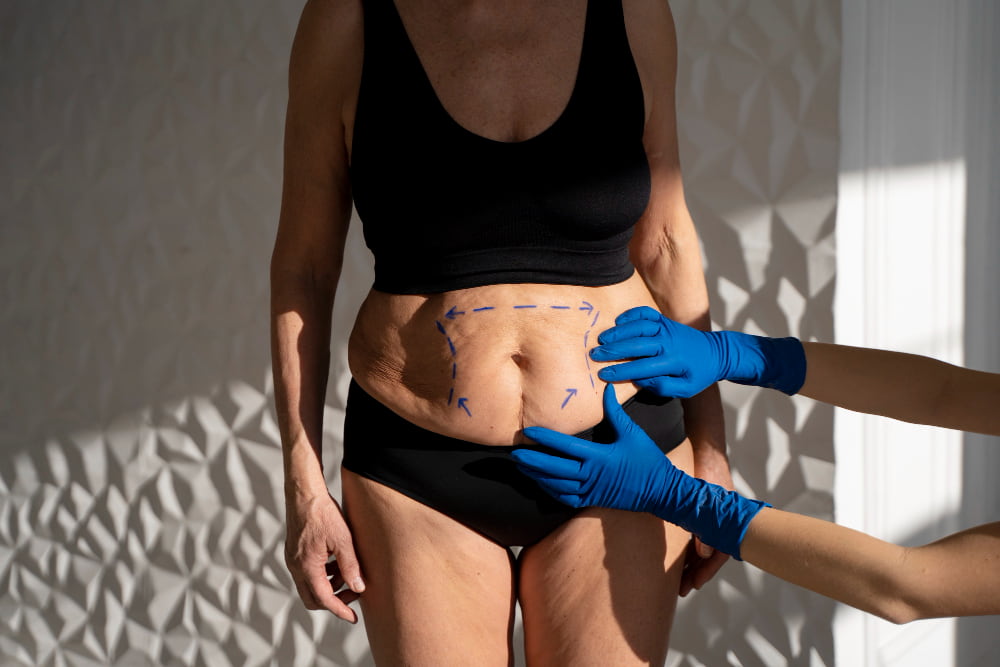
For people considering belly fat removal, liposuction can help define the abdominal area by reducing subcutaneous fat beneath the skin. However, it is not a weight-loss procedure, does not remove visceral fat surrounding internal organs, and cannot correct substantial loose skin or separated abdominal muscles.
The suitability of liposuction depends on factors such as fat distribution, skin elasticity, general health, and individual aesthetic goals. Several techniques are available, including tumescent, ultrasound-assisted, power-assisted, and laser-assisted liposuction, each with specific considerations.
This guide explains how liposuction works, how to remove fat from the stomach, the differences between belly liposuction and a tummy tuck, the factors affecting treatment costs in Turkey, and what to expect during surgery and recovery.
What Is Liposuction?
Liposuction is a cosmetic surgery that removes excess subcutaneous fat, the layer of fat located beneath the skin. A plastic surgeon uses a thin tube called a cannula to loosen and suction out fat through small incisions. The goal is to improve the proportions and contours of the treated area rather than achieve significant weight loss.
As one of the most widely performed body sculpting procedures, liposuction is best suited to localized fat deposits rather than substantial weight reduction.
Liposuction can be performed on several areas of the body, including:
Abdomen and waist: To reduce localized fat deposits around the stomach and flanks.
Thighs and hips: To improve body proportions by treating stubborn fat in these areas.
Arms: To reduce localized fat that affects the contour of the upper arms.
Chin and neck: To address selected fat deposits beneath the chin or around the neck. Fat in the cheeks is treated differently; buccal fat removal reduces the buccal fat pads to alter the contours of the lower cheeks.
Back and chest: To treat localized fat deposits when clinically appropriate. In men with enlarged breasts, gynecomastia may involve excess fatty tissue, enlarged glandular tissue, or both, so treatment depends on the underlying cause.
Fat accumulation in the thighs or arms can sometimes be associated with lipedema, a chronic condition that may cause disproportionate fat buildup, pain, or tenderness. Because lipedema treatment requires an assessment of the condition itself, the appropriate approach may differ from cosmetic liposuction for localized fat deposits.
Liposuction may be suitable for adults who are generally healthy, have a relatively stable weight, and have sufficient skin elasticity to allow the skin to adapt to the new contours. The procedure is not a treatment for obesity, and results depend on factors such as the amount and distribution of fat, skin quality, and individual anatomy.
A consultation with a qualified plastic surgeon is necessary to determine whether liposuction is appropriate and which treatment approach may best meet the patient's goals.
How to Remove Fat from the Stomach
Removing fat from the stomach can involve lifestyle changes, medical weight-management support, or cosmetic surgery, depending on the type of fat and the individual's goals. The distinction between subcutaneous fat and visceral fat is particularly important when considering abdominal fat removal.
Subcutaneous fat sits beneath the skin and can often be pinched between the fingers. Visceral fat lies deeper inside the abdomen, surrounding internal organs. Although both contribute to abdominal size, liposuction targets subcutaneous fat and cannot remove visceral fat.
For people seeking a more defined abdominal contour, the available approaches include:
Nutrition and physical activity: A balanced diet and regular exercise can support overall fat loss and help maintain a stable weight. However, they cannot guarantee targeted fat loss from the stomach alone.
Medical weight management: People with excess body weight may benefit from an individualized weight-management plan before considering cosmetic surgery.
Abdominal liposuction: This procedure removes selected subcutaneous fat deposits when a patient is an appropriate surgical candidate.
Tummy tuck surgery: Abdominoplasty may be more suitable when excess abdominal skin is a primary concern, particularly after substantial weight loss or pregnancy.
The appropriate approach depends on whether the main concern is excess fat, loose skin, abdominal muscle separation, or a combination of these factors. A plastic surgeon can assess the abdomen and explain which options are likely to produce a suitable result.
Belly Fat Removal with Liposuction
Belly liposuction is designed to reduce localized fat deposits around the abdomen and improve its overall contour. It may be considered by people who are close to their desired weight but have persistent abdominal fat that does not respond as expected to lifestyle changes.
During the procedure, the surgeon makes small incisions in selected locations and inserts a cannula to remove fat from beneath the skin. The treatment area and amount of fat removed depend on the patient's anatomy, skin elasticity, health status, and desired outcome.
Abdominal liposuction may address fat deposits in the upper or lower abdomen and can sometimes be combined with treatment of the flanks to improve the transition between the waist and abdomen. The surgeon determines the appropriate areas and extent of treatment during the preoperative assessment.
Who Is a Suitable Candidate for Belly Liposuction?
Belly liposuction may be appropriate for people who:
Have localized abdominal fat deposits despite maintaining a relatively stable weight.
Have sufficient skin elasticity for the skin to adapt to the reduced volume beneath it.
Are in generally good health and can safely undergo surgery and anesthesia.
Understand that the procedure is intended for body contouring rather than substantial weight loss.
Have realistic expectations about the results, recovery period, and potential risks.
People with significant loose skin or weakened abdominal muscles may need a different procedure or a combination of treatments. Smoking, certain medical conditions, medications, and other factors can also affect surgical suitability and healing.
What Results Can You Expect?
Liposuction can improve abdominal contours by reducing the thickness of localized fat deposits. However, the final appearance depends on the amount of fat removed, skin elasticity, tissue characteristics, and healing.
Swelling and bruising are common after surgery, so the abdominal shape changes gradually as recovery progresses. Liposuction removes fat cells from the treated area, but remaining fat cells can still enlarge with weight gain. Maintaining a relatively stable weight helps preserve the results.
It is also important to understand that liposuction does not tighten substantial amounts of loose skin or repair separated abdominal muscles. Patients with these concerns should discuss alternative or combined procedures with their surgeon.
Belly Liposuction vs. Tummy Tuck (Abdominoplasty)
Belly liposuction and tummy tuck surgery both aim to improve the abdominal appearance, but they address different concerns. Liposuction primarily removes localized fat, whereas a tummy tuck, also known as abdominoplasty, removes excess skin and may include tightening separated abdominal muscles.
| Feature | Belly Liposuction | Tummy Tuck (Abdominoplasty) |
|---|---|---|
| Main purpose | Removes localized fat deposits | Removes excess skin and may repair separated abdominal muscles |
| Suitable candidates | People with localized fat and relatively good skin elasticity | People with loose abdominal skin, sometimes accompanied by muscle separation |
| Fat removal | Yes, from selected areas beneath the skin | May include liposuction as part of a combined treatment plan |
| Excess skin removal | Does not remove substantial loose skin | Yes, removes selected excess skin |
| Abdominal muscle repair | Does not repair separated muscles | May include muscle repair when indicated |
| Incisions | Usually small incisions | Typically a longer incision across the lower abdomen |
| Recovery | Depends on the extent of fat removal and the technique used | Often involves a longer recovery because of the more extensive surgery |
Liposuction may be the better option when localized fat is the main concern and the skin is expected to adapt adequately after fat removal. A tummy tuck may be more appropriate when loose skin or abdominal muscle separation contributes significantly to the abdominal shape.
In selected patients, the procedures can be combined to address both fat deposits and excess skin. The decision depends on the patient's anatomy, health, and goals, as well as the surgeon's assessment of the risks and benefits.
What Are the Types of Liposuction?
Several liposuction techniques are available. They differ in how the fat is loosened or prepared for removal, and the most appropriate option depends on the treatment area, the amount of fat being addressed, and the surgeon's experience.
Tumescent Liposuction
Tumescent liposuction involves injecting a solution containing saline, a local anesthetic, and a medication that constricts blood vessels into the treatment area. This solution helps prepare the tissue for fat removal and can reduce bleeding and discomfort. The fat is then removed using a cannula.
Ultrasound-Assisted Liposuction and VASER
Ultrasound-assisted liposuction uses ultrasonic energy to help loosen fat before it is suctioned out. VASER is a specific ultrasound-assisted technique that uses targeted ultrasonic energy to facilitate fat removal.
These methods may be considered for selected treatment areas, but their suitability depends on the patient's anatomy and treatment goals. They are not guaranteed to produce better results than other techniques in every case.
Power-Assisted Liposuction
Power-assisted liposuction uses a mechanically moving cannula to help loosen and remove fat. The movement can make fat removal more efficient in some situations, depending on the area being treated and the surgeon's technique.
Laser-Assisted Liposuction
Laser-assisted liposuction uses laser energy to heat and disrupt fat tissue before removal. Some techniques may also affect the surrounding tissue, but the degree of skin tightening varies and should not be assumed to eliminate loose skin.
Laser-assisted liposuction is not suitable for every patient, and its benefits and limitations should be discussed during the surgical consultation.
Before recommending a technique, the plastic surgeon evaluates the patient's health, skin elasticity, fat distribution, and expectations. The most appropriate method is the one that best fits the individual treatment plan, rather than necessarily being the newest or most expensive option.
How Much Does Liposuction Cost in Turkey?
The cost of liposuction in Turkey varies according to the treatment area, the amount of fat being removed, the surgical technique, and the complexity of the procedure. The patient's health, anesthesia requirements, hospital facilities, and whether multiple areas are treated can also affect the overall price.
For international patients, the total cost may additionally depend on which services are included in the treatment package, such as accommodation, transfers, consultations, and postoperative follow-up. These items should be confirmed individually rather than assumed to be part of every package.
What Affects the Cost of Belly Fat Removal Surgery?
The cost of belly fat removal surgery depends on several factors, including:
Treatment area: Treating the abdomen alone may have a different cost from treating the abdomen and flanks together.
Amount and distribution of fat: The extent of the planned procedure affects its complexity and duration.
Surgical technique: The selected liposuction method and the equipment required may influence pricing.
Anesthesia and hospital care: The anesthesia approach, operating room requirements, and any necessary hospital stay can affect the total cost.
Additional procedures: Combining liposuction with a tummy tuck or treating other areas can change the overall treatment plan and price.
Included services: Consultation, tests, medications, compression garments, transfers, accommodation, and follow-up may be priced separately or included in a package.
The price of belly fat removal surgery and other liposuction procedures depends on the treatment area, the surgical technique used, the complexity of the procedure, and the services included in the overall treatment package.
What Is the Cost of Laser Belly Fat Removal?
The cost of laser belly fat removal depends on several factors, including the size of the treatment area, the amount of fat to be removed, the complexity of the procedure, and the type of laser-assisted liposuction technique used. Anesthesia, hospital facilities, the surgeon's assessment, and any additional services included in the treatment package may also affect the total cost.
Because treatment plans vary from patient to patient, the price should be assessed alongside the suitability of the technique and the services provided. A plastic surgeon can evaluate the patient's needs, explain the available options, and recommend an appropriate approach based on the desired results and individual circumstances.
Is Liposuction in Turkey Affordable?
Turkey is a destination for international patients considering cosmetic surgery, including liposuction. However, prices vary between hospitals, surgeons, procedures, and treatment packages. A meaningful comparison should account for the surgeon's qualifications, the standards of the surgical facility, the planned procedure, and the availability of postoperative care.
Because liposuction is generally considered elective cosmetic surgery, it is usually not covered by health insurance. Coverage depends on the policy and whether the procedure meets any applicable medical-necessity criteria.
For an individualized price estimate, patients should provide details about the areas they wish to treat and undergo the necessary medical assessment. The proposed treatment and its associated costs can then be explained before surgery is scheduled.
How Is Liposuction Performed?
Liposuction begins with a consultation and preoperative assessment. The plastic surgeon reviews the patient's medical history, medications, general health, skin quality, and fat distribution to determine whether the procedure is appropriate.
The operation generally involves the following steps:
Anesthesia: Local anesthesia, sedation, or general anesthesia may be used depending on the extent of the procedure and the patient's circumstances.
Incisions: The surgeon makes small incisions in selected locations near the treatment area.
Fat removal: A cannula is inserted through the incisions to loosen and suction out the targeted fat deposits.
Closure and dressing: The instruments are removed, the incisions are managed appropriately, and dressings and compression garments are applied as indicated.
Postoperative monitoring: The medical team monitors the patient and provides instructions for wound care, medication use, movement, and follow-up.
The duration of surgery depends on the number of areas being treated and the complexity of the operation. Some patients can return home the same day, while others may require a longer period of observation or a hospital stay.
Liposuction removes subcutaneous fat rather than visceral fat surrounding the internal organs. In selected cases, some of the fat removed during surgery can also be processed and transferred to another area to restore volume or refine contours. This separate procedure, known as fat transfer (grafting), may be considered when a patient wants to reduce fat in one area while adding volume elsewhere.
As with any surgery, liposuction carries potential risks, including bleeding, infection, fluid accumulation, irregular contours, changes in sensation, and complications related to anesthesia. The surgeon should explain the relevant risks and the measures used to reduce them before the patient gives consent.
Liposuction Recovery and Results
Recovery after liposuction varies according to the treatment area, the amount of fat removed, the surgical technique, and the individual's healing process. Swelling, bruising, tenderness, and temporary changes in sensation are common during the initial recovery period.
Patients should follow the surgeon's instructions carefully, including guidance on wound care, activity, medication, and compression garments.
Important aspects of recovery include:
Compression garments: These may be recommended to help manage swelling and support the treated area during healing.
Physical activity: Gentle movement is generally encouraged as directed, while strenuous exercise and heavy lifting should be postponed until the surgeon considers them appropriate.
Hydration and nutrition: Adequate fluid intake and balanced nutrition support general recovery.
Smoking and alcohol: Patients should follow medical advice about avoiding smoking and limiting or avoiding alcohol before and after surgery, as these can affect healing and surgical safety.
Follow-up appointments: Scheduled reviews allow the medical team to assess healing, address concerns, and advise when normal activities can resume.
Some patients may return to desk-based work within about a week, but this is not a universal timeline. More extensive procedures or physically demanding jobs may require additional time away from work.
Swelling can take weeks or months to resolve, and the final contours may not become apparent for several months. Results also depend on skin elasticity, healing, and weight stability. Patients should contact their medical team if they experience concerning symptoms, such as increasing pain, fever, spreading redness, shortness of breath, or sudden swelling.
Maintaining a stable weight and following long-term healthy lifestyle habits can help preserve the results. Liposuction permanently removes some fat cells from the treated area, but it does not prevent remaining fat cells from enlarging or fat from accumulating elsewhere.
What Are the Risks of Liposuction?
Liposuction is generally considered safe when performed on suitable candidates by a qualified plastic surgeon, but it carries risks like any surgery. Potential complications include bleeding, infection, fluid accumulation, uneven contours, changes in skin sensation, and complications related to anesthesia. Rare but serious complications can include blood clots and damage to deeper tissues or organs.
Although these risks cannot be eliminated entirely, they can be significantly reduced through careful patient selection, an experienced plastic surgeon, and a trusted hospital with advanced medical infrastructure and appropriate surgical facilities. A thorough preoperative assessment also helps identify individual risk factors.
Patients should discuss potential complications and the measures used to minimize them with their surgeon before proceeding.
Why Choose Medical Park for Liposuction in Turkey?
Medical Park’s Plastic Surgery departments provide liposuction operations in Turkey for patients seeking to reduce localized fat deposits and improve body contours. The plastic surgeons assess factors such as fat distribution, skin elasticity, general health, and the patient's goals when determining the appropriate treatment.
Depending on these findings, the procedure may target the abdomen, flanks, thighs, arms, or other areas. When excess skin or abdominal muscle separation is also present, a tummy tuck may be discussed as an alternative or complementary procedure.
Medical Park operates 27 hospitals across Turkey, with more than 5,300 beds and surgical facilities supporting a range of medical and surgical procedures. For international patients, Medical Park’s International Patient Services Center coordinates treatment arrangements and provides information about consultations, estimated costs, accommodation and transfer options, and postoperative follow-up.
The treatment plan and associated services are determined according to the patient's needs and the arrangements made before surgery. The consultation process also covers the selected liposuction technique, expected results, recovery requirements, and potential risks. These factors help establish whether liposuction is appropriate and whether another procedure may better address the patient's concerns.
For broader information about cosmetic and reconstructive surgery options, including other procedures available at Medical Park, explore our dedicated guide on Plastic Surgery in Turkey.





 Makaleye Dön
 E-Result
 WhatsApp