


 TR
 EN
 RU
 AR
 FR


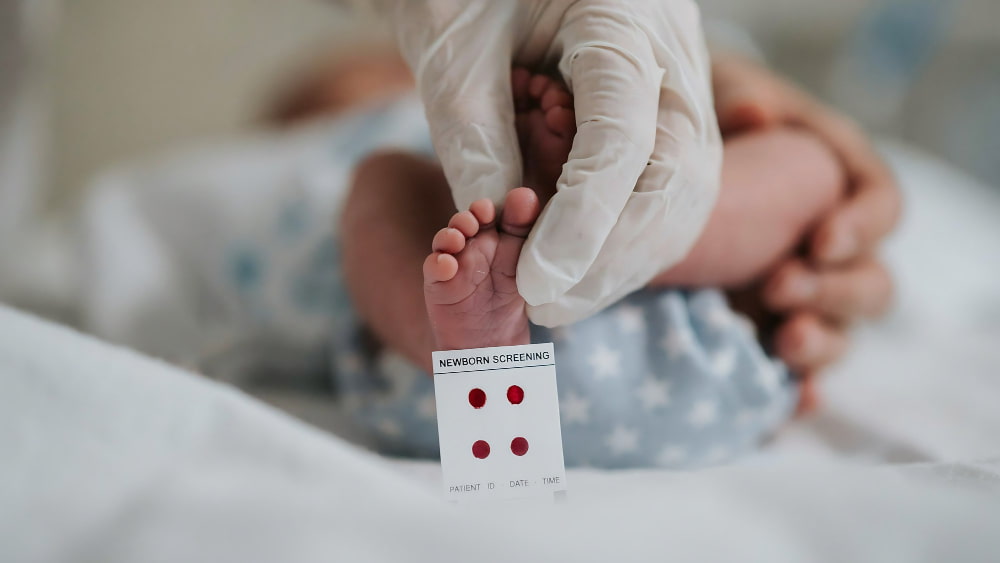

Newborn screening is a set of routine tests performed in the first days of a baby's life to detect certain serious health conditions before symptoms appear. Although the term is often associated with the heel prick test, newborn screening actually includes three distinct components: a blood spot test for selected metabolic, endocrine, and genetic conditions; a hearing screening; and pulse oximetry screening for critical congenital heart disease (CCHD).
These tests help identify conditions that may not be apparent during a routine newborn examination but can benefit from early treatment. Understanding what each test checks for and how the results are interpreted can help parents feel more prepared, especially if further testing is recommended.
This guide explains what each newborn screening test involves, when it is performed, what the results may mean, and how follow-up testing works.
What Is Newborn Screening?
Newborn screening is designed to identify health conditions that may not be visible when a baby is born. Many babies with an inherited metabolic disorder, hearing loss, or a serious heart problem appear healthy at first, even though early treatment may be important for their development and long-term health.
The term “newborn screening” refers to three different tests carried out around the same time:
- Blood spot screening: A few drops of blood are taken from the baby’s heel to screen for selected metabolic, endocrine, and genetic conditions.
- Hearing screening: A painless test checks whether the baby responds to sound.
- Pulse oximetry screening: A sensor measures the oxygen level in the blood to screen for certain critical congenital heart defects.
These tests are part of routine newborn care in many countries. The exact newborn screening panel and follow-up procedures vary by country and region, so the conditions included in one program may not be identical to those included elsewhere.
Newborn screening takes place after delivery and is different from prenatal screening, which is performed during pregnancy to assess the health and development of the fetus.
When Is Newborn Screening Done?
Newborn screening is usually performed within the first 24 to 48 hours after birth, often before the baby leaves the hospital. The timing may change if the baby is born prematurely, requires intensive care, has not yet fed adequately, or is discharged very soon after birth.
The blood spot test is generally collected after the baby has had time to feed. If it is taken too early, the healthcare team may recommend a repeat newborn screening test later. Babies born outside a hospital or discharged before screening should be taken to an appropriate healthcare facility for testing.
The three parts of screening do not all produce results at the same time. Hearing screening and pulse oximetry can usually be completed at the bedside, with an initial result available shortly afterward. The blood sample is sent to a laboratory, so newborn screening results may take longer to become available.
In Turkey, some blood spot screening programs may involve an initial sample before discharge and a second sample during the first week of life, depending on the national protocol and the baby’s circumstances. Parents should follow the instructions provided by the hospital or healthcare provider.
The Blood Spot Heel Prick Test
The blood spot test, also called the heel prick test, heel stick, or newborn blood spot test, uses a few drops of blood collected from the baby’s heel. The sample is placed on a special card and sent to a laboratory for analysis.
This test is sometimes called the Guthrie test. The name refers to Dr. Robert Guthrie, who developed an early screening method for phenylketonuria, or PKU, in the 1960s. Although current screening methods are more advanced, the term is still used in some healthcare settings.
How the Heel Prick Test Works
A healthcare professional cleans and gently warms the baby’s heel before using a sterile lancet to make a small puncture. Several drops of blood are placed onto marked circles on a filter-paper card.
The card is dried and sent to a laboratory, where the sample is tested for selected conditions included in the local newborn screening panel. The procedure takes only a few minutes. Babies may cry briefly during the heel prick, but the discomfort is short-lived.
The test does not require a large blood sample. It is a targeted screening test for newborns, not a general blood examination and not a complete genetic test.
What the Blood Spot Screens For
A newborn metabolic screening panel may include conditions from several categories:
- Metabolic disorders that affect how the body processes proteins, fats, or carbohydrates.
- Endocrine disorders, such as congenital hypothyroidism.
- Genetic disorders that can affect development or organ function.
- Certain inherited blood disorders, depending on the local program.
Examples included in some screening programs are cystic fibrosis newborn screening, sickle cell newborn screening, congenital adrenal hyperplasia screening, galactosemia screening, and testing for biotinidase deficiency. The exact panel varies, so there is no single universal answer to the question, “How many conditions does newborn screening test for?”
The blood spot test looks for specific markers associated with certain conditions. It does not assess every possible genetic or medical problem, and a normal result does not guarantee that a child will never develop a health condition.
PKU Testing
PKU is one of the best-known conditions detected through newborn screening. The pku test, also called pku testing or pku screening, illustrates why screening is performed even when a baby appears healthy.
What Is Phenylketonuria (PKU)?
Phenylketonuria is an inherited metabolic disorder caused by a deficiency or reduced activity of phenylalanine hydroxylase. This enzyme normally helps the body break down phenylalanine, an amino acid found in protein-containing foods.
When phenylalanine cannot be processed properly, it can accumulate in the blood and affect the developing brain. Babies with PKU usually do not show obvious phenylketonuria symptoms immediately after birth, which is why pku newborn testing is important.
Why Early Detection Matters
If PKU is not detected and treated, high phenylalanine levels can cause serious and irreversible intellectual disability and neurological problems. With early diagnosis and appropriate phenylketonuria treatment, children can often develop normally.
Treatment commonly involves a carefully controlled pku diet that limits phenylalanine while providing the nutrients needed for growth. A specialist metabolic team monitors blood levels and adjusts the diet as the child develops. Some patients may also receive medication, depending on the type and severity of the condition.
A positive PKU screening result does not confirm phenylketonuria. It means that additional blood tests and clinical assessment are needed to determine whether the baby has PKU or another explanation for the screening result.
Newborn Hearing Screening
Newborn hearing screening checks whether a baby may have hearing loss present at birth. Early identification of congenital hearing loss allows parents and healthcare professionals to arrange diagnostic testing and support at an early stage.
The test is painless and can usually be performed while the baby is sleeping. It does not require the baby to respond consciously or indicate whether the baby will develop normal speech.
How Hearing Screening Works
Two main methods are used for newborn hearing screening:
Otoacoustic emissions, or OAE, measure the response produced by the inner ear after sounds are played through a small earpiece. A probe placed in the ear canal sends soft sounds and records the echo produced by the cochlea.
An auditory brainstem response, or ABR, measures how the auditory nerve and brainstem respond to sound. Small earphones deliver clicks or tones, while sensors placed on the baby’s head record the electrical response.
The method used may depend on the hospital, the baby’s medical history, and the screening protocol. Some babies receive one test, while others require a different method or both tests.
If Your Baby Does Not Pass the Hearing Screen
A newborn failed hearing test does not necessarily mean that the baby has permanent hearing loss. Fluid in the middle ear, movement, crying, background noise, or temporary blockage in the ear canal can affect the result.
A “did not pass” or “refer” result means that newborn hearing screening follow-up is needed. The healthcare provider may repeat the screening before discharge or arrange an outpatient test.
If the repeat screen is also abnormal, the baby may be referred for diagnostic hearing testing with an audiologist. Confirmatory testing is more detailed than screening and determines whether hearing loss is present, its severity, and whether it affects one or both ears.
Parents should attend the recommended follow-up even when the baby responds to voices or loud sounds at home. Informal observation cannot replace a diagnostic hearing assessment.
Pulse Oximetry Screening for Critical Congenital Heart Disease (CCHD)
Pulse oximetry screening, also known as a pulse oximetry test for newborns or newborn oxygen level screening, measures the amount of oxygen in a baby’s blood. It is used to screen for certain forms of critical congenital heart disease, or CCHD.
A small sensor is placed on the baby’s right hand and one foot. The sensor uses light to estimate blood oxygen saturation and compare the readings from these two locations.
The test is painless and takes only a few minutes. It is usually performed after the baby is at least 24 hours old or as close to discharge as possible if the baby is leaving the hospital earlier.
For a broader explanation of congenital heart conditions, including their types, symptoms, and treatment, see our guide to congenital heart disease.
Why CCHD Screening Is Important
Some serious congenital heart defects do not produce clear symptoms during the first hours of life. A baby may have a normal physical examination, appear well, and still have low oxygen levels caused by a heart problem.
CCHD screening can help identify babies who require further assessment before they go home. It does not detect every congenital heart defect and cannot replace a clinical examination or echocardiogram.
A low or borderline pulse oximetry result may occur for reasons other than heart disease, including breathing problems, infection, cold extremities, or difficulty obtaining an accurate reading. The healthcare team may repeat the test and assess the baby further.
Possible congenital heart defect symptoms in a newborn include bluish skin or lips, rapid breathing, difficulty feeding, unusual tiredness, sweating during feeds, or poor weight gain. These symptoms require medical assessment whether or not the pulse oximetry screening result was normal.
Understanding Newborn Screening Results
Newborn screening results can be difficult for parents to interpret, especially when the report uses terms such as “positive,” “abnormal,” “borderline,” “refer,” or “failed.” The most important point is that a screening result is not a diagnosis.
Screening tests are designed to identify babies who may need further evaluation. They are deliberately sensitive, which means that some babies with an abnormal result will not have the condition after confirmatory testing.
What an Abnormal or “Failed” Result Means
The next step depends on which part of the screening produced the result.
A blood spot result may lead to a repeat newborn blood spot test, additional blood or urine tests, or an urgent referral to a specialist. A hearing result may require repeat screening or a diagnostic hearing assessment. A pulse oximetry result may lead to repeat measurements, a physical examination, and heart imaging such as an echocardiogram.
A newborn screening false positive occurs when the screen suggests a possible condition but follow-up testing shows that the baby is healthy. False positives can happen because of early sample collection, prematurity, feeding difficulties, temporary illness, or normal biological variation.
Parents should respond promptly to follow-up recommendations but should not assume that an abnormal newborn screening result confirms a disease. The healthcare provider should explain what the result means, which test is needed next, and how quickly it should be completed.
Genetic Counseling and Specialist Follow-Up
If confirmatory testing identifies a condition, the baby may be referred to a pediatric specialist or a metabolic, genetic, cardiology, audiology, or other clinical team. The exact referral depends on the screening result.
Genetic counseling may help parents understand how a confirmed condition is inherited, what treatment involves, and whether other family members may need assessment. The counselor can also discuss future pregnancies and available testing options where appropriate.
Early specialist follow-up does not always mean that the baby will need long-term treatment. In some cases, the additional tests show that the initial screen was abnormal for a temporary or non-specific reason.
Newborn Genomic Testing: A Different Kind of Screening
Newborn genomic testing is broader than standard newborn screening. It uses genetic sequencing or other genomic methods to examine a much larger amount of DNA and may look for gene changes associated with conditions that are not included in the routine blood spot panel.
Standard newborn screening is a targeted program designed to identify a defined group of conditions for which early intervention can make a meaningful difference. Newborn genomic testing may examine many more genes, including genes associated with conditions that appear later in childhood or adulthood.
For this reason, genomic testing raises different questions about consent, uncertain results, privacy, future medical information, and whether a finding can be acted upon during infancy. It is generally considered a separate and more expansive option rather than part of the routine newborn screening test.
Parents considering newborn genomic testing should receive clear information about what the test examines, which results may be reported, how uncertain findings are handled, and whether genetic counseling is available. A genomic result also requires clinical interpretation and does not automatically predict a child’s future health.
Newborn Screening in Turkey
Newborn screening in Turkey includes national programs for selected conditions identified through blood spot testing. The Ministry of Health information for the national heel blood sampling program lists conditions such as phenylketonuria, congenital hypothyroidism, biotinidase deficiency, cystic fibrosis, congenital adrenal hyperplasia, and spinal muscular atrophy. The program also states that screening results may require further examination and clinical evaluation for a definitive diagnosis.
Newborn hearing screening is also carried out as part of national screening services. Babies with a result requiring further assessment are referred for additional testing and, when necessary, specialist care.
The timing and number of samples may depend on the baby’s birth circumstances, feeding, gestational age, hospital discharge, and the applicable protocol. Parents should ask the healthcare provider when each test will be performed, when results will be available, and where to go if repeat or confirmatory testing is required.
Families traveling to Turkey or arranging care for a newborn should also confirm whether pulse oximetry screening for critical congenital heart disease is included in the hospital’s routine newborn assessment. Screening practices and available follow-up services may differ between institutions.
Why Choose Medical Park for Newborn Screening?
Medical Park Hospitals provide neonatal and pediatric services that can support screening, assessment, and follow-up during the early days of life. Newborn screening may include blood spot testing, hearing screening, and pulse oximetry, depending on the baby’s clinical needs and the services available at the hospital.
For international families, Medical Park’s international patient services can assist with appointments, diagnostic testing, specialist consultations, and communication with the healthcare team. Parents can discuss when each newborn screening test will be performed, how results are reported, and what arrangements are available if repeat or confirmatory testing is needed.
A screening result is not a diagnosis. When a result requires follow-up, timely communication and appropriate testing help clarify whether the baby has a condition and whether treatment or specialist care is necessary.
For a broader overview of preventive health screenings available to international patients in Turkey, explore our guide to preventive health care.


 Makaleye Dön
 E-Result
 WhatsApp