


 TR
 EN
 RU
 AR
 FR


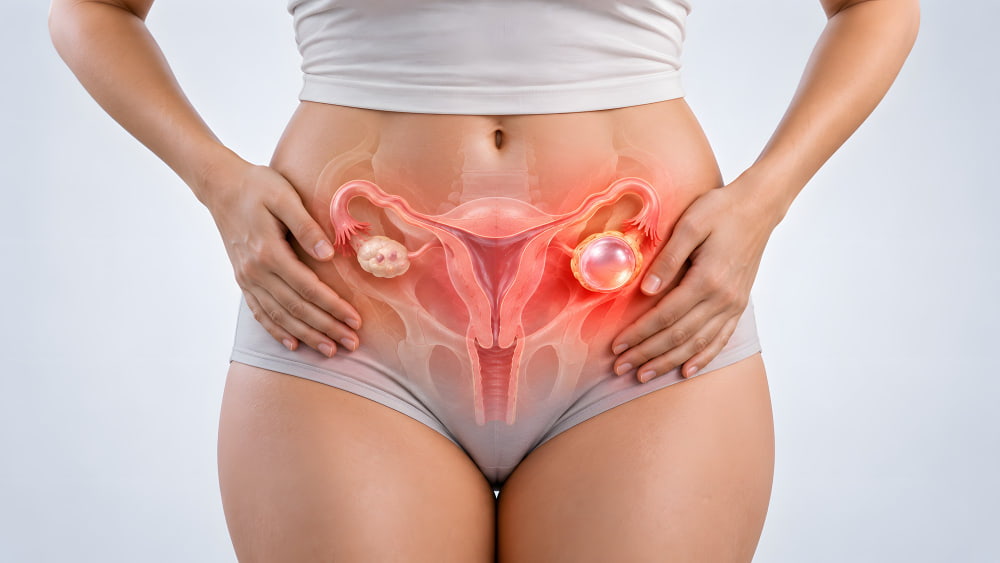

An ovarian cyst is a fluid-filled sac that develops in or on an ovary. Ovarian cysts are very common, particularly during the reproductive years, and most are harmless, cause no symptoms, and disappear without treatment. However, some cysts persist, grow, cause pelvic pain, or have features that require closer assessment.
The type of cyst, its size and appearance on ultrasound, the patient's age, and whether menopause has occurred all help determine what should happen next. Sudden, severe pelvic pain can indicate a ruptured cyst or ovarian torsion, both of which may require emergency treatment.
A cyst diagnosis does not automatically mean surgery or cancer, but it should be interpreted in the context of the individual's symptoms and medical history. This guide covers the different types of ovarian cysts, their symptoms and causes, how they are diagnosed, and the available treatment options, from monitoring to surgery.
What Is an Ovarian Cyst?
An ovarian cyst is a sac or pouch that forms within or on the surface of an ovary. It may contain clear fluid, blood, thick material, or different types of tissue, depending on how it develops. The ovaries are part of the female reproductive system. They release an egg during ovulation and produce hormones, including estrogen and progesterone, that regulate the menstrual cycle and support pregnancy.
Ovarian cysts can develop at different stages of life. They are particularly common before menopause because the hormonal changes involved in the menstrual cycle can cause temporary cysts to form. Many are discovered incidentally during a pelvic ultrasound performed for another reason.
Most ovarian cysts are benign, meaning they are not cancerous. Some disappear within a few menstrual cycles, while others remain and may need periodic ultrasound examinations or treatment. A cyst's appearance and behavior over time are often more informative than its presence alone.
Ovarian Cyst, Ovarian Tumor, and Polycystic Ovaries: What Is the Difference?
These terms are related but do not mean the same thing.
Ovarian cyst: A fluid-filled or partly fluid-filled sac in or on an ovary. Most ovarian cysts are benign, and many are temporary
Ovarian tumor: An abnormal growth that may be benign, borderline, or malignant. Some benign ovarian tumors, such as cystadenomas and dermoid cysts, have a cyst-like appearance
- Polycystic ovaries: Ovaries containing multiple small follicles, which are structures that develop around immature eggs. This appearance may be associated with Polyendocrine Metabolic Ovarian Syndrome (PMOS), formerly known as polycystic ovary syndrome (PCOS), but these follicles are not the same as ovarian cysts
PMOS/PCOS is a hormonal and metabolic condition that can affect ovulation, menstrual regularity, skin, and fertility. Having polycystic ovaries on an ultrasound does not, by itself, mean that a person has PMOS/PCOS. The diagnosis is based on a combination of clinical features, medical history, and, when appropriate, blood tests.
Types of Ovarian Cysts
The type of ovarian cyst is one of the most important factors in deciding whether it needs treatment. Some develop as part of the normal menstrual cycle and usually resolve on their own. Others form through different processes, such as endometriosis or the growth of ovarian tissue, and are more likely to persist.
Doctors commonly distinguish between functional cysts and non-functional, sometimes called pathological, cysts. The word pathological in this context means that the cyst is not simply a temporary result of the menstrual cycle. It does not automatically mean that the cyst is cancerous.
Type of cyst | How it forms and typical features | Usual management |
|---|---|---|
Follicular cyst | Develops when a follicle does not release an egg or shrink after ovulation; usually fluid-filled and simple in appearance | Often resolves without treatment |
Corpus luteum cyst | Forms when the structure left after ovulation fills with fluid or blood | Usually monitored if uncomplicated |
Hemorrhagic cyst | Develops when bleeding occurs inside a functional cyst; may contain blood products visible on ultrasound | Follow-up or treatment depending on symptoms and bleeding |
Dermoid cyst | A mature cystic teratoma containing tissue such as fat, hair, or skin | Monitored or surgically removed depending on size and risk |
Cystadenoma | A benign growth that may contain watery or mucus-like fluid and can become large | Monitored or removed if persistent, growing, or symptomatic |
Endometrioma | Forms when endometriosis affects the ovary; contains old, dark blood | Managed according to pain, fertility plans, and ovarian reserve |
Functional Ovarian Cysts
Functional ovarian cysts develop during the normal menstrual cycle. They are the most common type of ovarian cyst in people who have not reached menopause and usually disappear without treatment.
Two main types are recognized:
Follicular cysts: Each menstrual cycle, a small fluid-filled structure called a follicle develops in an ovary and contains an immature egg. If the follicle does not release the egg during ovulation, or does not shrink afterward, it may continue to fill with fluid and become a cyst
Corpus luteum cysts: After ovulation, the empty follicle becomes a temporary structure called the corpus luteum, which produces progesterone. If it closes and fills with fluid or blood, a corpus luteum cyst can develop
Functional cysts are generally benign and often resolve within several weeks or a few menstrual cycles. They may cause no symptoms, although some produce one-sided pelvic discomfort or irregular bleeding.
Hemorrhagic Ovarian Cysts
A hemorrhagic ovarian cyst is a functional cyst in which bleeding occurs into the cyst. It commonly develops in a corpus luteum cyst and may contain blood clots or changing blood products.
Some hemorrhagic cysts cause no symptoms and resolve as the blood is reabsorbed. Others cause sudden pelvic pain, particularly if the cyst stretches the ovary or ruptures. Ultrasound can often identify the characteristic appearance of blood within the cyst, but follow-up imaging may be recommended to confirm that it is resolving.
Significant internal bleeding after rupture is less common but can be serious. Severe pain accompanied by dizziness, fainting, weakness, or a rapid heartbeat requires emergency assessment.
Dermoid Cysts
A dermoid cyst, medically known as a mature cystic teratoma, is a usually benign ovarian growth that develops from reproductive cells capable of forming different types of tissue. It may contain fat, hair, skin, or other tissue. These contents give dermoid cysts a distinctive appearance on imaging.
Unlike functional cysts, dermoid cysts do not usually disappear on their own. Small cysts without concerning features may be monitored, while larger or symptomatic ones may be removed. One important concern is ovarian torsion, in which the ovary twists around its supporting structures. Dermoid cysts can increase this risk because they add weight to the ovary.
Cystadenomas
Cystadenomas are usually benign ovarian tumors that develop from cells on the outer surface of the ovary. They may contain thin, watery fluid, as in a serous cystadenoma, or thicker, mucus-like material, as in a mucinous cystadenoma.
Some cystadenomas remain small, while others grow considerably and cause abdominal swelling, pressure, or discomfort. They do not generally resolve like functional cysts. Depending on their size, ultrasound appearance, and symptoms, a gynecologist may recommend monitoring or surgical removal.
Endometriomas, or Chocolate Cysts
An endometrioma is an ovarian cyst associated with endometriosis. It forms when tissue similar to the lining of the uterus grows on or within an ovary and repeatedly bleeds during the menstrual cycle. Over time, old blood collects inside the cyst, giving it a thick, dark-brown appearance. This is why endometriomas are often called chocolate cysts.
Endometriomas may cause painful periods, persistent pelvic pain, pain during intercourse, and difficulties becoming pregnant. They can affect ovarian function and may be associated with reduced ovarian reserve, which refers to the number and quality of eggs remaining in the ovaries.
Treatment depends on symptoms, cyst characteristics, age, and pregnancy plans. Surgery is not automatically recommended for every endometrioma because removing the cyst can also remove or damage healthy ovarian tissue.
Pathological Cysts and Ovarian Tumors
A pathological ovarian cyst is a cyst that does not form as part of the normal ovulation process. Dermoid cysts, cystadenomas, and endometriomas are examples. Most are benign, although some ovarian masses have borderline or malignant features and require specialist assessment.
An ovarian tumor may be solid, cystic, or a combination of both. A borderline ovarian tumor has abnormal cells but does not show the same pattern of tissue invasion as an invasive ovarian cancer. The distinction is made through appropriate clinical assessment, imaging, and, when necessary, examination of tissue after surgery.
Most ovarian masses in younger, premenopausal patients are benign. However, a persistent or complex mass, particularly after menopause, needs careful evaluation. Ultrasound findings such as solid areas, papillary projections, irregular walls, or fluid in the abdomen can influence the level of concern.
Symptoms of Ovarian Cysts
Many ovarian cysts cause no symptoms and are found during an ultrasound performed for another reason. When symptoms occur, they often depend on the cyst's size, location, type, and whether it has ruptured or caused the ovary to twist.
A small cyst may not produce noticeable changes, while a larger one can press on nearby organs. Symptoms can also overlap with those of endometriosis, urinary conditions, digestive problems, and other gynecologic disorders, so they should not be used to diagnose a cyst without an examination.
Ovarian Cyst Pain
Ovarian cyst pain is often felt in the lower abdomen or pelvis, usually on the side where the cyst is located. It may be dull and persistent or sharp and intermittent. Some people notice discomfort around ovulation or menstruation, while others experience pain during exercise or sexual intercourse.
Other possible symptoms include:
Pelvic pressure or heaviness: A larger cyst may create a feeling of fullness or pressure in the lower abdomen.
Pain during intercourse: Deep pelvic discomfort may occur when movement puts pressure on an enlarged or sensitive ovary.
Menstrual changes: Some functional cysts can be associated with irregular periods, spotting, or changes in menstrual discomfort.
Frequent urination: A large cyst may press against the bladder, creating a need to urinate more often.
Nausea or abdominal discomfort: These symptoms may occur with significant pain or complications such as torsion.
Persistent or worsening pain should be assessed, even if an ovarian cyst has already been identified. The pain may be caused by the cyst or by another condition that requires different treatment.
Bloating, Weight Gain, and Back Pain
A large ovarian cyst can cause abdominal bloating, visible swelling, or a feeling of increased abdominal size. It may also produce a dull ache that extends into the lower back, particularly if it presses on surrounding structures.
However, simple ovarian cysts do not usually cause true weight gain. A change in body weight is more likely to have another explanation, such as fluid retention, changes in diet or activity, thyroid conditions, or hormonal and metabolic conditions such as PMOS/PCOS. Rapidly increasing abdominal size should be assessed rather than automatically attributed to a cyst.
Persistent Symptoms That Need Checking
Bloating that does not go away, feeling full quickly after eating, persistent pelvic or abdominal pain, and frequent urination deserve medical attention, especially when they are new, frequent, or becoming more noticeable. These symptoms can have many causes and do not necessarily indicate ovarian cancer.
After menopause, new or persistent symptoms and ovarian masses are generally evaluated more carefully because functional cysts are less common. A gynecologist may recommend pelvic imaging and selected blood tests to understand the cause.
Ruptured Ovarian Cyst and Ovarian Torsion
An ovarian cyst can sometimes rupture, meaning its wall breaks and its contents are released into the pelvic or abdominal cavity. In another complication, the ovary twists around the ligaments and tissues that support it, potentially reducing or cutting off its blood supply. This is called ovarian torsion.
Both conditions can cause sudden pelvic pain. Some ruptured cysts settle without surgery, but significant bleeding or torsion requires urgent medical attention. It is important not to assume that severe pain is simply a normal symptom of an ovarian cyst.
Symptoms of a Ruptured Ovarian Cyst
A ruptured ovarian cyst may cause sudden, sharp pain on one side of the lower abdomen. The pain can begin during physical activity, exercise, or sexual intercourse, although it may also occur without an obvious trigger.
Other symptoms may include:
Sudden pelvic or lower abdominal pain
Abdominal tenderness or discomfort when moving
Light vaginal spotting
Nausea or vomiting
Weakness, dizziness, or fainting if significant internal bleeding occurs
A small rupture may cause temporary pain as fluid or blood is absorbed by the body. However, severe pain, faintness, or signs of blood loss need emergency assessment. Treatment depends on the amount of bleeding, the patient's vital signs, and the findings on examination and imaging.
Ovarian Cyst Rupture and Discharge
When an ovarian cyst bursts, its contents are released inside the abdomen, not through the vagina. Therefore, fluid from a ruptured ovarian cyst does not appear as vaginal discharge.
Some people may experience light spotting around the time of a rupture, but this is not the cyst's contents draining through the vagina. Foul-smelling discharge, fever, or heavy vaginal bleeding should not be attributed to a cyst rupture without assessment, as these symptoms may indicate infection or another gynecologic problem.
Ovarian Torsion
Ovarian torsion occurs when an ovary twists around the tissues that hold it in place. The twisting can restrict blood flow to the ovary, causing tissue damage if treatment is delayed. An ovarian cyst or mass, particularly one that enlarges the ovary, can increase the risk.
The most characteristic symptom is sudden, severe pain on one side of the lower abdomen. The pain may come and go if the ovary twists and untwists, and it is often accompanied by nausea or vomiting. Ovarian torsion is a medical emergency. Treatment usually involves urgent surgery to untwist the ovary and restore blood flow, with removal considered if the tissue cannot be preserved or another condition makes it necessary.
When to Seek Emergency Care
Seek emergency medical care if you experience:
Sudden, severe pelvic or lower abdominal pain
Pelvic pain accompanied by fainting, dizziness, marked weakness, or a feeling that you may collapse
Severe pain with nausea or repeated vomiting
Pelvic pain with fever
Heavy vaginal bleeding or signs of significant blood loss
Do not wait for a scheduled appointment if these symptoms occur. Severe pelvic pain can have several causes, including ovarian torsion, a bleeding cyst, ectopic pregnancy, or appendicitis, and requires prompt evaluation.
What Causes Ovarian Cysts?
The causes of ovarian cysts depend on their type. Functional cysts develop because of the hormonal changes involved in ovulation, while other cysts form through processes such as endometriosis or the growth of ovarian cells.
Common factors and conditions associated with ovarian cysts include:
Ovulation: Changes during the menstrual cycle can cause a follicle or corpus luteum to fill with fluid and form a functional cyst
Hormonal changes: Hormonal fluctuations can affect ovulation and the development of functional cysts
Endometriosis: Endometrial-like tissue growing on an ovary can lead to an endometrioma
Pregnancy: A corpus luteum cyst may remain during early pregnancy and help support hormone production until the placenta takes over
Fertility treatment: Medicines that stimulate the ovaries can contribute to the development of ovarian cysts or enlarged follicles
Pelvic infection: In some cases, a severe pelvic infection can lead to a collection involving the ovary and fallopian tube, known as a tubo-ovarian abscess. This is not the same as a routine functional cyst and needs medical treatment.
PMOS/PCOS: PMOS is associated with multiple small ovarian follicles and irregular ovulation, but these follicles should not be confused with individual ovarian cysts.
Stress is not considered a direct cause of ovarian cysts. It can affect general well-being and may influence menstrual patterns, but there is no established evidence that stress alone creates ovarian cysts. Likewise, there is no reliable method to prevent all types of ovarian cysts.
How Are Ovarian Cysts Diagnosed?
Ovarian cysts are usually diagnosed through a combination of medical history, physical examination, and imaging. The evaluation considers symptoms, menstrual and pregnancy history, age, menopausal status, previous gynecologic conditions, and any family history that may affect ovarian cancer risk.
The main purpose is to determine whether the finding is likely to be a temporary functional cyst, a benign growth, or a mass that needs further investigation. The ultrasound appearance is particularly important because not all cysts require the same follow-up or treatment.
Pelvic Examination and Pregnancy Test
A gynecologist may perform an abdominal or pelvic examination to check for tenderness, swelling, or a mass. A pregnancy test may also be recommended for patients who could be pregnant, particularly when they have pelvic pain or bleeding. This helps rule out pregnancy-related causes, including ectopic pregnancy, which can cause similar symptoms and requires urgent care.
An internal pelvic examination is not automatically necessary for every patient. The examination is selected according to the person's symptoms, medical circumstances, and comfort.
Pelvic Ultrasound for Ovarian Cysts
Pelvic ultrasound is the main imaging test used to identify and assess ovarian cysts. It uses sound waves to show the ovaries, uterus, and surrounding pelvic structures without radiation.
There are two common approaches:
Transvaginal ultrasound: A small ultrasound probe is gently placed inside the vagina to obtain detailed images of the uterus and ovaries. It is often used when appropriate and acceptable to the patient.
Transabdominal ultrasound: The probe is moved over the lower abdomen. This approach can be used when an internal scan is not suitable or is not wanted, although it may provide less detailed images of some pelvic structures.
Not everyone needs or has to undergo a transvaginal ultrasound. The imaging method should be discussed with the patient, and an abdominal scan may be used on its own or alongside other investigations.
An ultrasound report may describe a cyst as simple or complex. A simple cyst is usually fluid-filled, with a thin, smooth wall and no solid areas or internal structures. A complex cyst may contain blood, thicker material, internal partitions called septations, or solid components. Complex does not automatically mean cancer, but it may require closer assessment.
Radiologists may use standardized systems such as the Ovarian-Adnexal Reporting and Data System (O-RADS) to classify the ultrasound features and estimate the likelihood of malignancy. The category helps guide follow-up or referral, but it is interpreted alongside the patient's age, symptoms, and medical history.
MRI and Blood Tests
Magnetic resonance imaging (MRI) may be recommended when ultrasound does not provide enough information to characterize a cyst or when a mass has features that need further investigation. MRI can help distinguish fluid, blood, fat, and solid tissue and clarify the relationship between a mass and nearby structures.
Blood tests may be used selectively. CA-125 is a protein that can be elevated in some ovarian cancers, but it can also rise with benign conditions such as endometriosis, menstruation, fibroids, and pelvic inflammation. A raised CA-125 result does not confirm cancer, and a normal result does not rule it out. Depending on the patient's age and imaging findings, a specialist may consider CA-125 or other tumor markers, such as HE4, as part of a broader assessment.
What Size of Ovarian Cyst Is Dangerous?
There is no single size that makes an ovarian cyst dangerous. Size matters because larger cysts can cause pressure, discomfort, and a greater risk of complications such as torsion. However, the cyst's internal structure and the patient's age and symptoms are also important.
A small cyst with suspicious solid components may need more investigation than a larger, clearly simple cyst. Features that can increase concern include:
Solid areas or nodules: Tissue within a cyst may require closer assessment, particularly if it has an irregular appearance.
Papillary projections: Small growths extending from the cyst wall can affect the estimated risk.
Thick or irregular walls and septations: These features may make a cyst less likely to be a simple functional cyst.
Blood flow within solid areas: Doppler ultrasound can help assess vascularity, which may contribute to risk classification.
Fluid in the abdomen: Unexplained fluid, particularly alongside a suspicious mass, may require further investigation.
For example, guidelines for well-characterized simple cysts may recommend no follow-up for many smaller cysts, while larger ones may be monitored depending on menopausal status and imaging quality. These thresholds do not apply to every type of cyst or to patients with concerning symptoms. A gynecologist should interpret the ultrasound report rather than relying on cyst size alone.
Ovarian Cyst Treatment
Ovarian cyst treatment depends on the type of cyst, its size and ultrasound appearance, whether it is growing, the symptoms it causes, and whether the patient has reached menopause. Pregnancy plans and the need to preserve ovarian function are also important considerations.
Many cysts do not need active treatment. When intervention is necessary, options range from pain relief and follow-up imaging to minimally invasive surgery or, in selected cases, open surgery.
Watchful Waiting and Follow-Up
Watchful waiting means monitoring a cyst rather than treating it immediately. It is commonly recommended for simple functional cysts that are not causing significant symptoms and do not have concerning ultrasound features.
Many functional cysts resolve within one or two menstrual cycles or over several weeks. A repeat ultrasound may be arranged to confirm that the cyst has become smaller or disappeared. The timing depends on its appearance, size, and the likelihood that it will resolve.
Follow-up is different before and after menopause. In premenopausal patients, a simple cyst may be related to normal ovulation and can often be managed conservatively. After menopause, functional cysts are less common, so a new ovarian mass is assessed more carefully. Nevertheless, a clearly simple cyst after menopause is not automatically cancerous or an indication for surgery. Its size, ultrasound characteristics, and the patient's overall risk determine the next step.
Medication and Pain Relief
Pain relief may be sufficient for mild discomfort while a functional cyst resolves. The appropriate medicine depends on the patient's medical history, other medications, and whether pregnancy is possible. A clinician should advise which pain relievers are suitable.
Hormonal contraceptives may be prescribed for contraception, menstrual regulation, or other gynecologic reasons. However, combined oral contraceptive pills do not reliably make an existing functional cyst disappear faster. In some patients, hormonal contraception may reduce the formation of new ovulation-related cysts, but it does not treat every type of ovarian cyst. It is not a treatment for dermoid cysts, cystadenomas, or endometriomas.
Home remedies, special diets, and supplements have not been shown to remove ovarian cysts. Persistent symptoms or a cyst that changes on follow-up imaging should be medically assessed rather than managed with unproven treatments.
When Is Ovarian Cyst Surgery Needed?
Surgery may be recommended when a cyst:
Persists or grows: A cyst that does not resolve or continues to enlarge may need removal or further investigation.
Causes significant symptoms: Persistent pain, pressure, or discomfort affecting daily activities may be a reason to consider surgery.
Has complex or suspicious features: Solid components, irregular structures, or other concerning imaging findings may require surgical assessment.
Is large: Larger cysts may cause pressure or increase the risk of torsion, although size alone does not determine the need for surgery.
Causes a complication: Ovarian torsion or significant bleeding from a ruptured cyst may require urgent surgery.
The decision is based on the overall clinical picture, not on a single measurement. When cancer is suspected, the surgical plan may involve a gynecologic oncology team to ensure that the mass is managed appropriately.
Laparoscopic Ovarian Cystectomy
An ovarian cystectomy is an operation to remove a cyst while preserving the ovary whenever this is safe and possible. Laparoscopic ovarian cystectomy is a minimally invasive approach performed through several small incisions in the abdomen. A thin camera called a laparoscope and specialized instruments allow the surgeon to view the pelvic organs and separate the cyst from the surrounding ovarian tissue.
The aim is to remove the cyst while preserving as much healthy ovarian tissue as possible. The removed tissue is usually sent for pathological examination to confirm its nature. Laparoscopy is commonly considered for cysts that appear benign and can be safely removed using this approach.
For selected patients, vNOTES (Vaginal Natural Orifice Transluminal Endoscopic Surgery) may be another minimally invasive option for certain procedures involving the ovaries and fallopian tubes. It uses a vaginal route rather than abdominal incisions and is suitable only in specific clinical circumstances.
Laparotomy (Open Surgery)
Laparotomy is an open abdominal operation performed through a larger incision. It may be recommended when a cyst or mass is too large or complex for safe laparoscopic removal, when extensive adhesions make minimally invasive surgery difficult, or when there is a concern about malignancy.
Open surgery can give the surgeon wider access to the pelvic organs and may allow a mass to be removed intact when this is important for diagnosis and safety. The incision and recovery period are generally greater than with laparoscopy. The choice between laparoscopic surgery and laparotomy depends on the findings and the safest way to complete the operation.
Oophorectomy
An oophorectomy is the surgical removal of one or both ovaries. It may be considered when an ovary is severely damaged, a mass cannot be safely separated from the ovarian tissue, or there is a significant concern about cancer. It may also be part of a treatment plan for selected patients after menopause.
Removing one ovary does not usually cause immediate menopause if the other ovary is functioning. The remaining ovary can continue producing hormones and releasing eggs. Removing both ovaries before natural menopause, however, causes surgical menopause and stops the body's main ovarian production of estrogen and progesterone. This also removes the possibility of becoming pregnant using one's own eggs without previously preserved eggs or embryos.
Oophorectomy is different from cystectomy, which aims to remove the cyst while keeping the ovary. When fertility or hormone production is a concern, the surgeon should explain why ovary removal is being considered and whether an ovary-sparing approach is possible.
Protecting Ovarian Tissue and Fertility
Preserving healthy ovarian tissue is an important consideration, particularly for patients who may want children. During a cystectomy, the surgeon aims to separate the cyst from the ovary while avoiding unnecessary damage to the tissue that contains follicles and eggs. However, preservation is not always possible, and the effect on ovarian function depends on the cyst type, the amount of tissue involved, and the surgical technique.
Endometrioma surgery requires particular care. Removing an endometrioma may reduce pain and the risk of recurrence in selected patients, but surgery can also reduce ovarian reserve. This is especially important when both ovaries are affected, a patient has had previous ovarian surgery, or fertility treatment is being considered. The benefits of surgery should therefore be weighed against its potential effect on future fertility.
In certain medical situations, ovarian tissue freezing may be considered as a fertility-preservation option, although it is not a routine treatment for ovarian cysts. Patients concerned about future pregnancy may benefit from discussing ovarian reserve testing and fertility-preservation options before surgery.
Recovery After Ovarian Cyst Surgery
Recovery after ovarian cyst surgery depends on the surgical approach, the size and type of cyst, whether one or both ovaries are involved, and the patient's general health. Patients usually recover more quickly after uncomplicated laparoscopic surgery than after an open operation, but individual recovery times vary.
After laparoscopy, some patients go home on the same day or after an overnight stay. Following laparotomy, a longer hospital stay is generally needed. The surgeon provides instructions about wound care, pain relief, activity, and follow-up based on the operation performed.
What to Expect and When to Call Your Doctor
Mild abdominal soreness, tiredness, and temporary bloating are common after surgery. Following laparoscopy, some patients also experience shoulder-tip pain caused by the carbon dioxide gas used to create space in the abdomen. This usually improves as the gas is absorbed.
Walking short distances soon after surgery is generally encouraged when the medical team considers it safe. Heavy lifting, strenuous exercise, and sexual activity may need to be restricted while the tissues heal. The surgeon will explain when it is appropriate to return to work, exercise, and usual daily activities.
Recovery after laparoscopic ovarian cystectomy often takes around one to three weeks, although some people need longer. Recovery after laparotomy commonly takes several weeks, often around four to six weeks or more. These are general estimates, not fixed deadlines.
Contact the treating team promptly if you develop a fever, worsening abdominal pain, heavy vaginal bleeding, increasing redness or discharge from an incision, or difficulty urinating. One-sided leg swelling or pain also needs urgent assessment. Seek emergency care for chest pain, sudden shortness of breath, fainting, or severe abdominal pain.
Ovarian Cysts, Pregnancy, and Menopause
Ovarian cysts can occur during pregnancy, before menopause, and after menopause, but their likely causes and clinical significance differ. The patient's age and reproductive stage therefore influence how a cyst is evaluated.
During early pregnancy, a corpus luteum cyst may be seen on ultrasound. This structure produces progesterone to support the pregnancy until the placenta takes over hormone production. It often shrinks as pregnancy progresses and does not usually require treatment unless it causes complications or has concerning features.
In teenagers, ovarian cysts are commonly functional and related to the development of the menstrual cycle. Many resolve without intervention. Surgery is considered carefully because preserving ovarian tissue is important for future reproductive and hormonal health.
After menopause, new ovarian cysts are assessed more closely because ovulation-related cysts are no longer expected. However, simple cysts can still be benign. Ultrasound appearance, size, symptoms, and selected blood tests help determine whether monitoring or further investigation is appropriate.
Can Ovarian Cysts Be Prevented or Come Back?
There is no reliable way to prevent every ovarian cyst. Functional cysts develop as part of the ovulation process, while other types are associated with conditions such as endometriosis or benign ovarian growths. Hormonal contraception may reduce the formation of some new functional cysts in selected patients, but it does not prevent all cyst types.
Some cysts can recur. Endometriomas, in particular, may return after treatment because surgery does not necessarily eliminate endometriosis elsewhere in the pelvis. Follow-up depends on the original cyst type, symptoms, treatment, and pregnancy plans. Patients with a history of recurring cysts should follow the monitoring plan recommended by their gynecologist.
Ovarian Cyst Diagnosis and Surgery at Medical Park
At Medical Park hospitals in Turkey, specialists in Gynecology and Obstetrics evaluate ovarian cysts by considering the patient's symptoms, medical history, pelvic examination, and imaging findings. Pelvic ultrasound is a key part of this assessment, helping determine the cyst's size, location, and internal structure, including whether it is fluid-filled, contains solid areas, or has other features that require closer investigation. Depending on the findings, the team may recommend additional imaging or blood tests to clarify the diagnosis and assess whether further treatment is needed.
The care plan is based on the type of cyst, its size and appearance, the severity of symptoms, and factors such as the patient's age and plans for pregnancy. For cysts that appear benign and are not causing significant problems, the recommended approach may be monitoring with repeat ultrasound examinations to check whether the cyst is shrinking, remaining stable, or growing.
If symptoms persist or the cyst requires treatment, specialists assess the available options and determine whether surgery is appropriate. Whenever possible, treatment planning takes ovarian function and the preservation of healthy ovarian tissue into account, particularly for patients who wish to maintain their fertility. When surgery is indicated, the surgical approach is selected according to the cyst's characteristics, the patient's overall health, and the need to remove or investigate the mass safely.
Medical Park performs vNOTES at several hospitals, where specialists in Gynecology and Obstetrics and Gynecologic Oncology Surgery evaluate whether this minimally invasive technique is suitable for selected procedures involving the ovaries and fallopian tubes. The surgical team explains the recommended procedure, possible alternatives, potential risks, and expected recovery before treatment, helping patients understand what to expect at each stage.
For international patients, Medical Park’s International Patient Services Center coordinates the review of medical records and available imaging, communication with the treating team, appointment planning, and practical arrangements for treatment in Turkey. The team also helps patients understand their follow-up plan, including any recommended postoperative checks and how to stay in contact with their medical team after returning home.


 Makaleye Dön
 E-Result
 WhatsApp