


 TR
 EN
 RU
 AR
 FR


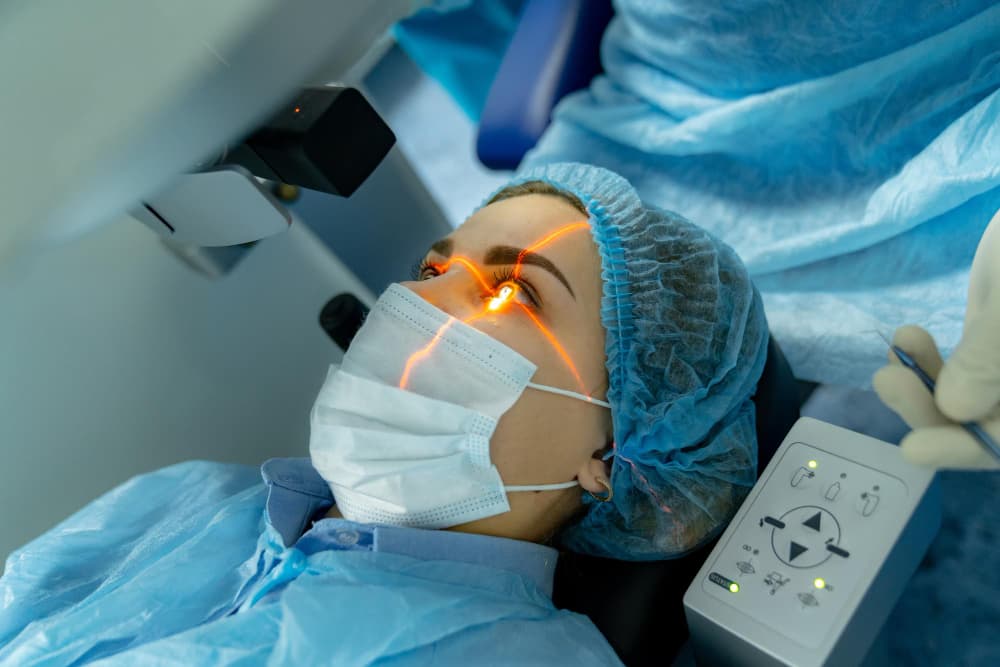

Refractive surgery has become one of the most transformative developments in modern ophthalmology, offering millions of people around the world a lasting alternative to glasses and contact lenses. If you've spent years relying on corrective eyewear, understanding what refractive eye surgery actually involves, who it's suitable for, and what recovery looks like can help you make an informed decision about your vision.
This guide covers the full picture, from the underlying refractive errors these procedures correct to the specific surgical options available today.
What Is Refractive Eye Surgery?
To understand refractive surgery, it helps to first understand the refractive state of the eye. In a healthy eye, light entering through the cornea and lens focuses precisely onto the retina, producing a sharp image. When the shape of the cornea or lens prevents light from focusing correctly, the result is a refractive error, which is what causes blurry vision at various distances.
Refractive surgery refers to any surgical procedure designed to correct these errors by reshaping the cornea, replacing the eye's natural lens, or implanting an additional lens, allowing light to focus properly on the retina without the need for glasses or contact lenses.
The rise in global refractive surgeries performed each year reflects both advancing technology and growing patient demand for permanent vision correction. Millions of procedures are now carried out annually worldwide, and refractive surgery practice has evolved considerably since the earliest corneal procedures, becoming safer, faster, and more precise with each generation of laser and diagnostic technology.
What was once a relatively narrow field limited to a handful of corneal techniques has grown into a broad discipline covering corneal reshaping, lens replacement, and combined approaches, giving patients far more tailored options than were available even a decade ago.
Common Refractive Errors
Refractive correction exists to address a specific set of underlying refractive errors, each of which affects how light bends as it passes through the eye.
- Myopia (nearsightedness): distant objects appear blurry because light focuses in front of the retina rather than directly on it.
- Hyperopia (farsightedness): nearby objects appear blurry because light focuses behind the retina.
- Astigmatism: an irregularly shaped cornea or lens causes light to focus at multiple points, blurring vision at both near and far distances.
- Presbyopia: an age-related loss of the lens's flexibility that makes focusing on close objects more difficult, typically beginning in the early to mid-40s.
Many people experience a combination of these errors, which is why a detailed diagnostic evaluation is essential before choosing a specific refractive surgery procedure. Diagnosing the precise refractive state of the eye typically involves corneal topography to map the cornea's curvature, measurement of corneal thickness, pupil size assessment, and a detailed refraction test to quantify the exact degree of nearsightedness, farsightedness, or astigmatism present.
Refractive Surgery Types
There isn't a single approach to vision correction surgery. Refractive surgery primarily includes procedures that reshape the cornea or address the eye's natural lens, while other specialized corneal procedures, such as keratopigmentation, may be performed for cosmetic or selected therapeutic purposes. The right option depends on factors including the type and severity of the refractive error, corneal health, age, and overall eye health.
Laser-Based Corneal Procedures
Refractive laser surgery works by reshaping the cornea so that light focuses correctly on the retina, and it remains the most widely performed category of refractive surgery worldwide.
- LASIK (Laser-Assisted In Situ Keratomileusis): a thin flap is created in the outer corneal layer, and a laser reshapes the underlying tissue before the flap is repositioned; refractive lasik eye surgery is valued for its minimal discomfort and rapid visual recovery.
- LASIK for astigmatism: modern laser platforms can correct irregular corneal curvature with high precision, making LASIK for astigmatism a well-established option for patients who once had limited surgical choices.
- PRK (Photorefractive Keratectomy): the surface layer of the cornea is removed rather than folded into a flap, and the laser reshapes the tissue beneath; often recommended for patients with thinner corneas who aren't candidates for LASIK.
- SMILE (Small Incision Lenticule Extraction): a minimally invasive technique in which a small lenticule of corneal tissue is removed through a tiny incision, avoiding the creation of a larger flap altogether.
Lens-Based Procedures
For patients whose refractive error, corneal thickness, or age make laser correction less suitable, lens refraction surgery offers an alternative path to clear vision.
- Refractive lens exchange (RLE): Also called refractive lens replacement, this procedure removes the eye's natural lens and replaces it with an artificial intraocular lens (IOL) to correct refractive error. It is performed primarily for vision correction in patients who do not have a significant cataract and may be considered for people with presbyopia, higher degrees of hyperopia, or other refractive errors who are not suitable candidates for corneal laser procedures.
- Refractive cataract surgery: This procedure removes a cloudy natural lens affected by cataracts and replaces it with an artificial intraocular lens (IOL) selected to address the patient's refractive error. It is suitable for patients who have both a cataract and a significant need for vision correction, allowing cataract removal and refractive correction to be addressed during the same procedure.
- Phakic intraocular lens implantation: This procedure involves placing an artificial intraocular lens inside the eye while leaving the natural lens in place. It is commonly considered for patients with high degrees of myopia who may not be suitable for laser vision correction because of corneal thickness or other factors.
Who Is a Good Candidate for Refractive Surgery?
Not everyone is an ideal candidate for every refractive surgery procedure, and the right approach depends heavily on individual eye anatomy and health history. Good candidates generally share several characteristics that a comprehensive refractive surgery consultation will assess in detail.
- Stable vision: a refractive error that hasn't changed significantly within the past year, since surgery performed on an unstable prescription can lead to under- or over-correction.
- Adequate corneal thickness: particularly important for laser-based procedures, since removing or reshaping too much corneal tissue can weaken the eye's structure.
- Good overall eye health: free from significant dry eye disease, active infections, uncontrolled glaucoma or corneal irregularities that could affect healing or outcomes. Patients with significant corneal damage or disease may require other treatments, such as a corneal transplant, rather than refractive surgery.
- Controlled systemic health: conditions such as uncontrolled diabetes or certain autoimmune disorders can impair healing and may need to be managed before surgery is considered.
- Appropriate age: candidates are typically over 18 with a stabilized refractive error, though older patients, particularly those with presbyopia or an early cataract, are often better suited to lens-based procedures rather than corneal reshaping.
A comprehensive refractive surgery consultation, including corneal mapping, thickness measurement, and a full eye health evaluation, is the only reliable way to determine which procedure, if any, is appropriate for a given patient, and it's also the point at which a surgeon will walk through realistic expectations for the specific refractive errors involved.
Benefits of Refractive Surgery
The appeal of refractive surgery benefits goes well beyond simple convenience, and most patients notice the difference across several areas of daily life.
- Reduced dependence on corrective eyewear: most patients experience dramatically less reliance on glasses or contact lenses, with many achieving 20/20 vision or close to it within days of their procedure.
- Freedom for sports and outdoor activities: activities such as swimming, running, and other physical pursuits that were previously complicated by glasses or lenses become significantly easier.
- Long-lasting results: corneal reshaping from laser procedures is permanent, since the treated tissue doesn't regenerate into its earlier shape.
- Reduced future cataract risk considerations: lens-based procedures can even eliminate the future need for cataract surgery in some patients, since the natural lens has already been replaced with an artificial one.
- Improved quality of life: many patients report that not having to manage glasses, contact lens maintenance, or related costs has a meaningful day-to-day impact well beyond vision itself.
Refractive Surgery Risks and Considerations
Like any surgical procedure, refractive surgery risks are worth understanding fully as part of the decision-making process, even though modern surgical protocols and diagnostic screening have made serious complications increasingly rare.
- Temporary dry eyes: reduced tear production is common in the initial weeks after surgery and typically resolves as the eye heals.
- Glare and halos: particularly noticeable at night in the early recovery period, usually diminishing over the following weeks or months.
- Fluctuating vision: short-term variability in visual clarity while the eye adjusts and heals.
- Under-correction or over-correction: the refractive error may not be fully corrected, or may be slightly overcorrected, occasionally requiring a touch-up procedure.
- Corneal flap complications: specific to LASIK, involving the thin flap created during surgery, though this is uncommon with current techniques.
- Infection: rare with modern sterile surgical protocols, but a possibility with any procedure that involves the corneal surface.
Some patients, particularly younger patients whose refractive error hadn't fully stabilized before surgery, may eventually need a touch-up procedure if their vision shifts over time. Discussing these risks openly during the consultation process, along with a patient's specific eye anatomy and health history, allows the surgical team to select the approach with the most favorable risk profile for that individual.
What to Expect: Procedure and Recovery
Most refractive surgery procedures are performed on an outpatient basis and take only 15 to 30 minutes per eye, often with just numbing eye drops rather than general anesthesia. Laser-based procedures such as LASIK are typically the fastest, while lens-based procedures like refractive lens exchange or refractive cataract surgery involve a slightly longer procedure time given the more involved nature of removing and replacing the eye's natural lens.
Refractive surgery recovery timelines vary depending on the specific procedure performed:
- LASIK: significantly improved vision is often noticeable within 24 hours, with most normal activities resumed within a few days.
- PRK: a longer initial healing period is typical, since the corneal surface itself needs time to regenerate, with clearer vision developing gradually over one to two weeks.
- SMILE: recovery tends to fall between LASIK and PRK, with most patients noticing meaningful improvement within the first few days.
- Refractive lens exchange and refractive cataract surgery: most patients notice significant visual improvement within the first few days, with continued stabilization over the following weeks as the eye adjusts to the new lens.
Across all procedure types, patients are usually advised to avoid rubbing their eyes, swimming, and strenuous exercise for a period following surgery, along with using prescribed eye drops to support healing and reduce the risk of infection. Follow-up appointments in the days and weeks after surgery allow the surgical team to monitor healing and confirm that vision is stabilizing as expected.
Refractive Surgery Cost and Choosing Where to Have It Done
Refractive surgery cost varies considerably depending on the country, the specific procedure chosen, the technology used, and the experience of the surgical team, which is a major reason many international patients research their options carefully before deciding where to proceed. Several factors typically influence cost:
- Procedure type: lens-based procedures generally involve a higher cost than laser-based corneal procedures, given the additional surgical complexity.
- Technology used: advanced diagnostic mapping and newer laser platforms can affect pricing depending on the clinic and country.
- Surgeon experience: highly experienced refractive surgeons and specialized eye hospitals often reflect that expertise in their fees.
- Aftercare included: some packages include follow-up visits and touch-up procedures within a defined period, which is worth clarifying before committing to a clinic.
This variation in cost, combined with long wait times and higher prices in some countries, has made refractive surgery in Turkey an increasingly popular choice among patients seeking vision correction surgery in Turkey without compromising on the quality of care or technology involved.
Refractive Surgery and Eye Care at Medical Park
Medical Park's Ophthalmology departments provide comprehensive refractive surgery in Turkey, from the initial diagnostic consultation through the full range of modern laser and lens-based correction options. Patients considering eye surgery in Turkey benefit from access to advanced diagnostic imaging, corneal mapping technology, and a full spectrum of procedures, including LASIK, PRK, SMILE, refractive lens exchange, and refractive cataract surgery, performed by experienced ophthalmology specialists across Medical Park's hospital network.
Each treatment plan begins with a thorough evaluation of the patient's refractive error, corneal characteristics, and overall eye health, ensuring that the recommended approach, whether corneal reshaping or lens replacement, is the one best suited to achieving safe, lasting vision correction for that individual. This individualized approach is particularly important because refractive surgery is not a one-size-fits-all treatment.
The ophthalmology team considers each patient's vision goals, lifestyle, age, refractive error, corneal measurements, and overall eye health when determining the most appropriate option. For international patients, Medical Park's coordinated services can support the treatment journey from the initial evaluation and procedure planning to postoperative examinations and follow-up care.
By combining detailed diagnostic assessment with personalized treatment planning, the aim is to provide patients seeking vision correction in Turkey with care that is tailored to their specific visual needs rather than based solely on their prescription.


 Makaleye Dön
 E-Result
 WhatsApp