


 TR
 EN
 RU
 AR
 FR


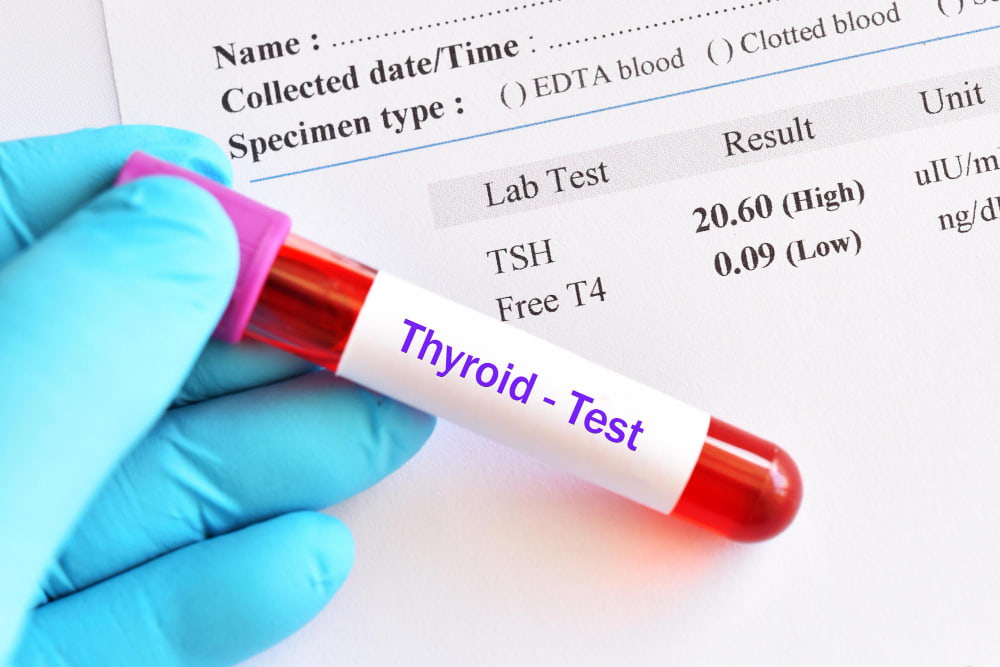

The thyroid gland produces hormones that help regulate how the body uses energy, maintains its temperature, and controls functions such as heart rate and digestion. When the gland produces too much or too little thyroid hormone, it can affect many aspects of health, sometimes causing symptoms that develop gradually or are difficult to recognize. Thyroid function tests are a group of blood tests that help determine whether the thyroid is working as expected.
Thyroid testing commonly starts with a TSH blood test, which measures thyroid-stimulating hormone. Depending on the result and the person's symptoms, additional tests may measure free T4, free T3, or thyroid antibodies to help identify the possible cause of an abnormal result.
This guide explains the different types of thyroid function tests, what TSH, T3, and T4 levels mean, how to interpret normal and abnormal results, and when thyroid testing may be recommended.
What Is the Thyroid?
The thyroid is a small, butterfly-shaped gland at the front of the neck. It produces thyroid hormone, which helps regulate metabolism, energy use, body temperature, heart rate, digestion, and brain function.
The thyroid mainly produces thyroxine, also called T4. The body converts some T4 into triiodothyronine, or T3, which is the more active form of thyroid hormone in many tissues.
When thyroid hormone levels are too low, the brain increases TSH to stimulate the thyroid. When thyroid hormone levels are too high, the brain reduces TSH. This feedback system keeps thyroid activity and thyroid function balanced.
What Is TSH in a Blood Test?
TSH in a blood test measures the level of thyroid-stimulating hormone in the blood. TSH is produced by the pituitary gland, located at the base of the brain, and helps regulate the amount of thyroid hormone released by the thyroid gland.
When thyroid hormone levels decrease, the pituitary gland generally releases more TSH to stimulate the thyroid. When thyroid hormone levels rise, TSH production usually decreases. This feedback mechanism allows the body to maintain relatively stable thyroid hormone levels.
This is why TSH is commonly used as the starting point in a thyroid function assessment.
Normal TSH Levels
The normal range of thyroid TSH can vary slightly between laboratories because testing methods differ. In general, many laboratories use a reference range of about 0.4 to 4.5 mIU/L for healthy adults.
Normal TSH levels depend on age, pregnancy, medications, and existing thyroid conditions. Always interpret your result using the reference range printed on your own laboratory report.
| TSH level | What it may indicate | Possible next steps |
|---|---|---|
| 0.4–4.5 mIU/L | Thyroid function may be balanced | Routine monitoring if symptoms or risk factors are present |
| Above 4.5 mIU/L | The thyroid may be underactive | Free T4 testing and assessment for hypothyroidism |
| Below 0.4 mIU/L | The thyroid may be overactive | Free T4 and free T3 testing and assessment for hyperthyroidism |
| Mildly abnormal | Early or subclinical thyroid dysfunction may be present | Repeat testing and review of symptoms and medicines |
| Very high or very low | A more significant thyroid imbalance may be present | Prompt specialist review and further thyroid testing |
A normal TSH result suggests that the feedback system between the brain and thyroid is working as expected. However, if you have ongoing symptoms or a strong family history of thyroid disease, your doctor may still recommend further testing.
A high TSH usually means the body is asking the thyroid to produce more hormone because thyroid hormone levels are low or falling. A low TSH usually means thyroid hormone levels are high, causing the brain to reduce its stimulation of the thyroid.
Borderline results should not be interpreted on their own. Your doctor may repeat the test, check free T4 and free T3, review your medicines, and consider thyroid antibody testing before deciding whether treatment is needed.
High TSH: What It Means
High TSH usually means the pituitary gland is working harder to stimulate a thyroid that is not producing enough hormone. This pattern is commonly seen in primary hypothyroidism, including Hashimoto’s thyroiditis.
Common causes include autoimmune thyroid disease, thyroid surgery, radioactive iodine treatment, certain medicines, and iodine imbalance. A high TSH with a low free T4 often confirms an underactive thyroid.
Symptoms of an Underactive Thyroid
An underactive thyroid can slow many body processes. Symptoms may include:
- Fatigue and low energy
- Weight gain or difficulty losing weight
- Feeling cold more easily
- Dry skin and hair thinning
- Constipation
- Low mood or difficulty concentrating
- Muscle aches and weakness
- A slower heart rate
- Irregular or heavier menstrual periods
Some people have a mildly high TSH but normal free T4. This is called subclinical hypothyroidism. Whether treatment is needed depends on symptoms, TSH level, thyroid antibodies, age, and other health factors.
Low TSH: What It Means
Low TSH usually means the thyroid is producing too much thyroid hormone. When thyroid hormone levels are high, the pituitary gland reduces TSH production.
This pattern can occur in hyperthyroidism, including Graves’ disease, thyroid nodules, thyroid inflammation, or taking too much thyroid medication. A low TSH with high free T4 or free T3 supports an overactive thyroid.
Low TSH Symptoms
Low TSH symptoms are often related to an overactive metabolism. They may include:
- Fast or irregular heartbeat
- Palpitations
- Anxiety, nervousness, or irritability
- Shakiness or tremor
- Excessive sweating
- Heat intolerance
- Unexplained weight loss
- Frequent bowel movements or diarrhea
- Difficulty sleeping
- Muscle weakness
Some people have low TSH but normal thyroid hormone levels. This is called subclinical hyperthyroidism. Your doctor may repeat the test and check free T4 and free T3 before deciding whether treatment is needed.
What Are Free T4 and Free T3?
The thyroid gland produces two main hormones: thyroxine (T4) and triiodothyronine (T3). These thyroid hormones help regulate metabolism, energy use, body temperature, heart rate, and other essential functions.
Most T4 and T3 circulating in the blood is attached to proteins. Only a small proportion circulates freely, without being bound to these proteins. Free hormone tests measure this unbound portion.
Free T4 (Thyroxine)
T4 is the main hormone produced by the thyroid gland. Much of it is converted into T3 in other tissues, where it can exert its effects.
A free T4 test measures the amount of unbound thyroxine in the blood. It is commonly ordered alongside TSH when thyroid dysfunction is suspected or when a TSH result falls outside the reference range.
A low free T4 level together with high TSH commonly indicates primary hypothyroidism. In contrast, a high free T4 level with low TSH commonly suggests hyperthyroidism.
Free T4 can also help distinguish between overt and subclinical thyroid dysfunction. For example, a person may have elevated TSH but a free T4 level that remains within the reference range, a pattern that may indicate subclinical hypothyroidism.
Free T3 (Triiodothyronine)
T3 is the more biologically active of the two main thyroid hormones. Although the thyroid produces some T3 directly, much of the body's T3 comes from the conversion of T4 in other tissues.
A free T3 test may be useful when hyperthyroidism is suspected, particularly if TSH is low but free T4 is normal. Some people with hyperthyroidism have elevated T3 levels even when free T4 remains within the reference range.
Free T3 is not routinely necessary in every thyroid assessment, and it is generally less useful than free T4 when investigating suspected hypothyroidism.
The results of TSH, free T4, and free T3 are most informative when interpreted together where appropriate. No single result should automatically be treated as a complete diagnosis.
Thyroid Antibodies: Anti-TPO and TgAb
Thyroid antibody tests help identify autoimmune thyroid diseases, in which the immune system attacks the thyroid gland. The two most common antibodies are anti-TPO and TgAb.
Anti-TPO Antibodies
Anti-TPO stands for anti-thyroid peroxidase antibodies. These antibodies target an enzyme inside thyroid cells and are often elevated in Hashimoto’s thyroiditis.
Positive anti-TPO antibodies may increase the risk of developing hypothyroidism over time. However, they do not always mean that thyroid function is currently abnormal.
TgAb: Thyroglobulin Antibodies
TgAb stands for thyroglobulin antibodies, also called thyroglobulin antibodies. These antibodies target thyroglobulin, a protein the thyroid uses to make thyroid hormones. TgAb may be checked when autoimmune thyroid disease is suspected. Like anti-TPO, a positive result does not automatically mean the thyroid is underactive or overactive.
TgAb testing also has a specific role in monitoring certain patients treated for thyroid cancer because these antibodies can interfere with the interpretation of thyroglobulin measurements, a marker used during follow-up after treatment for differentiated thyroid cancer.
Autoimmune Thyroid Diseases
Autoimmune thyroid diseases occur when the immune system mistakenly attacks thyroid tissue. The two most common forms are Hashimoto’s thyroiditis and Graves’ disease.
Hashimoto’s Thyroiditis
Hashimoto’s thyroiditis often leads to hypothyroidism over time. It is commonly associated with positive anti-TPO antibodies and sometimes TgAb as well.
Symptoms may develop gradually and can include fatigue, weight gain, cold intolerance, constipation, dry skin, and low mood.
Graves’ Disease
Graves’ disease usually causes hyperthyroidism. It can be associated with thyroid-stimulating immunoglobulins, which stimulate the thyroid to produce too much hormone.
Symptoms may include palpitations, anxiety, weight loss, heat intolerance, sweating, tremor, and sleep problems.
Thyroid Test Combinations
A blood test for thyroid may include one test or several tests, depending on your symptoms and medical history. There is no single blood test to test thyroid function that answers every question.
| Test | What it measures | When it may be used |
|---|---|---|
| TSH | Thyroid-stimulating hormone | First-line screening and monitoring |
| Free T4 | Active thyroxine | Often checked when TSH is abnormal |
| Free T3 | Active triiodothyronine | Often used in hyperthyroidism or complex cases |
| Anti-TPO | Thyroid peroxidase antibodies | Helps assess autoimmune thyroid disease |
| TgAb | Thyroglobulin antibodies | May be used when autoimmune disease is suspected |
| Thyroid ultrasound | Thyroid structure, nodules, and size | Used when a lump, goiter, or nodule is found |
Understanding Abnormal Thyroid Function
Abnormal thyroid function can mean the thyroid is producing too little hormone, too much hormone, or that the immune system is attacking the gland. Results should always be read together rather than in isolation.
For example, a high TSH with low free T4 usually points to hypothyroidism. A low TSH with high free T4 or free T3 usually points to hyperthyroidism.
Sometimes results are mixed or borderline. This can happen early in thyroid disease, during illness, during pregnancy, or because of medicines such as biotin, steroids, or thyroid hormone replacement. Your doctor may repeat testing after an appropriate interval.
Functional Thyroid Testing
Functional thyroid testing is a term sometimes used in wellness settings to describe broader hormone or metabolic panels. It is not a standard medical diagnosis on its own.
Conventional thyroid testing relies on validated laboratory measurements such as TSH, free T4, free T3, and thyroid antibodies. These tests are interpreted alongside symptoms, examination findings, medications, and medical history.
Be cautious with unregulated panels or supplement plans that claim to diagnose “thyroid imbalance” without proper laboratory testing. Thyroid treatment should be guided by a qualified clinician.
Who Should Have Thyroid Testing?
Thyroid testing may be recommended if you have symptoms of an underactive or overactive thyroid, a family history of thyroid disease, or an abnormal neck examination.
Testing is also commonly considered during pregnancy, after thyroid surgery, or while taking thyroid medication. People with autoimmune conditions, type 1 diabetes, or Down syndrome may have a higher risk of thyroid disease and may need periodic screening.
How to Prepare for a Thyroid Blood Test
Most people do not need to fast for a routine thyroid testing. However, follow the instructions given by your clinic, especially if other blood tests are being performed at the same time.
Tell your doctor about all medicines and supplements you take. Biotin in particular can interfere with some thyroid laboratory assays, so it is often advised to pause it before testing if your clinician recommends doing so.
If you take levothyroxine or another thyroid medicine, ask whether you should have your blood drawn before or after your usual dose. Timing can affect TSH and thyroid hormone results.
Thyroid Function Tests in Turkey
Thyroid function tests can be part of a comprehensive check-up in Turkey when symptoms, medical history, or risk factors indicate a need to assess thyroid health. TSH is commonly the first test used to evaluate thyroid function, with free T4 added when necessary to clarify the results. Depending on the findings, free T3 and thyroid antibody tests, including anti-TPO and thyroglobulin antibodies (TgAb), may help investigate suspected hyperthyroidism or autoimmune thyroid diseases.
These tests can identify possible hormone imbalances and help determine whether further evaluation is needed. However, the tests included in a check-up should be selected according to individual health needs rather than automatically ordering every available thyroid test.
At Medical Park Hospitals in Turkey, our endocrinologists evaluate thyroid disorders and determine which tests are needed to confirm a diagnosis and guide treatment. If initial blood test results are abnormal, further evaluation may include additional thyroid hormone measurements and thyroid antibody tests to help identify conditions such as Hashimoto’s thyroiditis or Graves’ disease.
If a thyroid enlargement or nodule is suspected, thyroid ultrasound may be used to examine the gland's size and structure. Based on the findings, endocrinologists can determine whether treatment, medication adjustments, or repeat blood tests are needed to monitor thyroid function over time.
For international patients, Medical Park's International Patient Services Center can coordinate appointments for check-ups and specialist evaluations in Turkey. Whether you need routine blood tests as part of preventive screening or a more detailed assessment of a suspected thyroid condition, the appropriate investigations can be determined according to your medical history, symptoms, and initial findings.




 Makaleye Dön
 E-Result
 WhatsApp