


 TR
 EN
 RU
 AR
 FR


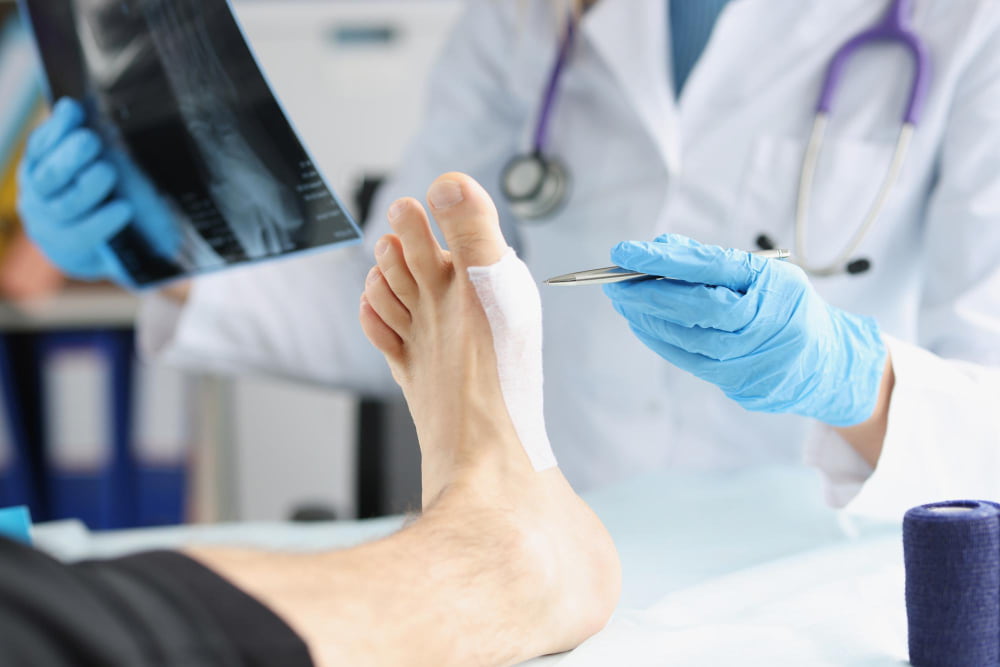


A bunion may begin as a minor inconvenience — a slight bump at the base of the big toe, some discomfort in certain shoes — but for many people it gradually becomes a source of persistent pain that affects walking, footwear choices, and quality of life. Understanding when bunion treatment can be managed conservatively and when surgery is the right step is essential for anyone living with this condition.
This guide covers everything you need to know, from the earliest non-surgical options through to the most advanced corrective procedures available today.
What Is a Bunion and Why Does It Develop?
A bunion, known medically as hallux valgus, is a bony deformity that forms at the metatarsophalangeal joint — the joint at the base of the big toe. Over time, the big toe drifts toward the second toe, and the joint beneath it pushes outward, creating the characteristic bump on the inner side of the foot. The condition is progressive, meaning it rarely stays the same; without intervention, the misalignment typically worsens over years.
The causes of bunion formation are multifactorial. Genetics play a significant role — the underlying foot structure that predisposes someone to bunions is largely inherited. Other contributing factors include:
- Prolonged use of narrow or high-heeled footwear that crowds the toes
- Flat feet or low arches that alter the mechanics of the foot
- Hypermobility of the joints, which allows greater drift over time
- Inflammatory conditions such as rheumatoid arthritis
- Occupations or activities that place repetitive stress on the forefoot
A toe bunion affects the big toe joint, but bunions can also develop on the outer side of the foot at the base of the little toe. This variant is known as a bunionette, or tailor's bunion — a condition named after the cross-legged sitting position once common among tailors, which placed sustained pressure on the outer foot.
Bunion Relief Without Surgery: What Conservative Treatment Can Achieve
Not every bunion requires an operation, and for patients in the earlier stages of the condition, non-surgical bunion treatment can manage pain and slow progression effectively. It is important to understand, however, that conservative measures do not correct the deformity — they manage the symptoms around it.
The Most Effective Non-Surgical Options
Commonly recommended approaches for bunion relief without surgery include:
- Wide, supportive footwear that reduces pressure on the joint and accommodates the deformity comfortably
- Custom orthotics that redistribute load across the foot and correct underlying biomechanical imbalances
- Toe spacers or bunion splints worn at night to slow the progression of the drift
- Anti-inflammatory medication or corticosteroid injections to address acute pain flares
- Physiotherapy targeting the intrinsic muscles of the foot to improve joint mechanics and reduce daily discomfort
For many patients, these measures provide adequate relief for years. The question of whether bunions can be corrected without surgery, however, has a straightforward answer: no. Once the bony misalignment has developed, only surgical realignment can restore the correct position of the joint. Conservative treatment is management, not correction.

When Bunion Surgery Becomes the Right Choice
The decision to proceed with bunion surgery — formally known as a bunionectomy — is based on the severity of symptoms rather than the size of the deformity alone. Some patients with large bunions experience relatively little pain, while others with modest deformities find their daily lives significantly limited. Surgery is generally recommended when:
- Pain is persistent and no longer adequately controlled by conservative measures
- The deformity is interfering with normal footwear and walking
- The big toe is beginning to push against and deform the adjacent toes
- The joint shows signs of progressive arthritic change on imaging
A thorough assessment by an experienced bunion surgeon, including weight-bearing X-rays to evaluate the degree of joint misalignment, forms the basis of any surgical recommendation.
Types of Bunion Operations: Choosing the Right Approach
There is no single bunion surgery — there are numerous techniques, each suited to different degrees of deformity and different patient profiles. Understanding the main types of bunion operations helps patients engage meaningfully with their surgeon's recommendations and set realistic expectations for both the procedure and the recovery ahead.
Osteotomy: The Most Widely Performed Correction
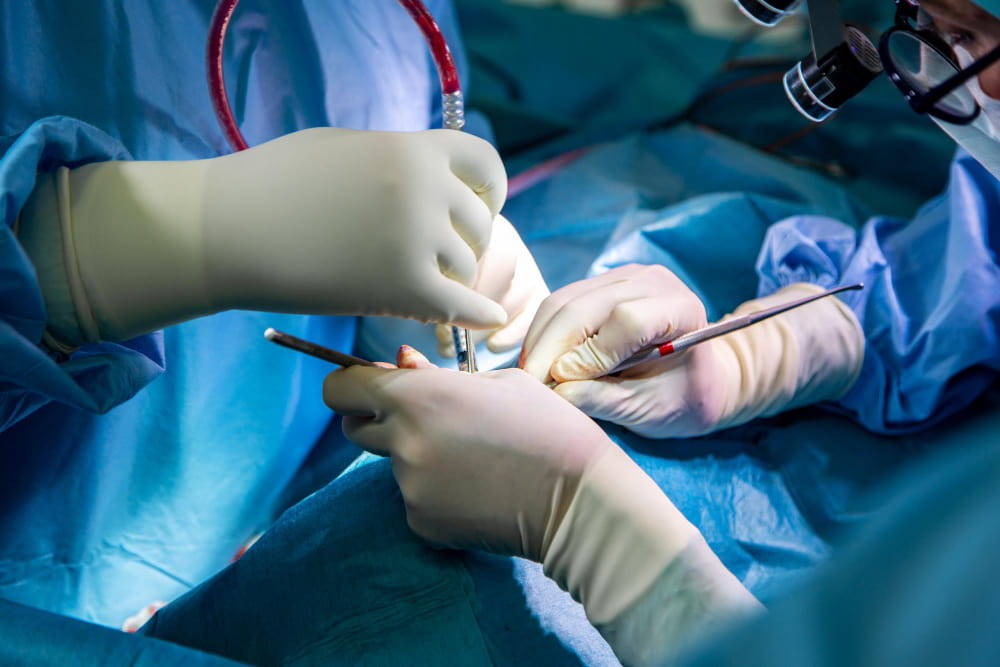
Osteotomy is the backbone of modern bunion surgery and remains the most commonly performed category of bunion correction. The principle is consistent across its variants: the metatarsal bone is cut, repositioned to correct the misalignment, and then secured with screws or small plates while it heals. What differs between techniques is the location, angle, and extent of the cut — factors that determine how much correction can be achieved and how stable the fixation will be.
The chevron osteotomy, which makes a V-shaped cut near the head of the metatarsal, is well suited to mild to moderate deformities and has a long track record of reliable outcomes. The scarf osteotomy, which runs a longer cut along the shaft of the bone, allows greater rotational and positional correction and is preferred for more significant cases. For very severe deformities, a proximal osteotomy — made closer to the base of the metatarsal — provides the greatest degree of angular correction. Minimally invasive bunion surgery applies osteotomy principles through laparoscopic (keyhole) incisions under live X-ray guidance, offering reduced soft tissue disruption, lower infection risk, and faster recovery compared to open approaches.
Bunion Fusion Surgery: When Joint Preservation Is Not the Goal
Arthrodesis — more commonly known as bunion fusion surgery — takes a fundamentally different approach from osteotomy. Rather than preserving and realigning the metatarsophalangeal joint, fusion surgery permanently joins the bones on either side of the joint, eliminating movement at that site entirely. It is reserved for cases where the joint itself has been significantly damaged by arthritis, where a previous bunion surgery has failed, or where the deformity is so severe that realignment alone would be insufficient to produce a stable, pain-free result.
While the prospect of a fused joint can sound alarming to patients, the metatarsophalangeal joint contributes relatively little to overall foot function in normal walking, and most patients who undergo bunion fusion surgery report excellent pain relief and a good return to daily activity. The trade-off is that certain footwear — particularly high heels — will no longer be compatible with the fused joint, and the recovery timeline is typically longer than for osteotomy-based procedures.
Lapiplasty 3D Bunion Correction: A Significant Advance
One of the most important developments in bunion correction surgery in recent years is lapiplasty surgery. Traditional osteotomy techniques address the bunion in two dimensions, cutting and shifting the bone sideways. Lapiplasty 3D bunion correction takes a fundamentally different approach by addressing the root cause of most bunions — rotational instability at the base of the metatarsal — in all three dimensions simultaneously.
Lapiplasty bunion surgery straightens the metatarsal bone and secures it with titanium plates at the unstable joint, correcting the deformity at its source rather than simply reducing the visible bump. The key advantages of this approach include:
- Correction of the deformity in all three planes rather than two, producing more complete realignment
- Fixation at the unstable joint itself, significantly reducing the risk of recurrence
- Earlier weight-bearing compared to many traditional techniques, with many patients on their feet within days
- A lower profile correction that tends to produce more natural-looking and functional results long term
Lapiplasty is not universally appropriate — patient selection matters, and an experienced bunion surgeon will assess whether the anatomy and severity of the deformity make it the right choice.
Bunionette Surgery and Tailor's Bunion Correction
The outer foot has its own equivalent procedure, and it follows similar surgical principles. Tailor's bunion surgery addresses the bony prominence at the base of the fifth metatarsal through bone realignment, fixation, and soft tissue balancing. Depending on the severity of the bunionette, the surgeon may perform a simple shaving of the prominence, a metatarsal osteotomy to correct the underlying bone angulation, or — in more complex cases — a more extensive realignment procedure. In appropriate cases, tailor's bunionectomy can also be performed using minimally invasive techniques, and it is frequently carried out alongside standard bunion correction when deformities are present on both sides of the same foot, allowing the patient to undergo a single anaesthetic and a combined recovery.
Bunion Surgery Before and After: What the Results Look Like
For patients considering bunion removal, understanding realistic outcomes is important. Bunion surgery before and after results consistently show meaningful correction of the bony deformity, restoration of more normal toe alignment, and — crucially — significant or complete resolution of pain in the majority of patients. Cosmetic improvement, while often welcome, is a secondary outcome; the primary goals are functional restoration and pain relief.
Patient-reported outcomes following lapiplasty and minimally invasive techniques have been particularly positive in recent literature, with high satisfaction rates and low recurrence compared to older methods. That said, outcomes depend heavily on the skill and experience of the bunion surgeon, the technique selected, and the patient's commitment to the recovery process.
Bunion Surgery Recovery: A Realistic Timeline
Recovery is one of the most important factors patients consider before committing to feet surgery of any kind. Bunion surgery recovery time varies depending on the procedure performed, the severity of the original deformity, and the individual patient's healing response — but a general framework applies to most cases.
The week-by-week picture of bunion surgery recovery typically unfolds as follows:
- Weeks 1–2: The foot is elevated as much as possible to control swelling. Weight-bearing, if permitted at all, is limited to a surgical boot or special shoe. Pain is managed with medication and is usually most significant in this early phase.
- Weeks 3–6: Swelling begins to reduce gradually. Most patients can move around more independently, though running, sport, and prolonged standing remain off limits. Physiotherapy exercises for the toe and foot are typically introduced.
- Weeks 6–12: The majority of patients return to regular daily activity and low-impact exercise. Normal footwear — with some exceptions — can usually be resumed, though the foot continues to remodel internally.
- 3–6 months: Full resolution of swelling and a return to all activities, including sport, is typically achieved within this window, though some residual swelling can persist for up to a year in certain cases.
What to Expect During the Recovery Period
Swelling is the most persistent feature of bunion surgery recovery and should be expected to fluctuate — worsening with activity and improving with elevation and rest. To support the best possible outcome, patients are generally advised to:
- Keep the wound dry and protected until cleared by their surgeon
- Avoid prolonged standing or walking on hard surfaces in the early weeks
- Attend all scheduled follow-up appointments so healing can be monitored with X-rays
- Choose supportive, wide-fitting footwear during the recovery months and avoid returning to narrow shoes prematurely
Footwear choice in the months following surgery matters considerably; returning too quickly to restrictive shoes is one of the most common factors in poor long-term outcomes.
Bunion Surgery Costs in Turkey: What Patients Should Know
Bunion surgery costs vary significantly depending on the country, the type of procedure, the hospital setting, and whether the procedure is performed under general or local anaesthesia. In many Western European countries and the United States, the total cost of bunionectomy — including anaesthesia, implants, and follow-up care — can be substantial, and waiting times within public health systems are often lengthy.
Turkey has become an increasingly sought-after destination for orthopedic surgery, including bunion correction surgery, among international patients, offering access to highly experienced bunion surgeons, modern hospital facilities, and advanced techniques including lapiplasty at a significantly lower cost than comparable procedures in Western Europe or North America without compromising on clinical standards.
Expert Orthopedic Care and Foot Surgery at Medical Park
At Medical Park, Turkey's largest private hospital group, bunion surgery is performed by experienced orthopedic foot and ankle surgeons using the full range of modern techniques — from minimally invasive bunionectomy to bunion fusion surgery for complex cases. Every patient's treatment plan begins with a thorough clinical and radiological assessment to determine the most appropriate procedure for their specific deformity, lifestyle, and recovery expectations.
Bunionette surgery and tailor's bunionectomy are also performed at Medical Park, including combined procedures when deformities are present on both sides of the foot. Postoperative care is coordinated across the Orthopedics and Physical Therapy departments ensuring that recovery is monitored closely and rehabilitation is structured from the outset. For international patients, dedicated coordination support is available to manage scheduling, travel logistics, and communication with home-country physicians throughout the process.
If persistent bunion pain, progressive deformity, or limited mobility is affecting your daily life, Medical Park's foot and ankle specialists in Turkey are ready to guide you toward the most effective and lasting solution.




 Makaleye Dön
 E-Result
 WhatsApp