


 TR
 EN
 RU
 AR
 FR


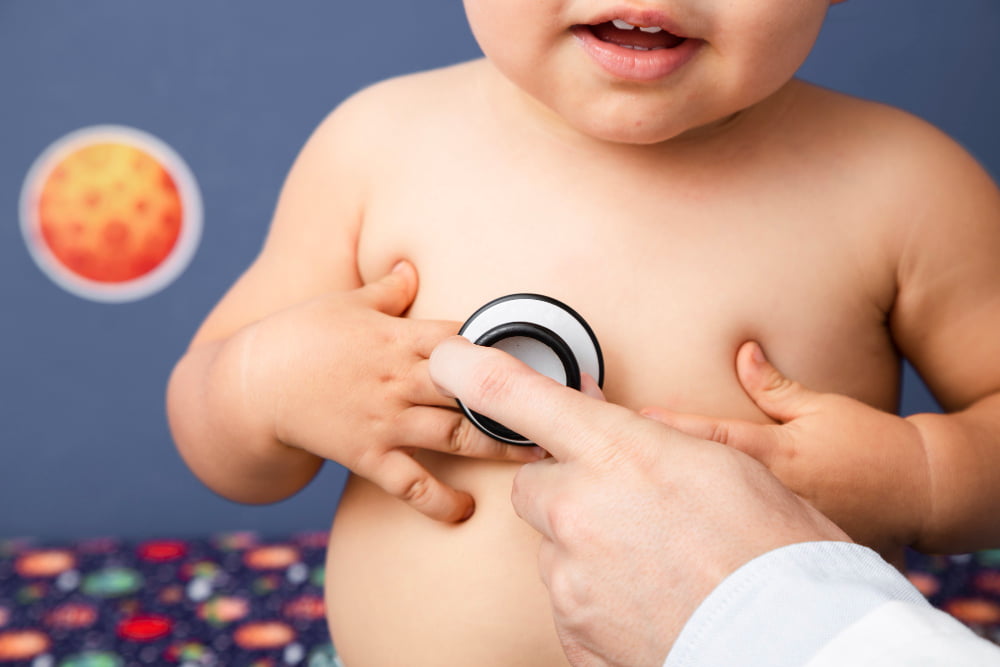

Congenital heart disease (CHD) is one of the most common birth defects worldwide, affecting approximately 1 in 100 newborns. Despite how frequently it occurs, many parents and patients remain unaware of the wide spectrum of congenital heart conditions, their signs, and the treatment options available.
This comprehensive guide covers everything you need to know from understanding the different types of congenital heart defects to recognizing symptoms, pursuing diagnosis, and exploring world-class cardiac care in Turkey.
What Is Congenital Heart Disease (CHD)?
Congenital heart disease refers to a range of structural problems with the heart that are present from birth. These problems with the structure of the heart can involve the walls, valves, or blood vessels surrounding it. The term "congenital" simply means that the condition develops during fetal growth — before a baby is born.
Congenital diseases of the heart are not a single condition but rather a broad category encompassing dozens of distinct defects, some mild and self-resolving, others complex and requiring immediate surgical intervention. In most cases, no single cause is identified, though genetics, certain infections during pregnancy, and environmental exposures are all known contributing factors.
It is important to distinguish heart disease and congenital heart disease: acquired heart disease develops over a lifetime due to lifestyle, diet, or other illnesses, while congenital heart disease is structural and present at birth. That said, many individuals with congenital heart defects go on to develop secondary cardiac complications in adulthood if the underlying condition is not properly managed.
Types of Congenital Heart Disease
Understanding the types of heart disease that fall under the congenital category helps patients and families make sense of a diagnosis. Congenital heart defects are broadly classified into two major groups: cyanotic and acyanotic.
Cyanotic Congenital Heart Disease
Cyanotic congenital heart disease involves defects that reduce the amount of oxygen circulating in the blood, leading to a bluish tint to the skin, lips, and fingernails — a condition called cyanosis. These defects are generally more severe and require prompt medical attention. The most clinically significant types include:
- Tetralogy of Fallot (ToF) — the most common cyanotic congenital heart defect, ToF involves four simultaneous abnormalities: a ventricular septal defect, pulmonary stenosis (narrowing of the pulmonary valve), an overriding aorta, and right ventricular hypertrophy. Infants with ToF often experience sudden episodes of intense cyanosis known as "tet spells." Surgical repair is typically performed within the first year of life.
- Transposition of the Great Arteries (TGA) — in this defect, the aorta and pulmonary artery are switched in position, meaning oxygen-poor blood is continuously circulated back to the body without passing through the lungs. TGA is a life-threatening emergency requiring intervention within days of birth, typically through an arterial switch operation.
- Pulmonary Atresia — the pulmonary valve fails to form properly, completely blocking blood flow from the right ventricle to the lungs. Newborns with this condition depend on a fetal blood vessel called the ductus arteriosus to survive in the first hours of life, and surgical or catheter-based intervention is urgently required.
- Tricuspid Atresia — the tricuspid valve, which controls blood flow between the right atrium and right ventricle, is absent or severely underdeveloped. This significantly limits circulation to the lungs and results in marked cyanosis from birth. Management typically involves a series of staged surgical procedures.
- Total Anomalous Pulmonary Venous Connection (TAPVC) — the pulmonary veins, which carry oxygenated blood from the lungs back to the heart, are incorrectly connected to the right side of the heart instead of the left. This creates a dangerous mixing of oxygenated and deoxygenated blood and requires early surgical correction.
- Truncus Arteriosus — instead of two separate vessels (the aorta and pulmonary artery) leaving the heart, a single common artery is present. This results in mixed blood being pumped throughout both the body and lungs simultaneously, and surgical repair during the newborn period is essential.
Acyanotic Congenital Heart Disease
Acyanotic congenital heart disease describes defects in which blood oxygen levels remain relatively normal, though abnormal blood flow still places significant strain on the heart. These conditions are often subtler and may go undetected for months or even years. The most frequently diagnosed acyanotic defects include:
- Ventricular septal defect (VSD) — a hole in the wall separating the two lower chambers of the heart
- Atrial septal defect (ASD) — a hole in the wall between the two upper chambers
- Patent ductus arteriosus (PDA) — a blood vessel that fails to close after birth as it normally should
- Coarctation of the aorta — a narrowing of the main artery carrying blood from the heart to the body

Understanding the Most Common Congenital Heart Defects
While congenital heart disease encompasses a wide range of structural abnormalities, a handful of specific defects account for the majority of diagnoses — each with its own mechanism, presentation, and treatment approach.
Ventricular Septal Defect
Ventricular septal defect is the most commonly diagnosed congenital heart defect, accounting for roughly 20–30% of all cases. A VSD is essentially a hole in the heart's lower wall (the septum) between the left and right ventricles. This allows oxygenated and deoxygenated blood to mix, forcing the heart to work harder than normal. Small VSDs may close on their own during early childhood, while larger ones typically require surgical repair or catheter-based closure.
Atrial Septal Defect
Atrial septal defect involves a similar hole in the heart, but located in the upper chambers. Many children with ASD show no symptoms at all, which is why the condition is sometimes not discovered until adulthood. Over time, however, an untreated ASD can lead to heart enlargement, abnormal heart rhythms, and pulmonary hypertension. To treat these irregular rhythms, some patients may eventually require cardiac ablation. The symptoms of a hole in the heart related to ASD may include fatigue, shortness of breath during physical activity, and frequent respiratory infections.
Patent Ductus Arteriosus
Before birth, a small vessel called the ductus arteriosus connects two major arteries and diverts blood away from the lungs, which do not yet function in the womb. After birth, this vessel normally closes within a few days. In patent ductus arteriosus, it remains open, causing blood to flow in the wrong direction and overburdening the lungs and heart. PDA is particularly common in premature infants.
Coarctation of the Aorta
Coarctation of the aorta is a congenital cardiovascular condition in which the aorta — the body's largest artery — is abnormally narrowed. This forces the heart to pump with much greater force to push blood through the restriction, leading to high blood pressure in the upper body and reduced circulation to the lower body. It may be detected at birth or during childhood when a significant difference in blood pressure between the arms and legs is noticed.
Symptoms of Congenital Heart Disease
Recognizing the symptoms of congenital heart disease early is critical. While some defects are identified immediately after birth, others present more gradually. Congenital heart anomalies in newborns may manifest as:
- Rapid or labored breathing
- Bluish or grayish skin tone (cyanosis)
- Poor feeding and failure to gain weight
- Excessive fatigue or lethargy
- Swelling in the legs, abdomen, or areas around the eyes
- A heart murmur detected by a physician
For older children and adults, the symptoms of a hole in the heart or other structural defect may include:
- Shortness of breath during activity or even at rest
- Irregular heartbeat or palpitations
- Dizziness or fainting
- Reduced tolerance for exercise
- Recurrent chest infections
It is worth noting that a congenital heart attack — or a cardiac event triggered by an undiagnosed or untreated congenital defect — can occur at any age. Adults who were never diagnosed as children may experience their first cardiac event later in life. While procedures like coronary artery bypass grafting (CABG) are typically reserved for acquired blockages, congenital patients require precise diagnosis to determine the right surgical path. Any unexplained cardiac symptoms should therefore be evaluated with congenital heart disease in mind.
Congenital Heart Problems in Infants and Newborns
Congenital heart problems in infants represent some of the most urgent pediatric medical situations. For a newborn with heart defects, the first hours and days of life are often the most critical. Neonatal cardiac teams must act quickly to stabilize oxygen levels, manage heart function, and determine whether emergency intervention is needed.
Certain congenital defects are now routinely identified through prenatal ultrasound, allowing medical teams to prepare in advance. Others are detected through newborn screening programs, including pulse oximetry testing — a simple, painless test that checks oxygen levels in the blood. Early identification dramatically improves outcomes.
Parents of a newborn with heart defects should expect a multidisciplinary care approach involving pediatric cardiologists, cardiovascular surgeons, neonatologists, and specialized nursing teams working together to develop a tailored treatment plan.
Congenital Heart Disease Diagnosis
Accurate congenital heart disease diagnosis relies on a combination of clinical assessment and advanced imaging. A physician who suspects a congenital cardiovascular condition will typically pursue one or more of the following:
- Echocardiogram — ultrasound imaging of the heart, the gold standard for diagnosing structural defects
- Electrocardiogram (ECG/EKG) — measures the heart's electrical activity and can reveal abnormal rhythms
- Chest X-ray — provides a view of the heart's size and shape and may reveal lung changes
- Cardiac MRI or CT scan — offers detailed three-dimensional imaging of heart structures and blood vessels
- Cardiac catheterization — a minimally invasive procedure used both to diagnose and sometimes to treat certain defects
- Genetic testing — recommended when a chromosomal syndrome is suspected as an underlying cause
Early and precise diagnosis is the foundation of effective treatment planning, particularly for complex or multi-component defects.
Complications of Congenital Heart Disease
When congenital heart defects go undetected or undertreated, the complications of congenital heart disease can be severe. These include:
- Heart failure — the heart becomes too weakened to pump blood effectively
- Pulmonary hypertension — elevated blood pressure in the arteries of the lungs
- Arrhythmias — abnormal heart rhythms that can range from mild to life-threatening
- Endocarditis — infection of the heart's inner lining, to which those with structural defects are more susceptible
- Stroke — abnormal blood flow patterns can increase clot formation and stroke risk
- Developmental delays — in children, reduced oxygen supply to the brain during critical developmental periods
Adults living with congenital heart disease face a lifelong need for specialized cardiac follow-up, even after successful childhood treatment. Many require additional procedures as they age.
Congenital Heart Defect Treatments
The range of congenital heart defect treatments available today is remarkable, and outcomes have improved dramatically over recent decades thanks to advances in surgical technique, catheter-based interventions, and post-operative care.
Treatment depends on the type, severity, and location of the defect, as well as the patient's age and overall health. Common approaches include:
- Watchful waiting — for small defects that may close spontaneously, such as minor VSDs
- Medications — to manage symptoms, control blood pressure, prevent clotting, or support heart function
- Cardiac catheterization procedures — including balloon valvuloplasty and device closure of septal defects, performed without open surgery
- Open-heart surgery — required for more complex structural repairs, including correction of coarctation of the aorta or multi-defect conditions
- Heart transplant — in rare cases where the heart is too severely affected to be repaired
Many patients require a combination of treatments across their lifetime. Thanks to improved care, more than 90% of children born with congenital heart disease now survive into adulthood.
Cardiovascular Screening and Cardiac Care in Turkey
Turkey has emerged as one of the world's leading destinations for cardiac care, attracting thousands of international patients every year. Cardiology treatment in Turkey combines internationally trained medical specialists, state-of-the-art infrastructure, Joint Commission International (JCI)-accredited hospitals, and treatment costs that are significantly lower than those in Western Europe or North America — all without any compromise on clinical quality.
For patients considering a check-up in Turkey with cardiac screening, the country's major hospital groups offer comprehensive programs that can identify congenital and acquired heart conditions with precision. These programs typically include advanced echocardiography, stress testing, cardiac CT and MRI, full laboratory workup, and specialist consultations — all coordinated within a single facility, often within just a few days.
Why Medical Park for Specialized Cardiac Care?
Medical Park's pediatric cardiovascular surgery program is one of the most comprehensive in the region, staffed by experienced congenital heart surgeons who perform a full range of procedures on newborns, infants, and children of all ages. From emergency neonatal interventions for critical defects such as transposition of the great arteries and pulmonary atresia, to elective open-heart repairs for ventricular and atrial septal defects, the surgical team works in close collaboration with pediatric cardiologists, neonatologists, and intensive care specialists to ensure the safest possible outcomes at every stage. Dedicated pediatric intensive care units provide round-the-clock monitoring and post-operative support tailored specifically to the needs of young patients.
Whether you are an adult who has recently been diagnosed with a congenital cardiovascular condition, a parent seeking the best possible care for a newborn with heart defects, or an international patient looking for a trusted facility for a cardiac check-up in Turkey, Medical Park's cardiology team is ready to provide you with a personalized treatment pathway from the moment of inquiry through to follow-up care. To learn more about congenital heart disease treatment at Medical Park or to request a consultation with a cardiac specialist, contact the International Patient Center — and take the first step toward a healthier heart.




 Makaleye Dön
 E-Result
 WhatsApp