


 TR
 EN
 RU
 AR
 FR


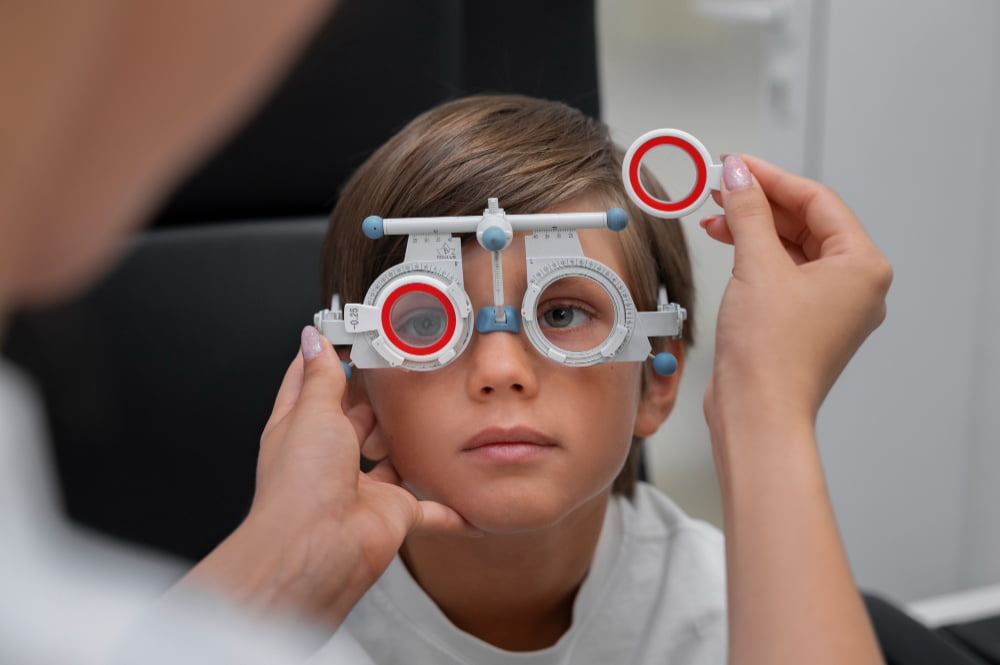

Lazy eye, medically known as amblyopia, is a condition in which vision does not develop normally in one eye and, less commonly, both eyes. It begins in early childhood when the brain starts relying more on the stronger eye and does not process visual information from the weaker eye as effectively.
Lazy eye in children can often be treated successfully when identified early. A child may not realise that one eye sees less clearly, which is why regular eye examinations and early lazy eye diagnosis are important. Treatment may include glasses, patching, eye drops, or treatment for an underlying eye condition.
This guide explains how amblyopia develops, lazy eye symptoms and causes, diagnosis, treatment options, risk factors, and the difference between amblyopia and strabismus.
What is Lazy Eye (Amblyopia)?
Amblyopia is reduced vision caused by the brain favouring one eye over the other during the period when vision is still developing. The affected eye may look healthy, but the connection between that eye and the brain has not developed as strongly as it should.
Lazy eye is not caused by an eye being “lazy” or refusing to move. The term describes a vision-development problem. Without treatment, the brain may increasingly ignore the image from the weaker eye, making it harder to improve vision later.
Amblyopia usually develops before the age of 7, although it can sometimes be identified later. It is one of the most common causes of reduced vision in one eye among children and young adults. Early treatment generally provides the best chance of improving sight.
Types of amblyopia include:
- Strabismic amblyopia, related to eye misalignment
- Anisometropic amblyopia, caused by a significant difference in prescription between the eyes
- Deprivation amblyopia, caused when something blocks clear vision in one eye, such as a cataract or drooping eyelid
- Combined amblyopia, involving more than one cause
How Does Lazy Eye Develop?
In early childhood, the brain learns how to use visual information from both eyes. For normal vision development, each eye needs to send a clear image to the brain. If one eye consistently sends a blurred, blocked, or misaligned image, the brain may begin to ignore it to avoid confusion.
The brain has a high level of neuroplasticity during early childhood, meaning it can adapt and strengthen connections in response to what the eyes see. When one eye repeatedly sends a blurred or misaligned image, the brain may adapt by relying more on the stronger eye. Lazy eye treatment works by helping the brain strengthen its use of the weaker eye while this ability to adapt is still greatest.
Over time, the weaker eye does not develop the ability to see clearly, even when there is no major visible problem with the eye itself. This is why treating the underlying cause alone may not always be enough; the weaker eye may also need targeted treatment.
Lazy eye can develop because of:
- An eye turn, where the eyes point in different directions
- Short-sightedness, long-sightedness, or astigmatism that is not corrected
- A large difference in vision prescription between the two eyes
- A cataract, drooping eyelid, or corneal clouding that blocks light from entering one eye
- Other conditions that prevent one eye from seeing a clear image
Lazy eye in babies may not be obvious to parents because babies cannot describe blurred vision. A paediatric eye examination can identify whether the eyes are aligned and whether each eye is developing normally.
Recognizing Lazy Eye: Symptoms to Watch For
Lazy eye symptoms are often difficult to recognise because children may adapt by relying on their stronger eye. A child can appear to see well in everyday situations while still having significant lazy eye vision problems.
Common Signs in Children
Children with amblyopia may show signs of difficulty using both eyes together. These signs do not always mean a child has lazy eye, but they should be discussed with an eye specialist.
Common signs include:
- Squinting or closing one eye when looking at something
- Tilting the head to see more clearly
- Eyes that appear to point in different directions
- Difficulty following moving objects
- Frequent eye rubbing, blinking, or complaints of tired eyes
- Difficulty judging distances when catching, throwing, or climbing
- Clumsiness, frequent tripping, or difficulty with hand-eye coordination
- Headaches or frustration during reading and close work
A slight lazy eye may be noticed only during a vision screening or eye examination. Even mild differences in vision between the eyes can affect depth perception and may become harder to treat if they are not addressed during childhood.
Subtle Indicators in Adults
Lazy eye in adults is often recognised because a person has always had weaker vision in one eye, reduced depth perception, or difficulty with tasks that require accurate distance judgement. Some adults only learn they have amblyopia during a routine eye examination or when the stronger eye develops another vision problem.
Possible signs include:
- Long-standing blurred vision in one eye
- Difficulty judging depth or distance
- Problems with driving, sports, stairs, or detailed work
- Eyestrain or headaches during visual tasks
- A history of patching, glasses, eye turning, or childhood vision treatment
Lazy eye treatment for adults may still improve vision in selected cases, although results are often more limited than in children because visual development is largely complete. An ophthalmologist can assess the cause of reduced vision and discuss realistic treatment options.
What Causes Lazy Eye?
Lazy eye causes usually involve a problem that prevents both eyes from sending equally clear images to the brain during childhood. The brain then favours the clearer image and reduces its use of the other eye.
The main causes are:
- Strabismus, where one eye turns inward, outward, upward, or downward
- Anisometropic amblyopia, where one eye has a much stronger glasses prescription than the other
- Uncorrected refractive errors, such as long-sightedness, short-sightedness, or astigmatism
- Deprivation of vision caused by cataracts, drooping eyelids, corneal scars, or other conditions that block light
Anisometropic amblyopia can be easy to miss because the eyes may look straight. A child with one eye that sees clearly may not complain about vision because the stronger eye compensates. This makes a lazy eye test and routine eye screening especially important.
In some children, more than one issue is present. For example, a child may have both an eye turn and a significant difference in prescription between the eyes.
Diagnosing Lazy Eye: Comprehensive Eye Exams
Lazy eye diagnosis requires a comprehensive eye examination. The eye specialist checks how well each eye sees, whether the eyes work together, and whether an underlying condition is affecting visual development.
A lazy eye test may include age-appropriate vision testing, assessment of eye movements and alignment, and tests to identify whether the eyes need glasses. Eye drops may be used to widen the pupils so the doctor can examine the inside of the eyes and measure refractive error accurately.
A comprehensive eye exam may include:
- Visual acuity testing for each eye separately
- Eye alignment and eye movement tests
- Refraction testing to determine whether glasses are needed
- Assessment of depth perception
- Examination of the cornea, lens, retina, and optic nerve
- Evaluation for cataracts, drooping eyelids, or other causes of blocked vision
For babies and young children who cannot read letters, the specialist uses toys, lights, pictures, or other age-appropriate methods to check whether each eye is seeing and following objects normally. Regular childhood screening helps identify amblyopia before reduced vision becomes more difficult to treat.
Treating Lazy Eye
Lazy eye treatment aims to improve vision in the weaker eye and help the brain use visual information from both eyes. The treatment plan depends on the child’s age, the cause of amblyopia, and the difference in vision between the eyes.
Correcting the underlying vision problem is usually the first step. For some children, wearing the correct glasses or contact lenses is enough to improve vision significantly.
Lazy eye treatment options may include:
- Glasses or contact lenses to correct refractive errors
- Eye patching over the stronger eye for a prescribed number of hours each day
- Atropine eye drops in the stronger eye to temporarily blur close vision
- Special filters placed on glasses to encourage use of the weaker eye
- Vision therapy or activities recommended by an eye-care specialist
- Treatment for cataracts, drooping eyelids, or other conditions blocking clear vision
Patching encourages the brain to use the weaker eye. The number of hours needed varies between children and should be determined by the eye specialist. Parents should follow the schedule closely and attend regular appointments, as treatment may need to be adjusted over time.
Atropine drops can be an alternative for children who struggle to wear an eye patch. The drops temporarily blur vision in the stronger eye, encouraging the weaker eye to work harder.
Lazy Eye Surgery and Refractive Surgery: What is the Difference?
Lazy eye surgery is not a direct treatment for amblyopia itself. Surgery may be needed to treat a cause of reduced vision, such as a cataract or drooping eyelid (blepharoptosis repair or blepharoplasty), or to improve eye alignment in strabismus. Even after surgery, glasses, patching, or other amblyopia treatment may still be necessary.
In selected adults with anisometropic amblyopia, refractive surgery may be considered to reduce dependence on glasses or contact lenses. It does not directly treat amblyopia and is generally not used in children. An ophthalmologist should assess eye health, stability of vision, and realistic benefit before recommending any procedure.
Lazy eye surgery cost depends on the type of procedure, the condition being treated, the hospital, anesthesia needs, and follow-up care. Families should request an individual treatment plan and cost estimate after an ophthalmologist has completed a detailed assessment.
Risk Factors and Prevention
Lazy eye risk factors include conditions that affect how clearly an eye sees during early childhood. A family history of amblyopia, strabismus, childhood cataracts, or strong glasses prescriptions may also increase risk.
Risk factors include:
- Premature birth or low birth weight
- Developmental delay or neurological conditions
- Family history of lazy eye or strabismus
- Untreated eye turn
- A large difference in prescription between the two eyes
- Childhood cataracts or drooping eyelids
- Uncorrected long-sightedness, short-sightedness, or astigmatism
Lazy eye cannot always be prevented, but early eye screening can identify risk factors before permanent vision problems develop. Parents should arrange an eye examination if they notice an eye turn, frequent squinting, head tilting, or other possible lazy eye symptoms.
The Difference Between Lazy Eye and Strabismus
Amblyopia vs strabismus is a common source of confusion. Amblyopia is reduced vision caused by the brain not using one eye effectively. Strabismus is a physical alignment problem in which the eyes point in different directions.
Strabismus can cause amblyopia because the brain may ignore the image from the misaligned eye. However, not all children with strabismus develop lazy eye, and not all children with amblyopia have an eye turn. Anisometropic amblyopia, for example, may occur when the eyes look straight but have very different prescriptions.
Both conditions need specialist assessment. Treatment may include glasses, patching, eye drops, exercises in selected cases, or surgery to improve eye alignment when appropriate.
Potential Complications of Untreated Lazy Eye
Untreated lazy eye can lead to lasting reduced vision in the affected eye. The longer the brain relies mainly on the stronger eye, the more difficult it may become to improve vision in the weaker eye.
Possible lazy eye complications include:
- Permanent reduced vision in one eye
- Reduced depth perception and difficulty judging distance
- Problems with sports, driving, education, or certain work tasks
- Greater impact on independence if the stronger eye is injured or develops disease later
- Low confidence, frustration, or social concerns related to an eye turn
Early diagnosis and consistent treatment offer the best chance of preventing long-term lazy eye vision problems. Children should continue follow-up appointments even when vision improves, as amblyopia can recur in some cases.
Expert Lazy Eye Treatment at Medical Park
Medical Park Hospitals provide comprehensive assessment and treatment for lazy eye in Turkey for both children and adults. Ophthalmology teams evaluate visual acuity, eye alignment, refractive errors, and eye health to identify the cause of amblyopia and create an individual treatment plan.
Treatment may include glasses, patching, atropine drops, follow-up eye examinations, and management of conditions such as strabismus, cataracts, or drooping eyelids. When a procedure is appropriate, the ophthalmology team explains whether surgery is needed to address the underlying eye condition and what recovery may involve.
For international patients seeking lazy eye treatment in Turkey, Medical Park supports coordinated appointments, review of available medical records, ophthalmology assessment, treatment planning, and follow-up guidance.


 Makaleye Dön
 E-Result
 WhatsApp