


 TR
 EN
 RU
 AR
 FR


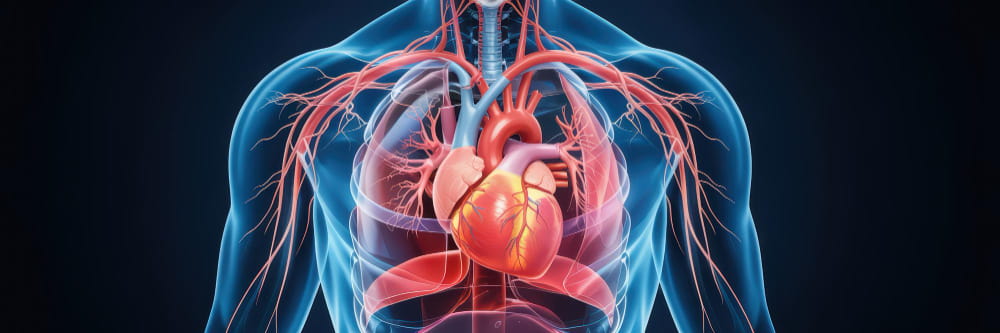

Aortic dissection is one of the most dangerous cardiovascular emergencies in medicine. It is a life-threatening condition in which a tear develops in the inner wall of the aorta, allowing blood to separate its layers. The condition develops suddenly, progresses rapidly, and can be fatal within hours if not recognised and treated. Yet, when diagnosed promptly and managed appropriately, many patients can survive and achieve excellent long-term outcomes.
Understanding what aortic dissection is, how to recognise its symptoms, and what treatment involves can genuinely be life-saving.
What Is Aortic Dissection?
The aorta is the largest artery in the body. It carries oxygenated blood from the heart and arches over the chest before descending through the abdomen, supplying blood to the brain, arms, organs, and legs. The aortic wall is made up of three layers: an inner lining called the intima, a thick middle layer called the media, and an outer layer called the adventitia.
Aortic dissection occurs when a tear develops in the inner lining of the aortic wall. Blood under high pressure forces its way through this tear and tracks between the layers of the wall, creating a false channel — or false lumen — that runs parallel to the true channel through which blood normally flows. This process of tearing of the aortic wall and separation of its layers is what gives the condition its name.
As the dissection extends, it can block the arteries branching off the aorta, cutting off blood supply to the organs those vessels supply. It can also weaken the outer wall of the aorta to the point of rupture, which is rapidly fatal. This is why aortic dissection is a true medical emergency that requires immediate diagnosis and treatment.
The Difference Between Aortic Dissection and Aortic Aneurysm
Aortic dissection and aortic aneurysm are related but distinct conditions, and the difference matters for both diagnosis and treatment.
An aortic aneurysm is an abnormal bulging or ballooning of the aortic wall, caused by a weakening of the vessel wall over time. The wall expands outward but remains intact. An aneurysm may be present for years, growing slowly and silently, before it causes symptoms or complications. The primary risk of an untreated aneurysm is rupture — the point at which the weakened wall finally gives way.
Aortic dissection involves an actual tear in the inner layer of the aortic wall, with blood actively tracking between the layers. It can occur in a previously normal aorta or in one already affected by aneurysmal disease. When an aortic aneurysm tears in this way, it may be described as a dissecting aortic aneurysm — a term that reflects the overlap between the two conditions.
Both conditions fall under the broader category of aortic aneurysmal disease, and both can lead to aortic rupture. However, dissection is typically more acute and immediately life-threatening, while aneurysm tends to be a chronic condition managed over time before it reaches a critical point.

Types of Aortic Dissection
Aortic dissection is classified based on which part of the aorta is affected, because the location of the tear determines how dangerous the dissection is and how it needs to be treated. The most widely used classification is the Stanford system, which divides dissections into two types.
Type A Aortic Dissection
Type A aortic dissection involves the ascending aorta — the portion of the aorta that rises from the heart before the arch. This is the more dangerous of the two types. Because the ascending aorta is so close to the heart, a dissection here can interfere with the coronary arteries that supply the heart muscle, causing symptoms that may resemble a heart attack.
In selected cases, coronary angiography and coronary angioplasty may be required to restore blood flow to an affected coronary artery, although the priority remains urgent treatment of the aortic dissection itself. The dissection may also damage the aortic valve, cause fluid to accumulate around the heart in a condition called cardiac tamponade, or extend into the arteries supplying the brain.
Type A aortic dissection is treated as a surgical emergency. Without surgery, mortality rises steeply with every hour that passes. Emergency open-heart surgery to replace the affected portion of the ascending aorta is the standard treatment, and outcomes are significantly better when surgery is performed promptly at a centre with experience in complex aortic procedures.
Type B Aortic Dissection
Type B aortic dissection involves the descending aorta — the portion that travels downward through the chest and abdomen after the arch — without involving the ascending aorta. It is generally less immediately life-threatening than Type A, though it can still cause serious complications if it blocks branches of the aorta supplying the kidneys, intestines, or spinal cord, or if it progresses toward rupture.
Uncomplicated Type B dissection is initially managed with medications to lower blood pressure and heart rate, reducing the force that drives the dissection forward. Complicated Type B dissection — where there is rupture, organ ischemia, or rapid expansion — requires intervention, most commonly an endovascular procedure in which a stent-graft is placed inside the aorta to seal the tear and restore flow through the true channel.
Symptoms of Aortic Dissection
Aortic dissection symptoms are characteristically sudden and severe. The most important feature is the nature of the pain, which is unlike most other types of chest pain and is the key to early clinical suspicion.
The classic presentation includes:
- Sudden, severe chest or back pain described as tearing, ripping, or sharp — many patients describe it as the worst pain they have ever felt, beginning at maximum intensity from the very first moment rather than building gradually
- Pain that migrates — the pain may move as the dissection extends, travelling from the chest to the back, or from the upper back down toward the abdomen
- Unequal blood pressure or pulse between arms — if the dissection blocks one of the arteries to the arms, blood pressure readings may differ significantly between the left and right side
- Neurological symptoms — aortic dissection can cause stroke-like symptoms, including sudden weakness or numbness on one side of the body, facial drooping, difficulty speaking or understanding speech, vision changes, dizziness, loss of balance, or loss of consciousness if blood flow to the brain or spinal cord is compromised
- Breathlessness — if the aortic valve is affected or fluid accumulates around the heart
- Fainting or collapse — particularly in Type A dissection, where the proximity to the heart makes circulatory compromise more immediate
It is important to note that not all presentations are dramatic. Some patients present with less typical symptoms, particularly if the dissection is progressing slowly or affecting branches that supply less critical territories. This atypical presentation can delay diagnosis, which is why a high clinical index of suspicion is essential whenever sudden severe pain occurs in a patient with relevant risk factors.
Risk Factors for Aortic Dissection
Several conditions and factors increase the risk of aortic dissection:
- High blood pressure — the single most important risk factor, present in the majority of patients with aortic dissection
- Connective tissue disorders — conditions such as Marfan syndrome and Ehlers-Danlos syndrome weaken the structural proteins in the aortic wall and significantly increase risk, often at younger ages
- Bicuspid aortic valve — a congenital heart defect of the aortic valve associated with aortic wall disease
- Pre-existing aortic aneurysm — an already dilated aorta is more susceptible to dissection
- Atherosclerosis — long-standing inflammation and plaque in the arterial wall contributes to wall weakening
- Stimulant use — causes sudden, extreme spikes in blood pressure
- Male sex and advancing age — aortic dissection is more common in men and in people over 60, though connective tissue disorders bring the risk to younger patients as well
- Trauma — high-speed deceleration injuries, such as those sustained in road traffic accidents, can cause traumatic aortic dissection
How Is Aortic Dissection Diagnosed?
Speed of diagnosis is critical. When aortic dissection is suspected, imaging is performed as a matter of urgency.
CT angiography of the aorta is the most widely used first-line imaging investigation. It is fast, widely available, and provides detailed information about the location and extent of the dissection, which vessels are involved, and whether rupture or organ compromise is present. It is the test that most directly informs the immediate treatment decision.
In some clinical situations, particularly when a patient is too unstable for CT, transoesophageal echocardiography — an ultrasoundperformed from inside the oesophagus, which lies directly behind the aorta — provides excellent visualisation of the ascending aorta and aortic valve and can be performed at the bedside or in the operating room.
MRI provides the most detailed anatomical information but is rarely practical in the acute setting due to scan time and limited availability in emergency pathways.
Aortic Dissection Treatment
Type A: Emergency Surgery
Type A aortic dissection is treated with emergency open surgery. The goal is to remove the segment of aorta containing the primary tear, replace it with a synthetic graft, and restore normal blood flow through the true lumen. If the aortic valve has been damaged, it may be repaired or replaced at the same operation. Surgery is performed under cardiopulmonary bypass and, in cases where the arch is involved, may require a period of circulatory arrest under deep hypothermia.
Type B: Medical and Endovascular Treatment
Uncomplicated Type B dissection is treated initially with intravenous antihypertensive medications — most commonly beta blockers — to reduce both blood pressure and the rate at which the heart beats, minimising the mechanical stress on the aortic wall. Patients are monitored closely in an intensive care setting during this acute phase.
Complicated Type B dissection, and many cases of uncomplicated dissection in the medium term, are treated with thoracic endovascular aortic repair, known as TEVAR. In this minimally invasive procedure, a stent-graft is delivered through a catheter inserted via the femoral artery and deployed across the tear in the descending aorta. By covering the entry tear and redirecting blood into the true lumen, TEVAR promotes gradual thrombosis of the false lumen and stabilisation of the aortic wall.
Long-term follow-up with regular aortic imaging is essential for all patients following aortic dissection, regardless of the type or the treatment received.
Endovascular Procedures at Medical Park
Medical Park provides comprehensive care for patients with aortic dissection and other complex aortic conditions through experienced cardiovascular surgeons, interventional specialists, anaesthetists, and intensive care teams. Depending on the type and severity of the dissection, treatment may involve emergency open surgery, minimally invasive endovascular procedures, or carefully monitored medical management.
Endovascular procedures are performed using advanced imaging guidance, allowing specialists to access the aorta through a small incision in the groin and place a stent graft to reinforce the damaged section of the vessel and restore normal blood flow. These minimally invasive techniques can offer shorter recovery times and are performed by expert cardiovascular teams using modern hybrid operating theatres equipped for complex aortic interventions.
Following treatment, patients receive ongoing follow-up with advanced imaging and personalised care plans to monitor the aorta, manage cardiovascular risk factors, and support long-term recovery. International patients also benefit from dedicated coordination services throughout their diagnosis, treatment, and follow-up journey.




 Makaleye Dön
 E-Result
 WhatsApp